How are the soundproof office booths designed to reduce noise?
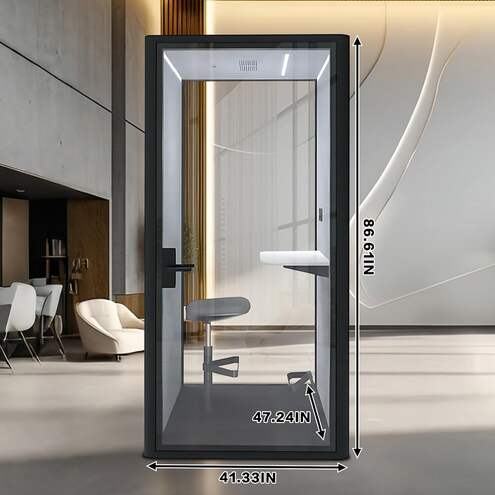
Soundproof office booths have become a common solution in modern workspaces, aiming at improving work efficiency and promoting collaboration. These independent office areas are usually closed and soundproof, aiming to provide privacy for employees and reduce interference. One of the main advantages of a compartment unit is that it can reduce noise, a common problem in open offices. So, how are these compartment units designed and built to achieve the best sound insulation and noise reduction? In this paper, various methods and technologies used in the design and construction of soundproof office booths will be discussed in depth to achieve the best sound insulation and noise reduction effect.
Understand the necessity of noise reduction in the office environment. With the development of the modern office environment, open space is becoming more and more common. Although this layout encourages teamwork, it also brings serious noise-related problems. Conversations, telephone calls, and daily office activities all create a noisy atmosphere, which makes it difficult for employees to concentrate on their work. Noise pollution has been proven to be related to increased pressure, decreased work efficiency, and decreased job satisfaction. Therefore, it is very important to create a quieter working environment, and the soundproof office boothsares an effective solution. These cubicle units provide a quiet and closed space for employees, so that they can concentrate and complete their tasks without being disturbed by external noise.
The role of materials in soundproof office compartmen.ts Choosing suitable materials is one of the most important aspects when building noise-reducing office cubicles. The materials used in the walls, floors, and ceilings of compartments are very important to prevent sound from passing from one space to another. For example, sound insulation boards are often used in compartment construction. These panels are designed to absorb sound waves and reduce echoes, thus preventing sound from reflecting from hard surfaces. High-density materials, such as soundproof gypsum boards and glass fiber insulation materials, are usually integrated into the structure of compartments to prevent noise from leaking out from the inside or entering from the outside.
For walls, it is more inclined to use materials with high quality and high density. For example, heavy-duty sound-absorbing foam, mineral wool, or composite materials are used to effectively absorb sound waves. These materials are also designed to block low-frequency sounds, such as conversation or the hum of office equipment. In addition, modular office cubicles are usually equipped with sound-insulated glass for windows, which is composed of laminated glass or a double-glazing system to further enhance the noise reduction effect. Reasonable selection and combination of these materials can ensure that the sound is effectively controlled in the compartment and will not interfere with other people in the office.
Design characteristics of enhancing sound insulation effect. The design of the office compartment unit is also a key factor in effectively reducing noise. Compartment units usually adopt a sealed and closed structural design, which helps to prevent sound leakage. The design will take into account factors such as the thickness of the wall, the type of joints used in the construction, and the sound insulation sealing strips used around the doors and windows. These design features cooperate to form an almost airtight structure, ensuring that the noise is confined in the compartment.
The door of this cabin also plays an important role in sound insulation. In many small compartments, doors are usually made of strong soundproof materials, and soundproof sealing strips are often arranged at the edges to prevent sound leakage. In addition, the door should be closely attached to the frame, leaving no gap where any sound can escape. In some high-end cabins, doors may be equipped with additional noise reduction technologies, such as laminated glass or thicker door panels.
Acoustic engineering and technology of noise control. Modern soundproof office booths are not only designed with basic sound insulation materials, but also incorporate advanced acoustic engineering technology. These technologies are designed to control the sound waves in the compartment, ensure a quiet environment, and facilitate centralized work. Some of these methods include sound wave diffusion, sound absorption, and sound insulation.
Sound diffusion refers to dispersing sound waves in space to avoid forming a clear and concentrated propagation path. In soundproof office booths, diffusers are usually installed on the ceiling or wall to disperse incoming sound waves. This can avoid echo and reverberation, thus avoiding making the space feel bigger than it really is. On the other hand, sound absorption treatment involves materials that can absorb sound waves and reduce the overall volume in the compartment. Acoustical panels and wall panels made of porous materials are usually used for this purpose.
Another important aspect of acoustic engineering is sound insulation, that is, preventing sound from entering or leaving the working cabin. In addition to using dense materials in the construction of the working cabin, engineers may also adopt techniques such as decoupling, that is, isolating structural components from each other to prevent vibration from being transmitted through the frame of the building. This is especially important when dealing with low-frequency sounds that are easy to propagate through solid materials.
Influence of lighting and ventilation on noise level. Although materials and design features are essential to reduce noise, other factors such as lighting and ventilation may also affect the noise level in office compartments. Poor lighting and ventilation will lead to discomfort, which will make the space unfavorable for work. In order to maintain a quiet environment, cubicle designers will adopt low-noise lighting options, such as LED lights, which will not produce the buzzing or vibrating sound that traditional fluorescent lamps may produce.
In addition, the ventilation system is carefully designed, which can not only reduce noise but also provide sufficient air circulation. Silent, low-pressure air circulation system, combined with sound-absorbing pipes, helps to prevent unnecessary noise from interfering with the work area.
Conclusion: The future of noise-reducing office cubicle units. In a word, soundproof office booths are an effective and innovative solution to the noise challenge in a modern office environment. Its structure adopts a variety of materials, design elements, and acoustic technology, which work together to reduce noise and create a focused and quiet working space. As the demand for noise control in offices continues to grow, the design of compartment units is likely to continue to develop, adopting more advanced sound insulation technology and providing greater customization flexibility. By reducing noise pollution, the cubicle unit not only improves the health and work efficiency of employees but also brings a more efficient and comfortable experience to the overall office environment.

 English
 Arabic
 French
 Spanish
 Portuguese
 Deutsch
 Turkish
 Dutch
Dutch
 Russian
 Romaian
 Portuguese (Brazil)
 Greek
Greek