


Differences Between Discoid Lupus and Other Skin Conditions: What Sets It Apart?
Introduction
Skin changes can be frustrating, especially when different conditions start to look almost the same. You may notice red patches, scaling, irritation, or changes in skin color and assume it is a simple rash.
However, the differences between Discoid Lupus Erythematosus and other skin conditions can matter more than many people realize. In fact, understanding discoid lupus can help you recognize why some symptoms continue even after trying common treatments.
In this blog, we will look at conditions that often resemble discoid lupus, discuss key differences, and explain how doctors tell them apart.
What Is Discoid Lupus and Why Does It Often Cause Confusion?
Many skin conditions share similar features. That is where confusion often begins.
What happens in discoid lupus?
Discoid Lupus Erythematosus is a long-term autoimmune skin condition that causes inflammation in certain areas of the body. It often affects places exposed to sunlight, including the face, scalp, ears, and neck.
People with discoid lupus may develop red or dark patches with scaling on the skin. Over time, some areas can become thicker or leave marks after healing. In some cases, the condition may also lead to scarring or permanent hair loss when it affects the scalp.
Symptoms do not always look severe at first. That is one reason people may overlook early signs.
Why do people mistake it for other skin problems?
The challenge is that discoid lupus shares features with several common skin conditions.
Similar symptoms can include:
- Red or inflamed patches
- Dry or scaly skin
- Changes in skin color
- Persistent irritation
- Areas that do not heal quickly
You might think a patch is simple dryness or irritation. However, skin sometimes tells a more complicated story. That leads us to the conditions most often confused with discoid lupus.
Which Skin Conditions Commonly Look Like Discoid Lupus?
At first glance, several skin disorders can appear nearly identical to discoid lupus. However, small details usually reveal important differences.
Psoriasis: Is it more than dry, thick skin?
Psoriasis and discoid lupus can both create red patches covered with scales. Because of this, many people mix them up.
However, psoriasis usually creates thicker, silvery scales. The patches often appear on the elbows, knees, lower back, and scalp.
Discoid lupus, on the other hand, commonly develops on sun-exposed areas and may leave scars after healing. In addition, the scales in discoid lupus can stick more firmly to the skin.
Eczema: Can irritation tell a different story?
Eczema often causes red, dry, and irritated skin. It can also become rough and uncomfortable.
Still, one major difference often stands out: itching.
People with eczema usually report intense itching that comes and goes during flare-ups. Certain triggers such as soaps, weather changes, allergies, or stress may also make symptoms worse.
Discoid lupus does not always cause severe itching. Instead, the skin changes themselves often become the biggest concern.
Rosacea: When facial redness sends mixed signals
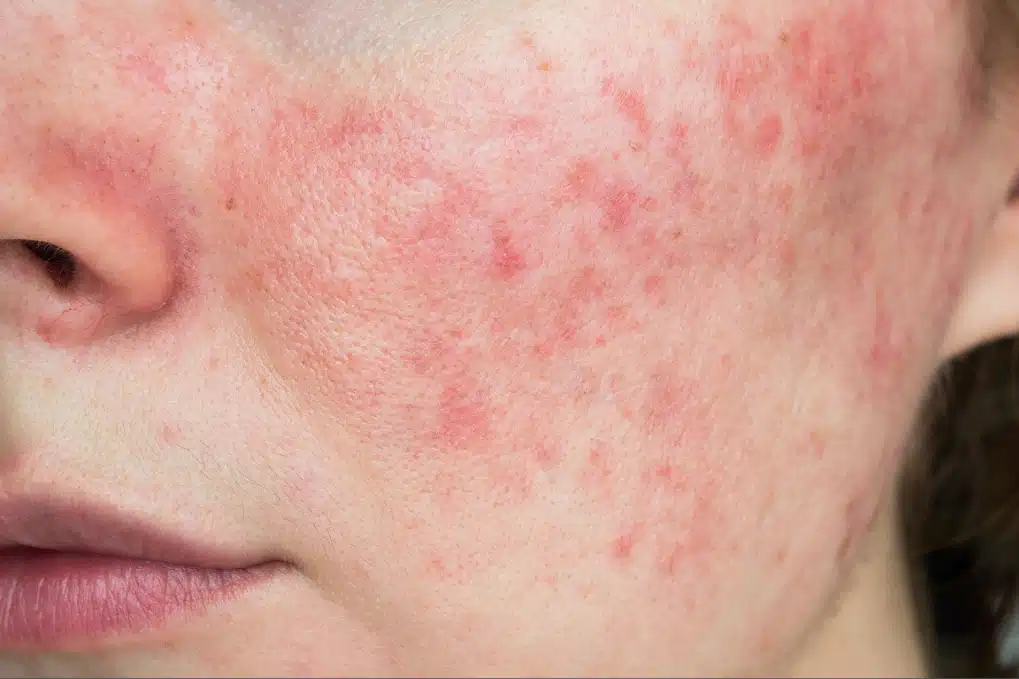
Rosacea can create facial redness that looks similar to some forms of discoid lupus.
You may notice:
- Redness across the cheeks and nose
- Small visible blood vessels
- Flushing episodes
- Mild swelling
However, rosacea usually does not cause the scaly patches or scarring often linked with discoid lupus.
Fungal skin infections: Why treatment sometimes fails
Fungal Skin Infection can also create round or irritated skin patches. In some cases, they may even resemble discoid lupus lesions.
The difference often appears in how they respond to treatment.
Fungal infections may improve with antifungal medications within a reasonable time. Discoid lupus will not respond in the same way because the cause is entirely different.
Appearance alone rarely gives the full answer. So next, it helps to look at small details that may point in a clearer direction.
Small Clues That Help Separate Discoid Lupus From Other Skin Problems
You might be wondering, what specific signs deserve attention? Well, sometimes the smallest clues tell the biggest story.
What details deserve closer attention?
Ask yourself these questions:
- Does the patch leave scarring?
- Is there hair loss where the skin changes appear?
- Does the skin become lighter or darker after healing?
- Do symptoms stay for weeks or even months?
- Does sunlight make the condition worse?
These details matter because many common skin conditions heal without leaving lasting changes.
For example, eczema flare-ups may improve and return later, while fungal infections often respond to treatment. Discoid lupus can behave differently. Some areas may continue changing slowly over time and leave lasting marks.
Of course, noticing these clues does not mean you can diagnose yourself. Instead, they simply help explain why further evaluation sometimes becomes necessary.
That brings us to the next question: how do doctors determine what is really happening?
How Do Doctors Confirm the Difference?
Guessing based on appearance alone can create delays and frustration. Two conditions may look similar while requiring very different treatment plans.
Looking beyond the surface
Doctors usually use several steps to reach a diagnosis:
Physical examination
Doctors carefully look at the location, shape, and appearance of skin changes.
Medical history review
They may ask questions about symptoms, timing, sunlight sensitivity, and family history.
Skin biopsy
A small skin sample may help identify specific changes linked with discoid lupus.
Blood tests
In some situations, doctors order blood work to look for related immune system findings.
Accurate diagnosis offers real benefits. It can help prevent unnecessary treatments and reduce the frustration of trying products that never address the actual problem.
More importantly, it helps guide the next steps with greater confidence.
Knowing the Difference Can Save Time and Stress
Several skin conditions can resemble discoid lupus. Psoriasis, Eczema, Rosacea, and Fungal Skin Infection can all create symptoms that seem similar at first. However, small differences often matter. Scarring, hair loss, skin color changes, and sensitivity to sunlight may provide useful clues.
Well, here's the thing — skin rarely follows a perfect pattern. Two people with the same condition can even have different experiences. That is why paying attention to ongoing symptoms matters.
Ready to take the next step? Here’s what you can do today. If skin changes continue, become worse, or do not respond to treatment, consider speaking with a healthcare professional. In addition, if you want to learn more about future treatment possibilities, you can also explore opportunities to enroll in lupus clinical research and stay informed about ongoing advances.
The sooner you understand what your skin may be telling you, the sooner you can move toward the right support and care.