


How Thread Mill Reduces Tool Breakage and Downtime
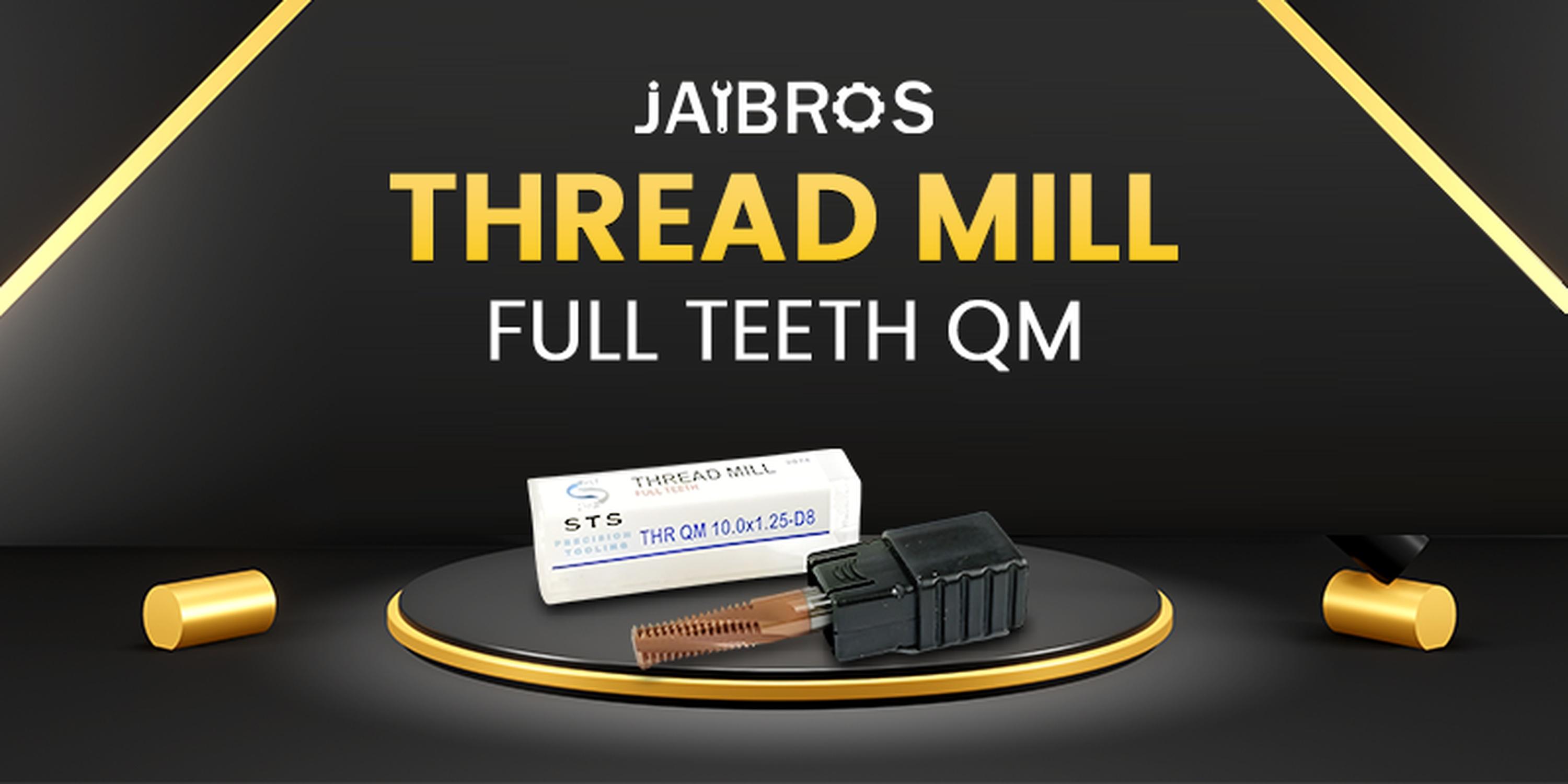
Minimize Tool Failure and Downtime with Thread Mill
In the current environment of manufacturing, it is a well-known fact that efficiency and reliability are the two primary factors that contribute to the overall productivity and profitability of a company. Tool breakage and downtime are two common problems faced by most manufacturing companies, especially in threading operations. It is a common phenomenon in conventional processes like tapping, where tool breakage is a common problem, leading to downtime and increased costs. It is in these situations that the importance of the thread mill is felt in enhancing the overall performance of the machining process.
Thread milling has proved to be a reliable solution in addressing the problems of tool breakage and downtime, especially in CNC machining processes.
Understanding the Problem of Tool Breakage
Tool breakage is a big problem in machining processes. In the event that a tool breaks during a machining process, not only is the workpiece damaged, but the machine is also brought to a halt. Removing a broken tool, especially a tap, is a tedious process.
In conventional threading processes, heavy cutting forces are involved, which put a lot of stress on the tool. However, in the thread milling process, the cutting is done gradually, and the chances of tool breakage are reduced.
How Thread-Milling Works
Thread milling is a method by which a cutting tool moves in a helical path. The main difference between milling and tapping is that tapping cuts a thread at once, but milling cuts a thread in small increments. This ensures a high degree of accuracy and reduces wear on the tool.
A thread mill is a cutting tool used for both internal and external threading. The tool is useful for different sizes of threads since it can cut various sizes with a single tool.
Key Ways Thread-Milling Reduces Tool Breakage
1. Lower Cutting Forces
Excessive cutting forces are one of the primary contributors to tool failure. The milling operation ensures uniform cutting forces. The uniform cutting forces ensure a strong and efficient tool.
2. Gradual Material Removal
While cutting threads with a tap, a single cut is made. This can sometimes cause damage to the tool. The milling operation removes material gradually.
3. Better Chip Evacuation
Chip accumulation is a common problem with cutting tools. The thread-milling operation ensures efficient chip evacuation.
4. Reduced Risk of Tool Jamming
Tool jamming is a common problem in tapping operations. It often results in breakage of the tool. However, in milling, the risk of jamming is minimized because of the path of the cut. This makes the thread mill a safer option.
5. Enhanced Tool Life
As a result of the reduced stress and better cutting conditions in thread-milling, the tools used have a longer life. This helps in minimizing the costs of replacing the tools.
Minimizing Downtime with Thread-Milling
Downtime in manufacturing can cause substantial losses. Machine failures, tool changes, and rework are factors that contribute to lower productivity. However, the thread mill can resolve these issues successfully.
Faster Recovery from Errors
In case of an error in the thread-milling process, the workpiece can often be salvaged. This is a big advantage.
Easy Tool Replacement
Replacing a broken tap is a tedious process. However, the tools used in the thread-milling process are easier to manage, thus saving time.
Compatibility with CNC Systems
Computer numerical control is a common feature in machining processes. Using a tool system is a must in machining operations. In this case, the milling tool is compatible with a CNC tool system.
Advantages Over Conventional Methods
When thread-milling is compared with conventional tapping, the advantages include the following:
-
Risk of breakage is less in thread-milling.
-
Better quality is obtained in the threaded product.
-
More flexibility is provided in the size of the threads.
-
Downtime is reduced in the machines.
-
Better performance is obtained even in hard materials.
Applications in Modern Manufacturing
Thread milling is used in various industries where precision and reliability are of utmost importance. The following are some of the most important milling applications:
-
Aerospace parts
-
Automotive parts
-
Medical devices
-
Heavy machinery parts
-
Manufacturing of tools and dies
With the help of sophisticated tools, manufacturers are able to achieve uniform outcomes in various intricate production processes.
Factors That Improve Thread-Milling Performance
In order to get the maximum benefit from thread-milling, one should:
-
Choose the right thread mill tool
-
Optimize the cutting parameters
-
Ensure the stability of the machine
-
Use appropriate cooling techniques
-
Choose good quality tools from a reliable online shop for cnc tools India
All of the above factors are of critical importance to avoid tool wear.
Thread-Milling Machine Price and ROI
The investment in thread-milling technology varies depending on the capabilities of the machines used and the tools required. Although the price of a milling machine varies, its benefits, including downtime reduction, lower maintenance costs, and increased productivity, make the investment worthwhile.
Manufacturers who adopt milling technology benefit from a higher return on investment, considering the efficiency of the process and the reduced operational risks.
Your Trusted CNC Tooling Partner
Jaibros Tools Pvt. Ltd. is a renowned company in the domain of industrial cutting tools and machining solutions. The company offers a variety of products, which include threading tools, milling cutters, and precise tools designed to meet the needs of modern-day industrial applications. Jaibros Tools is a trusted online shop for CNC tools in India, and the company promises to offer quality solutions to meet the needs of the market.
Conclusion
Tool breakage and downtime are two of the main problems in the manufacturing industry. However, these problems can be effectively minimized with the right approach. One such approach is the thread mill, which is a reliable and efficient solution in minimizing the above problems.
milling with the aid of advanced CNC tools is a better solution in terms of performance, cost savings, and productivity. With the evolution of the industry, it is essential to adopt innovative technologies such as milling in order to keep pace with the industry.
FAQs
1. How does a thread-mill reduce tool breakage?
A thread-mill reduces tool breakage by decreasing cutting forces and gradually removing material, thereby minimizing tool stress.
2. Is thread-milling better than tapping in terms of minimizing downtime?
Yes, thread-milling is better than tapping as it minimizes downtime by decreasing tool failure and making it easy to correct machining mistakes.
3. Is thread-milling effective on hard materials?
Yes, thread-milling is extremely effective on hard materials since it involves a controlled cutting process with minimal heat generated.
4. Which industries benefit most from thread-milling?
Aerospace, automotive, and medical industries benefit most from thread-milling since they require precision.
5. Is thread-milling cost-effective?
Although thread-milling is quite expensive in terms of initial investment, it is cost-effective in the long term as it reduces tool breakage.