Introduction
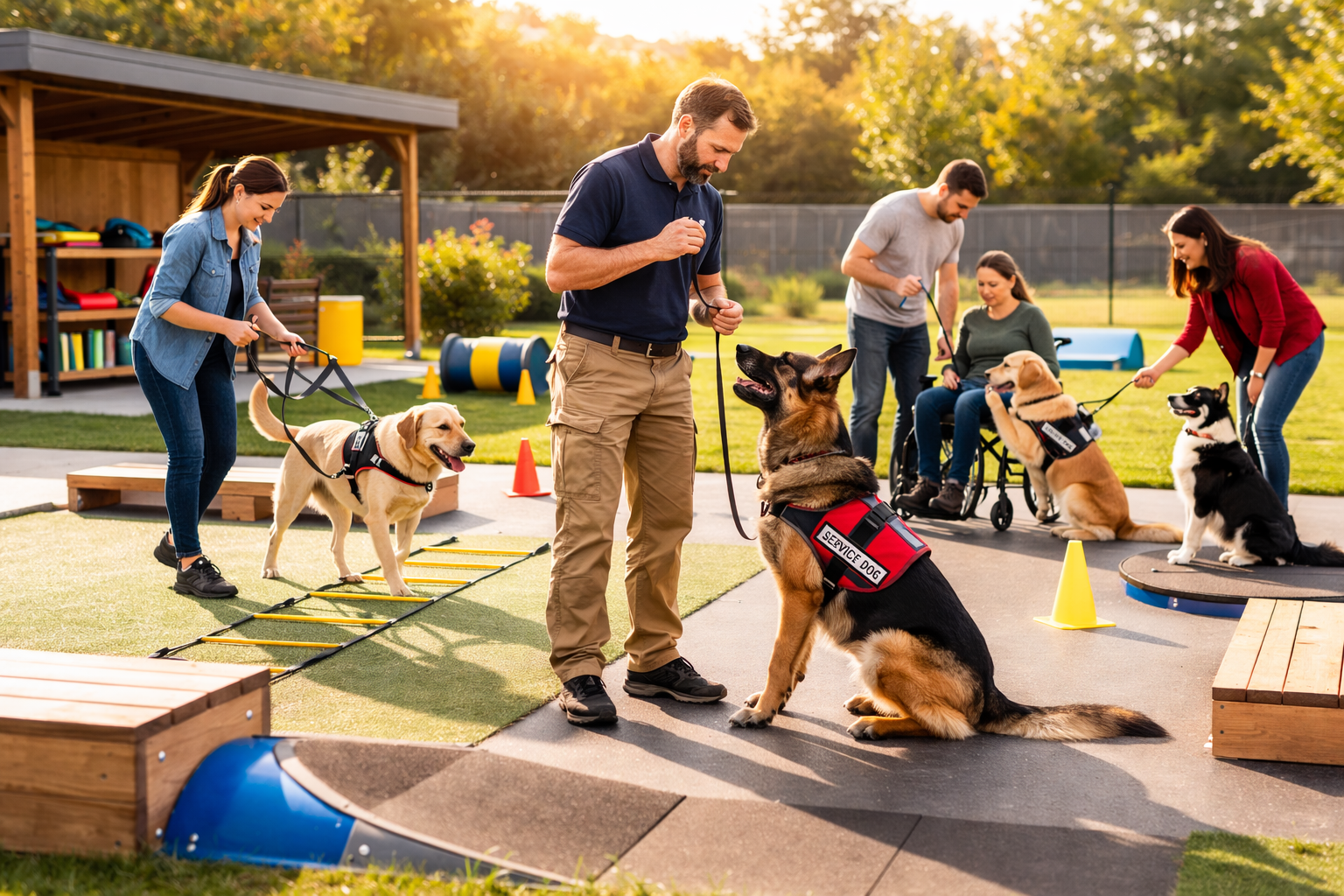
Service dogs help people live safer and more independent lives. Their ability to stay calm, focused, and responsive does not happen by chance. It comes from structured training, patience, and the right guidance. This guide explains how service dog trainers work, how dog training classes build strong foundations, and what steps are involved in preparing a reliable service dog in 2026.
Understanding Service Dog Training
Service dog training goes beyond basic obedience. These dogs must perform specific tasks that support a person with a disability. Training focuses on behavior, discipline, and task based skills that are practiced in real life situations.
Core Areas of Training
Service dog trainers usually focus on:
-
Obedience commands such as sit, stay, heel, and recall
-
Calm behavior in busy public spaces
-
Ignoring distractions like noise and food
-
Task specific actions based on the handler’s needs
-
Strong focus and emotional control
Each stage builds on the previous one. Without a solid base, advanced skills will not hold.
Role of Service Dog Trainers
Service dog trainers guide both the dog and the handler. Their job is not only to teach commands but also to build trust and clear communication.
What Service Dog Trainers Provide
-
Structured training plans
-
Behavior correction when needed
-
Social exposure in different environments
-
Public access preparation
-
Task training tailored to individual needs
Experienced service dog trainers understand how to adjust methods based on a dog’s temperament and learning pace.
Importance of Dog Training Classes
Dog training classes play a key role in early development. Before advanced service tasks begin, dogs benefit from group learning environments.
Benefits of Dog Training Classes
-
Controlled social interaction
-
Improved focus around other dogs
-
Better response to commands
-
Increased confidence
-
Consistent routine and discipline
These classes also help handlers learn proper timing and command delivery. Consistency between class and home practice leads to better results.
Stages of Service Dog Development
Training is usually divided into clear phases.
1. Basic Obedience
This is the foundation. Commands must be followed quickly and calmly. The dog learns structure and routine.
2. Socialization
Dogs are exposed to:
-
Crowded sidewalks
-
Public transport
-
Medical settings
-
Stores and restaurants
Calm behavior in every environment is required.
3. Task Training
After obedience and social control are strong, trainers introduce specific tasks. These may include:
-
Retrieving dropped items
-
Alerting to medical changes
-
Providing balance support
-
Offering pressure therapy
4. Public Access Testing
Before a dog works fully in public, behavior is evaluated. The dog must stay quiet, ignore distractions, and remain focused on the handler.
Difference Between Dog Training Classes and Service Training
| Feature |
Dog Training Classes |
Service Dog Training |
| Main Goal |
Obedience and manners |
Disability support tasks |
| Training Style |
Group sessions |
Personalized sessions |
| Duration |
Short term |
Long term program |
| Environment |
Training facility |
Public real life settings |
| Skill Level |
Basic commands |
Advanced task skills |
Both are important. Dog training classes build the base. Service dog trainers develop specialized ability.
Choosing the Right Training Support in 2026
In 2026, structured and ethical training methods are widely preferred. When selecting service dog trainers, consider:
-
Experience with task based training
-
Clear training programs
-
Positive reinforcement methods
-
Real world public practice
-
Ongoing support after training
Good trainers focus on long term success rather than quick results.
Long Term Benefits of Proper Training
Well trained service dogs offer many advantages:
Training also benefits the dog. Clear guidance builds confidence and stability.
Maintaining Skills Over Time
Training does not stop after completion. Regular practice keeps skills sharp.
Handlers should:
Small daily practice prevents regression and maintains discipline.
Conclusion
Service dog training requires time, structure, and commitment. Service dog trainers provide the expertise needed to shape behavior and teach task based skills. Dog training classes create a strong foundation that supports long term progress. In 2026, the focus remains on consistent practice, clear communication, and real world preparation. With proper training and steady effort, a service dog becomes a dependable partner for many years.
Visit here for more Informational blogs at whatson.plus