


Professional Apartment Balcony Pressure Cleaning Sydney
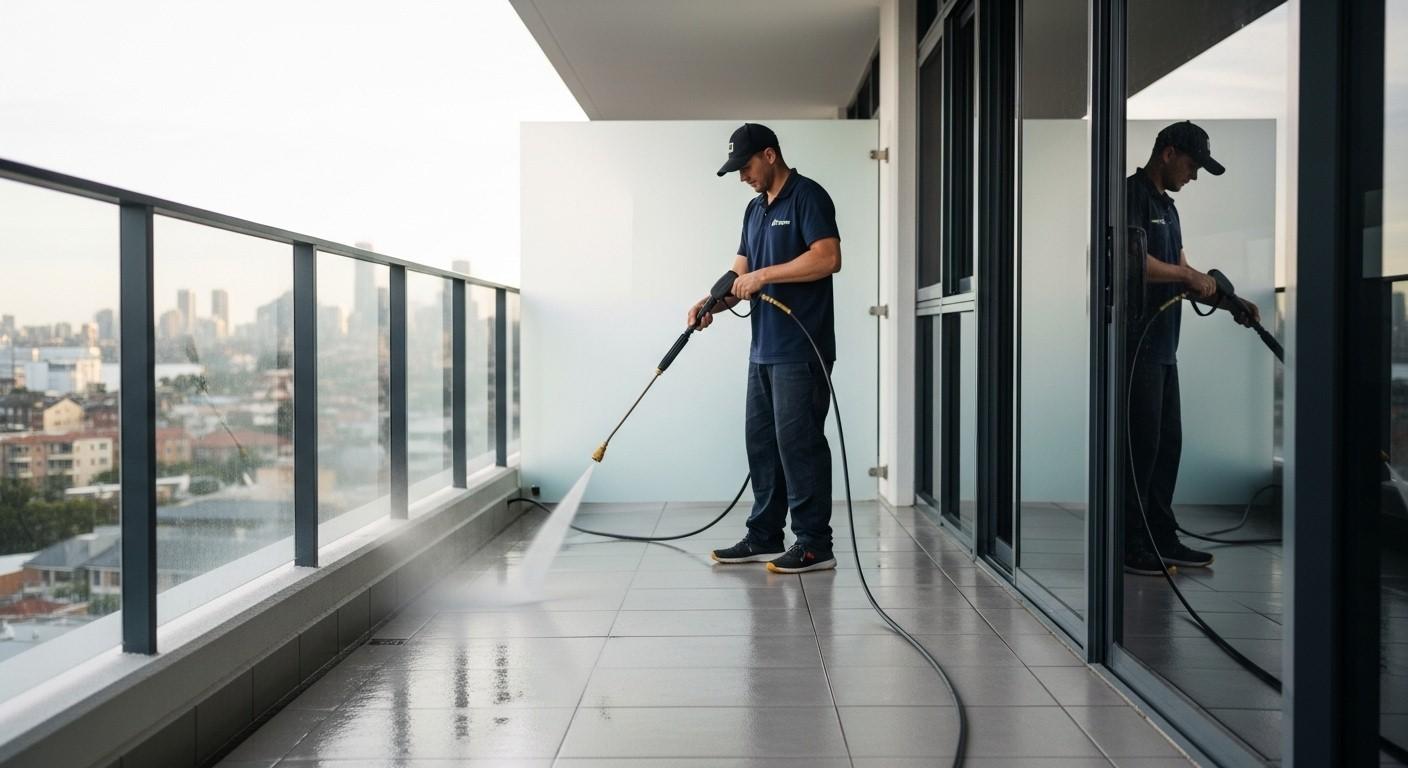
Professional apartment balcony pressure cleaning in Sydney uses controlled high-pressure water, mild surfactants, and targeted pre-treatments to safely remove accumulated dirt, mould, algae, lichen, grease, rust stains, efflorescence, and construction residue from balcony floors, grout lines, balustrades, sliding door tracks, ceilings, and drains. Professionals always begin with a full site inspection, drainage assessment, and test patch to confirm surface tolerance and avoid damage to tiles, grout, or the waterproof membrane beneath. They protect drains, nearby furniture, and glass; apply degreasers or mould treatments with proper dwell time; wash at the correct angle and distance to prevent grout erosion or sealant failure; rinse thoroughly; and perform a final slip-resistance check. Runoff is managed by pre-sweeping loose debris, spot-treating stains to minimise water volume, and directing wastewater away from storm drains where required by local stormwater authority guidelines—ensuring compliance with local council rules and preventing neighbour complaints or environmental issues. Strata, body corporate, or HOA committees typically require prior approval, coordinated access, and confirmation of quiet hours and water-point usage. Pricing varies by balcony size, surface type (tile, concrete, stone, timber), soil load, height/access difficulty, stain complexity, and drain protection needs. Outcomes include a restored, non-slip, hygienic balcony that looks fresh, feels safe, and lasts longer with reduced regrowth when paired with good aftercare. DIY attempts often lead to uneven results, grout damage, membrane risks, uncontrolled overspray, or safety incidents near edges, making professional service the reliable choice for apartment residents, property managers, and landlords.
What counts as an apartment balcony area
An apartment balcony includes the floor (tiles, pavers, painted concrete, or timber/composite decking), grout joints, balustrades (glass, metal, or timber), sliding door tracks and frames, soffits/ceilings, and drainage outlets or scuppers. Professionals address all these elements because dirt, mould, and algae migrate between them. Neglecting tracks leads to sliding issues; ignoring soffits allows mould regrowth from above. Drainage points clogged with debris create pooling and slip hazards or worse, backflow into the waterproof membrane.
When professional balcony pressure cleaning is worth it
Professional service becomes essential when visible mould or algae covers more than small patches, grout looks discoloured, slip hazards appear after rain, rust or planter stains persist, efflorescence (white salty haze) returns, or neighbours complain about runoff or appearance. Landlords preparing for inspections, property managers maintaining common areas, or strata committees addressing complaints also schedule it regularly. High-rise apartments add edge-safety and access challenges that DIY rarely handles well. Regular professional cleaning every 6–12 months prevents costly membrane repairs or slip-related claims.
Balcony surface types and what changes the method
Balconies are mixed-material areas, so the cleaning method changes based on surface strength, sealants, waterproofing membranes, and how easily pressure or chemicals can cause damage.
Tile and grout:
Grout joints can erode if pressure is too high or too close, which may let moisture reach the waterproofing layer. Use a wide fan tip, keep pressure lower on grout lines, work at a safer distance, and rinse well. If an alkaline cleaner is used, follow with a neutralising rinse to reduce residue.
Painted concrete:
Painted slabs can handle moderate pressure, but older coatings may lift or flake. Use pre-treatment to loosen stains, then rinse with controlled pressure so you clean the surface without stripping the coating.
Natural stone:
Many stones react badly to harsh chemicals and aggressive rinsing. Avoid acids and heavy pressure. Use a pH-neutral wash, soft dwell time, gentle agitation if needed, then a low-pressure rinse to protect the finish and reduce etching risk.
Timber or composite decking:
High pressure can splinter timber or fade composites. Use a soft wash approach with a surfactant dwell, light brushing where needed, and a gentle cold-water rinse along the grain.
Glass and metal balustrades:
Use a water-fed pole or low-pressure wash to remove film and dust without scratching. Avoid blasting grit into seals, joints, and hardware.
Common balcony problems and the safest way to treat each
Identify the most common balcony stains and growth, then match each one to a low-risk treatment that protects tiles, grout, coatings, stone, decking, and waterproofing while still delivering a visible clean.
Mould, algae, lichen:
These thrive in shaded, damp balcony environments. Professionals apply a biocidal surfactant, allow dwell time, then rinse. According to EPA guidance, scrub visible mould off hard surfaces with detergent and water, then dry completely to prevent regrowth.
Grease and food spills:
Degreaser with surfactant action lifts oils; dwell, agitate gently, rinse.
Rust marks and planter stains:
Chelating agents or mild acids (tested first) dissolve iron; neutralise to protect surrounding grout and stone.
Efflorescence/white haze:
This is soluble salts migrating from concrete or mortar due to moisture. Cleaning removes surface deposits temporarily but does not fix the moisture source; repeated aggressive cleaning can worsen porosity. Professionals explain limits upfront and recommend sealers or source fixes.
Construction dust and paint overspray:
Dry removal first, then low-pressure rinse or chemical softeners, to avoid embedding particles.
Pressure cleaning vs soft wash vs hot water: when each is used
Pressure cleaning (cold water, 1500–3000 PSI, controlled) suits robust concrete or well-sealed tiles with heavy soil. Soft wash (low pressure + surfactants/bleach alternatives) protects delicate surfaces, painted areas, or timber and kills mould deeply. Hot water boosts degreasing on grease or oil but risks thermal shock on stone or old sealants.
Step-by-Step Professional Balcony Pressure Cleaning Process
-
Site check, drainage check, photos: Document condition, note drains, membrane indicators, nearby plants/furniture, and neighbour proximity. Perform risk assessment for edges and height.
-
Protect surfaces and nearby items: Cover drains with filters or socks, mask adjacent windows/frames, move or cover furniture, use tarps for overspray control.
-
Pre-treatment and dwell time: Apply appropriate surfactant, mouldicide, or degreaser; allow 5–15 minutes of contact.
-
Controlled washing technique: Start from top (soffit/ceiling), work down; maintain 12–18 inch distance on grout and seals; use 15–25° fan nozzle; never blast directly into grout lines or balustrade bases. Avoid high PSI near waterproof membrane transitions.
-
Rinse and neutralise where needed: Thorough low-pressure rinse removes residues; apply neutraliser on acid or alkaline treatments to protect grout pH and prevent ongoing reactions.
-
Runoff capture and disposal approach: Pre-sweep reduces loose debris and water volume dramatically. Spot-treat stains instead of blanket washing. Direct water to landscaped areas or sanitary sewer where allowed; capture and dispose if chemicals used. Best management practices include blocking storm drains and collecting wastewater to prevent pollution.
-
Final inspection and slip check: Walk the dry balcony, check for residue, verify slip resistance (especially wet), photograph results, and advise on drying time.
Runoff, drains, and environmental care
Storm drains carry water directly to waterways untreated; sanitary sewer goes to treatment plants. Professionals reduce runoff volume by dry sweeping first, using minimal water, spot-treating, and employing recovery tools or vacuums when needed. Residents should ask: “Do you pre-sweep? How do you handle chemical residues? Will you protect/block drains? Where does wastewater go?” These steps meet local stormwater authority expectations and prevent fines or neighbour disputes.
Safety and risk controls
Slip hazards arise from wet surfaces or residue; professionals use anti-slip additives if requested and verify post-clean. Electrical risks require GFCI protection and no overhead lines. Trip hazards from hoses or tools are managed with signage and barriers. Working near balcony edges in high-rise settings follows workplace safety obligations and height-work protocols (harnesses, exclusion zones). Noise considerations mean scheduling within strata quiet hours. High-pressure water jets can cause serious injection injuries, eye damage, or lacerations if PPE is inadequate or the technique is poor.
Conclusion
A well-executed professional apartment balcony pressure cleaning restores safety, appearance, and usability while protecting your investment and meeting compliance needs. Residents, strata committees, property managers, and landlords benefit from reduced slip risks, fewer complaints, and longer-lasting surfaces. For tailored service that follows the detailed process outlined, request a quote with photos and the checklist above.
FAQs
How much does balcony cleaning cost in Sydney?
Price depends on size, access, surface, and stains. Use the fast-quote checklist above and request site photos for an accurate estimate. No fixed numbers apply universally.
Can you pressure wash a balcony safely?
Yes, when controlled: test patch, correct distance/angle, protect grout and membrane, manage runoff. Uncontrolled pressure risks damage and injury.
Will pressure cleaning damage balcony tiles or grout?
Tile grout damage risk is high if pressure is applied too close or at 90°. Professionals maintain distance, use fan nozzles, and avoid direct grout blasting.
How often should apartment balconies be cleaned professionally?
Every 6–12 months, or sooner with heavy mould, coastal salt, or high use. Prevention maintenance extends intervals.
What is the best way to clean balcony mould?
Apply biocidal surfactant, allow dwell, rinse thoroughly, dry completely. Fix moisture sources. See EPA guidelines for safe mould cleanup on hard surfaces.
Do I need strata or body corporate approval for balcony cleaning?
Yes in most apartment buildings. Use the checklist and email template above to coordinate.
How to clean balcony without damaging the waterproof membrane?
Avoid high pressure near transitions, protect drains, control water volume, never blast seals. Professionals inspect and adjust technique.
Is soft washing better than pressure washing for balconies?
Soft wash excels on mould, delicate surfaces, or painted areas. Pressure suits heavy soil on robust sealed tiles. Choose based on the decision guide.
What happens to the runoff water from pressure cleaning?
Professionals pre-sweep, minimise volume, direct to landscaped areas or sanitary sewer when allowed, and contain chemical wastewater. Follow stormwater BMPs to avoid pollution.
Can balcony glass and railings be cleaned at the same time?
Yes. Professionals clean them together using water-fed poles or low-pressure methods to avoid scratches and overspray.
 Dutch
Dutch
 English
 Arabic
 French
 Spanish
 Portuguese
 Deutsch
 Turkish
 Italiano
 Russian
 Romaian
 Portuguese (Brazil)
 Greek
Greek