


Bulking Calories: Fuel Muscle Gains, Not Fat
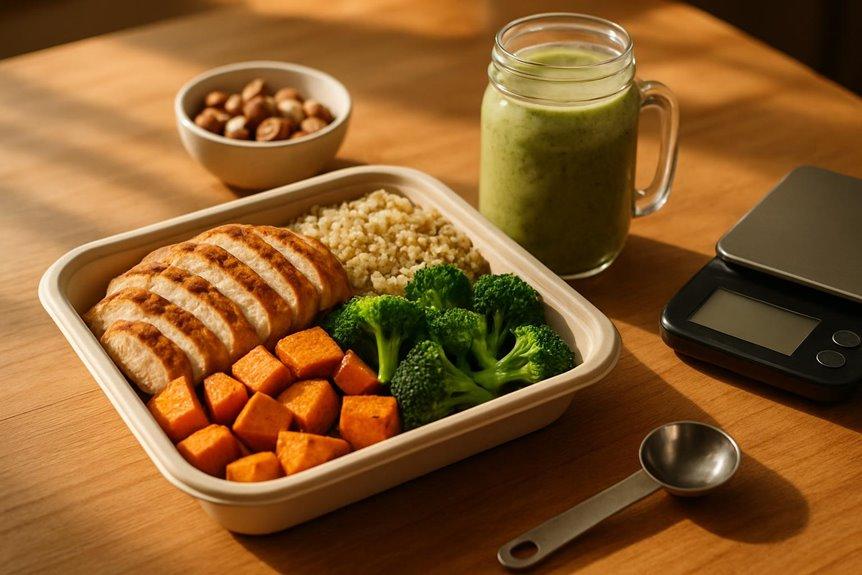
You’ll build muscle faster with a controlled 300–500 kcal daily surplus, enough protein (1.6–2.2 g/kg), and progressive strength training. Prioritize carbs around workouts, eat 20–40 g protein after sessions, and keep fats at 20–35% of calories. Track weight, strength, and photos weekly, aiming to gain ~0.25–0.5% bodyweight per week; adjust calories by 100–200 kcal if progress or fat gain drift. Keep going for practical meal examples and tweaks.
How to Calculate Your Bulking Calorie Target (Step-by-Step)
Start by estimating your current daily calorie needs (maintenance) using your sex, age, height, weight, and activity level—then add a modest surplus of about 300–500 kcal/day to support muscle growth while limiting fat gain.
Next, pick a surplus within that range based on how quickly you want gains and how much fat you’ll tolerate.
Track weight and adjust weekly: gain about 0.25–0.5% body weight per week signals a reasonable pace.
Use a calorie tracker, log meals accurately, and prioritize consistent resistance training.
Tweak calories slowly if progress stalls or fat accumulation increases beyond your comfort.
Remember to aim for a protein target of 1.6–2.2 g/kg body weight to support muscle protein synthesis and recovery, and to help preserve lean mass during the bulk protein target.
Set Your Macronutrient Targets for Muscle, Not Fat
Now that you’ve set a sensible calorie surplus and a tracking plan, dial in the macronutrients to make those extra calories build muscle instead of fat. Aim for about 1.6 g protein per kg body weight to support repair and growth, spreading intake across meals so you’re fueled and flexible. Prioritize carbs around training for performance and glycogen, choosing minimally processed sources that keep you energized without feeling restricted. Keep fats in the 20–35% range for hormones and satiety, favoring unsaturated sources. Adjust targets based on progress, training intensity, and how you want to live your life. Maintain a moderate surplus and avoid an excessive calorie intake to limit unnecessary fat gain.
Pick Calorie and Food Examples for a 300–500 Kcal Surplus
If you add about 300–500 calories a day to your maintenance intake, you’ll create a steady surplus that supports muscle gain while limiting excess fat — here are concrete calorie and food examples to help you hit that target without guesswork.
Aim for simple swaps: add a 1/2 cup oats + 1 tbsp peanut butter (~300 kcal), or a sandwich with 3 oz turkey + whole grain bread + avocado (~450 kcal).
Snack: Greek yogurt with berries and honey (~300 kcal).
Add 1 scoop whey + banana (~250 kcal) plus a handful of nuts (~200 kcal) to reach your preferred surplus.
Pair these calorie choices with a consistent routine of strength training and adequate protein to translate the surplus into lean muscle rather than excess fat.
Training, Timing, and Habits That Turn Calories Into Muscle
While calories give your body the raw material for growth, resistance training, recovery, and consistent habits determine whether that energy builds muscle or stores as fat; prioritize progressive overload in the gym, train major muscle groups 2–3 times per week, and pair workouts with adequate protein and sleep so your body can repair and adapt.
Embrace compound lifts, track volume, and push intensity while avoiding ego-driven loads. Time protein across the day and include a 20–40 g serving after training.
Rest days, consistent sleep, and simple routines protect gains and freedom: train hard, recover well, and let steady habits do the work.
Track Progress and Adjust Calories to Avoid Excess Fat
You’ve laid the foundation with consistent training, recovery, and protein timing—now you need a simple system to monitor results and tweak calories so gains stay mostly muscle.
Track weight, strength, and how your clothes fit weekly; take monthly photos and one consistent body measurement.
Aim for 0.5–1% bodyweight gain per week for steady muscle with minimal fat. If weight rises faster or body fat increases, cut 100–200 kcal/day or add cardio; if progress stalls after 3–4 weeks, add 100–200 kcal.
Log food, adjust deliberately, and keep decisions based on trends, not daily noise.
Conclusion
You’ll add muscle, not unnecessary fat, when you use calories as tools, not excuses. Keep a modest 300–500 kcal surplus, hit protein targets, prioritize whole foods and heavy lifts — precise, patient work. Don’t binge and blame the program; track weight and strength, tweak intake when fat creeps up. Small, consistent gains now beat flashy, sloppy results later. Build slowly, measure honestly, and let every extra calorie earn its place in lean mass.

 English
 Arabic
 French
 Spanish
 Portuguese
 Turkish
 Dutch
Dutch
 Italiano
 Russian
 Romaian
 Portuguese (Brazil)
 Greek
Greek