


Leaping Through Lines: Enjoying the Perfect Geometry Jump in Geometry Dash
Introduction
There’s something oddly satisfying about a well-timed jump in a geometry-based rhythm game: one clean tap, a sharp arc, and a smooth landing that feels like it was “meant” to happen. That’s the core thrill behind Geometry Dash—a game where simple shapes, tight timing, and music-driven motion come together into a fast, focused experience. Whether you’re new to it or returning after a break, the fun often comes from learning how to feel the jump: reading the space ahead, syncing with the beat, and gradually turning chaos into flow.
This article walks through how to play and experience that “interesting geometry jump” feeling using Geometry Dash as the main example—covering the basics, what makes the gameplay click, and practical tips to keep it enjoyable rather than frustrating.
Gameplay: What Makes the Jump So Engaging
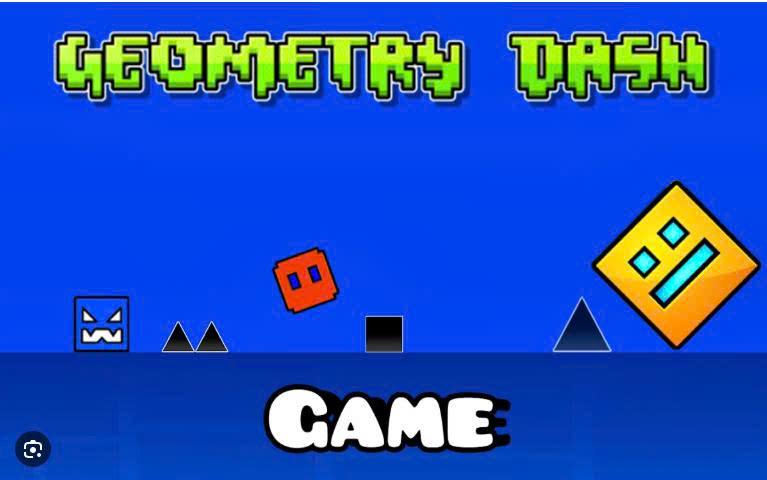
At a glance, Geometry Dash looks simple: you control a square (and later, other forms) moving automatically through obstacle-filled levels. You don’t steer left or right. Most of the time, you just jump—one input that changes everything.
1) One-button control, many outcomes
The interesting part is how many types of movement grow out of the same basic action. A tap might be a short hop, while a press-and-hold can produce a longer arc in certain modes. As you progress, you’ll encounter portals that change the way your input behaves. Even if you’re still “just jumping,” the timing and feel are constantly shifting.
2) Levels are built around rhythm and anticipation
The best levels don’t only test reaction speed—they train your brain to anticipate patterns. Obstacles arrive in sequences: spikes, platforms, gaps, and slopes arranged like punctuation marks in a sentence. After a few attempts, you start recognizing the “grammar” of a level, and your jumps become less like emergency decisions and more like planned steps.
3) Music is more than background
A big part of the Geometry Dash experience is how motion and sound line up. Beats and accents often match hazards or transitions, subtly guiding your timing. When you’re locked in, it feels less like you’re calculating distances and more like you’re playing an instrument with one key. That’s where the “geometry jump” becomes interesting—your input becomes part of a larger rhythm.
4) Learning through repetition (without it feeling pointless)
You will crash. A lot. But each crash is information: you learn where the danger sits, what the game expects, and how much time you actually have. Over time, the level that felt impossible starts to feel readable. That shift—from noise to clarity—is one of the most rewarding parts of the genre.
Tips: How to Get Better (and Have More Fun)
Getting good at Geometry Dash isn’t just about faster reflexes. It’s about building comfort with patterns, timing, and your own habits. These tips focus on making the learning process smoother and more enjoyable.
1) Treat early attempts as scouting
On your first few runs, don’t aim for perfection. Aim to see more. Let yourself fail while noticing what’s coming next—where spikes cluster, where platforms narrow, where the level speeds up. Once you know the layout, your jumps become intentional instead of panicked.
2) Watch your jump “height,” not just your timing
Many mistakes happen because you jump too early and land on the wrong part of a platform, or jump too late and clip a spike. Try thinking in terms of arcs: “Where will I land?” not just “When do I tap?” If you keep dying at the same spot, experiment with slightly earlier or shorter inputs to change where you touch down.
3) Use the music as a metronome
If a section feels overwhelming, listen for a steady element—kick drum, snare, hi-hat, or a repeating melody. Then try syncing your taps to that. Even when the visuals get busy, audio can keep you grounded. Some players improve dramatically once they stop reacting purely to what they see and start trusting what they hear.
4) Break hard sections into mini-goals
Instead of thinking “I need to beat the whole level,” focus on reaching the next landmark: the first portal, a tricky triple spike, a fast wave segment. These mini-goals make progress feel real, and they help your brain store the level in chunks. When you finally connect the chunks, the run feels surprisingly natural.
5) Stay relaxed—tension causes mis-taps
It’s easy to tense up when you’re close to a new record. The problem is that tense hands tap harder, earlier, or multiple times without meaning to. If you notice yourself “button-mashing,” pause for a minute. One calm attempt is often worth ten rushed ones.
6) Learn the common obstacle patterns
A lot of Geometry Dash difficulty comes from variations on a few classic ideas:
- Single spikes that punish late jumps
- Triple spikes that require clean, consistent timing
- Fake-safe platforms that lure you into jumping too soon
- Speed changes that shift your rhythm abruptly
Once you can recognize these patterns, you spend less effort “figuring out what’s happening” and more effort executing smoothly.
7) Choose levels that match your mood
If you’re tired, pick something you can flow through rather than something that demands razor-focus. If you’re energized, try a harder level and enjoy the challenge. Geometry Dash is at its best when it feels like a rhythm ride—not a chore—so it helps to play what fits your current attention span.
Conclusion
An “interesting geometry jump” isn’t just about clearing a spike—it’s about the moment everything aligns: the beat, the spacing, the timing, and your own confidence. Geometry Dash captures that feeling through simple controls and clever level design that turns repetition into progress and frustration into a kind of rhythmic learning.
If you approach it with curiosity—scout first, listen to the music, aim for small improvements—you’ll start noticing the real magic: the point where a difficult section stops being scary and starts feeling smooth. And once you’ve experienced that kind of flow, even a single well-timed jump can feel like a small victory worth chasing again.
 Portuguese
 English
 Arabic
 French
 Spanish
 Deutsch
 Turkish
 Dutch
Dutch
 Italiano
 Russian
 Romaian
 Portuguese (Brazil)
 Greek
Greek