Why Moving Scams Are Harder to Hide Today
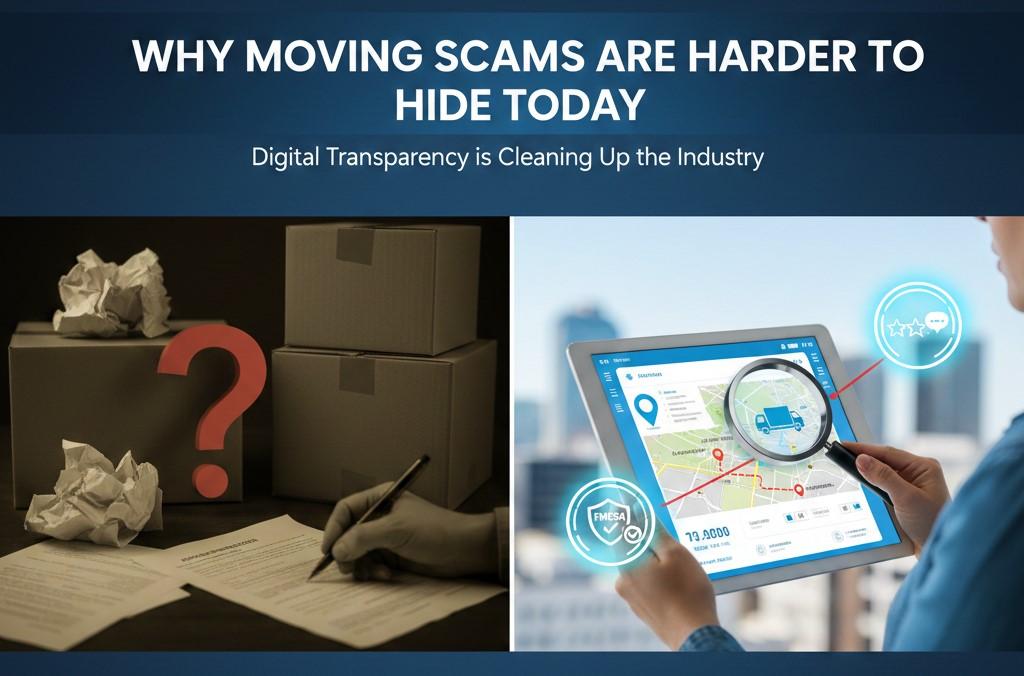
When people talk about moving, they usually imagine packing boxes and starting a new chapter. What they often don’t see is the growing conversation about fraud in the moving industry. The reason that conversation is getting louder is simple: moving scams are becoming harder to hide.
The Industry Isn’t as Opaque as It Used to Be
Digital Transparency Has Changed Everything
A few years ago, if someone had a bad moving experience, the story might stay within a small circle of friends or family. Today, that same experience can be shared with thousands of people in a matter of minutes. That shift alone has made a huge difference.
Recent consumer behavior studies show that over 80% of customers read online reviews before hiring a service company, including movers. At the same time, complaint databases have recorded double-digit percentage increases in service-related reports year over year, which means people are not staying silent anymore. Every review, every complaint, and every shared experience adds another layer of visibility that dishonest operators cannot easily escape.
Platforms dedicated to documenting real experiences, like Moving Scam Stories, are crucial in helping others recognize red flags before committing.
Consumers Are Researching More Than Ever
Awareness Levels Have Significantly Increased
People today are far more cautious than they were even five years ago. Surveys indicate that around 65–70% of people compare at least three moving companies before making a decision. That comparison culture makes it harder for fraudulent movers to blend in.
Customers now routinely check:
-
Licensing details
-
Insurance coverage
-
Online reviews across multiple platforms
-
Complaint histories
This behavior creates a digital trail. When multiple customers report hidden fees, delivery delays, or damaged belongings from the same company, those patterns become public knowledge.
Shared Experiences Reduce Risk
One of the strongest ways to protect yourself is by learning from others. That’s why educational resources, reviews, and case studies are so valuable. For example, expert guides like How To Avoid Moving Scams provide clear steps on verifying licenses, comparing quotes, and asking the right questions before signing a contract.
This kind of preparation is not just precautionary—it is essential in an industry where even minor oversights can lead to big problems.
Technology Is Working Against Fraudsters
Documentation Is Now in the Customer’s Hands
Another reason scams are harder to hide is the rise of technology. A decade ago, customers relied mostly on paperwork and verbal agreements. Today, nearly everyone carries a smartphone capable of recording evidence instantly.
Modern moving customers often use:
-
Photos and videos of items before loading
-
Time-stamped communication records
-
GPS tracking for shipment updates
-
Digital copies of contracts and estimates
When disputes happen, this documentation becomes powerful. If a mover claims additional charges that were not discussed, customers have written proof showing otherwise.
Reports from transportation oversight agencies show that documented disputes are resolved more quickly today compared to past years, largely because customers can provide clear digital proof.
Why This Matters
-
Reduces chances of being overcharged
-
Protects valuable or fragile items
-
Makes legal or insurance claims easier to process
-
Limits fraudulent behavior by companies
Red Flags Are Better Understood
Common Warning Signs
Not all low quotes are a scam, but some behaviors are universally suspicious:
-
Extremely low quotes that later increase
-
Lack of written estimates
-
Requests for large upfront deposits
-
No clear company address or branding
-
Frequent company name changes
Being aware of these signs is the first step toward preventing fraud.
Preparing Before Your Move
Key steps include:
-
Researching multiple companies and comparing services
-
Verifying licenses and insurance
-
Requesting detailed line-item estimates
-
Asking for references from past customers
When customers follow these steps, the risk of falling victim to a scam drops dramatically.
Public Accountability Is the New Normal
Sharing Experiences Helps Everyone
Consumer culture has shifted. People are more willing to speak up about negative experiences, creating a self-policing environment. Studies show that nearly 90% of consumers say reviews influence their hiring decisions, and this encourages more people to share their experiences.
The cycle works like this:
-
A customer reports a bad experience
-
Others read and become cautious
-
More people recognize the same issues
-
The company’s reputation becomes publicly defined
Scammers who once relied on silence now operate under constant public scrutiny.
Moving Forward With Confidence
Moving will always involve logistics and some stress. However, the environment around moving services is more transparent than it has ever been. Digital documentation, widespread consumer research, public reviews, and stronger oversight have all made it harder for dishonest movers to hide.
Awareness, preparation, and shared knowledge have shifted the balance of power toward consumers. With careful planning and research, moving can be smooth, secure, and stress-free and that’s why moving scams are harder to hide today.
 Spanish
 English
 Arabic
 French
 Portuguese
 Deutsch
 Turkish
 Dutch
Dutch
 Italiano
 Russian
 Romaian
 Portuguese (Brazil)
 Greek
Greek