


Why Creator Earnings Become Complex and How White Label NFT Marketplaces Simplify Royalties
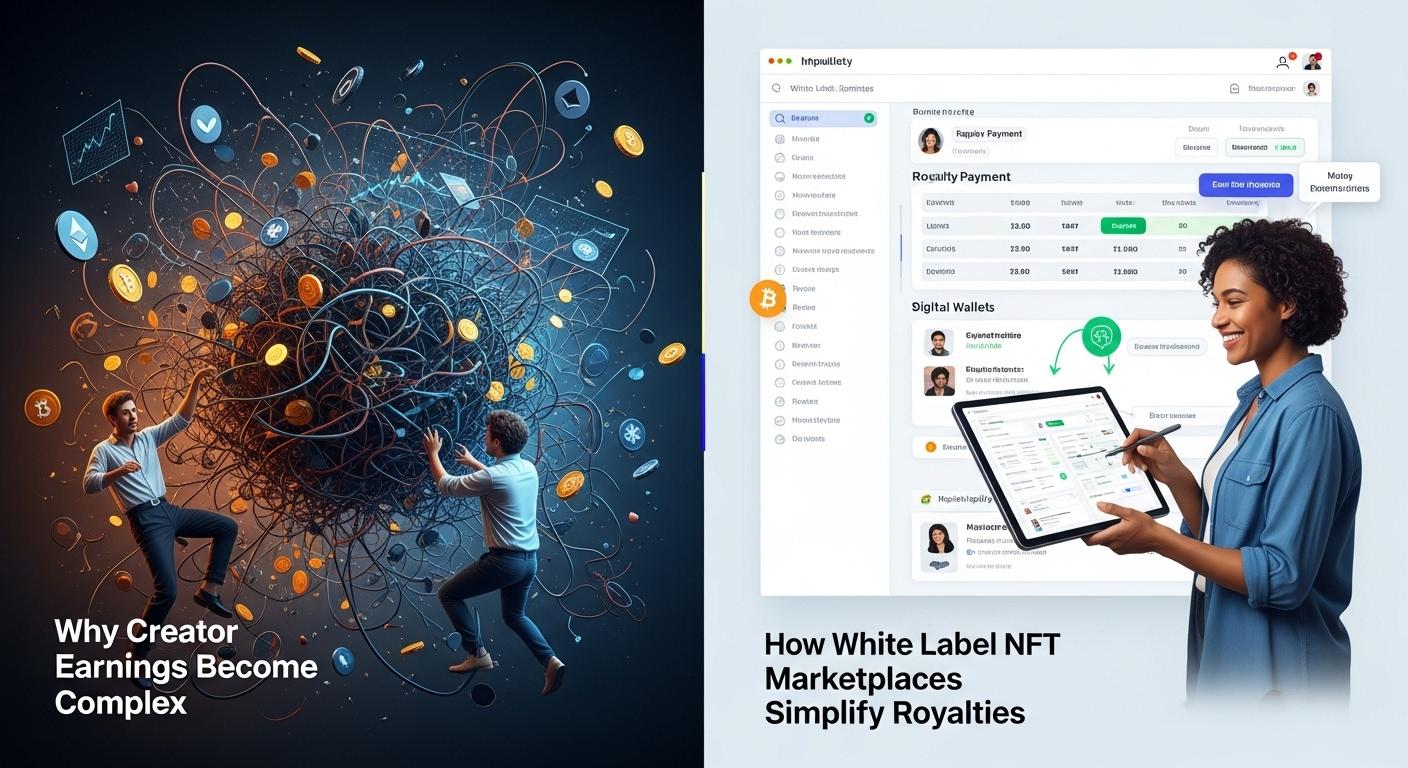
The Growing Complexity of Creator Earnings in NFTs
NFTs have transformed how creators monetize digital content by enabling direct ownership, programmable royalties, and global reach. Artists, musicians, game designers, and brands now rely on NFTs not just for one-time sales, but for long-term revenue streams tied to secondary market activity. However, as NFT ecosystems mature, creator earnings have become increasingly complex to manage.
Royalty logic, secondary sales tracking, multi-chain transactions, and marketplace interoperability introduce layers of technical and operational difficulty. Many creators struggle to ensure they are paid accurately and consistently across platforms, especially as NFT trading expands globally.
This complexity has made royalty management one of the most challenging aspects of NFT platform operations.
Key challenges driving this complexity include:
-
Multiple resale environments and marketplaces
-
Inconsistent royalty enforcement standards
-
Smart contract limitations
-
Cross-chain NFT trading
-
Manual revenue tracking and reconciliation
White label NFT marketplaces address these challenges by embedding structured royalty mechanisms directly into the platform architecture, simplifying earnings distribution while maintaining transparency and trust.
Why NFT Royalties Are Difficult to Manage at Scale
While the concept of NFT royalties is simple in theory, execution becomes difficult as platforms grow. Royalties must be calculated, enforced, and distributed automatically across a wide range of scenarios.
Major factors contributing to royalty complexity include:
-
Secondary market fragmentation
NFTs are often traded across multiple marketplaces. Each platform may enforce royalties differently or not at all, leading to inconsistent creator earnings. -
Smart contract rigidity
Poorly designed contracts make it difficult to update royalty percentages, add collaborators, or support future monetization models. -
Multiple stakeholders
Creator earnings are frequently split between artists, studios, licensors, and collaborators, increasing calculation and distribution complexity. -
Cross-border transactions
Global trading introduces currency conversion, fee structures, and compliance considerations. -
Manual tracking errors
Without automated systems, creators often rely on external tools or spreadsheets to track earnings, which increases errors and delays.
As NFT ecosystems expand, these issues compound, making royalty management unsustainable without platform-level automation.
How White Label NFT Marketplaces Embed Royalty Logic by Design
White label NFT marketplaces simplify creator earnings by integrating royalty management directly into the core platform, rather than treating it as an external or optional feature.
Key structural advantages include:
-
Built-in royalty configuration
Creators define royalty percentages during minting, which are automatically enforced on every resale. -
Smart contract–driven enforcement
Royalties are embedded at the contract level, ensuring payouts occur automatically without manual intervention. -
Support for multiple royalty recipients
Platforms can allocate earnings across creators, collaborators, and partners using predefined distribution rules. -
Standardized royalty models
White label solutions use tested royalty standards, reducing inconsistencies across transactions. -
Upgradeable contract frameworks
Platforms can adapt royalty logic over time without disrupting existing NFTs.
By designing royalties into the marketplace architecture, white label solutions eliminate many of the operational risks associated with creator earnings.
Simplifying Secondary Sale Royalties Across Marketplaces
Secondary sales are where royalty complexity becomes most visible. NFTs often change hands multiple times, and each resale must trigger accurate payouts to creators.
White label NFT marketplaces address this by:
-
Tracking ownership transfers internally
-
Enforcing resale logic within platform-controlled environments
-
Recording royalty transactions transparently on-chain
-
Maintaining historical earning records for creators
-
Reducing dependency on external marketplaces
This approach ensures creators continue to earn from their work long after the initial sale, without relying on third-party enforcement mechanisms.
Transparency and Trust in Creator Earnings
Trust is essential in NFT ecosystems. Creators need confidence that royalties are calculated correctly, while collectors expect clear pricing and fee transparency.
White label NFT marketplaces improve trust through:
-
Real-time royalty dashboards for creators
-
Transparent breakdowns of fees and payouts
-
Immutable transaction records
-
Automated payout confirmations
-
Clear smart contract visibility
This transparency benefits all participants by reducing disputes and increasing platform credibility.
Supporting Diverse Creator Monetization Models
Creators today use NFTs for more than simple artwork sales. Monetization models include:
-
Limited-edition drops
-
Membership and access NFTs
-
Gaming assets with resale value
-
Licensing-based NFTs
-
Collaborative collections
White label NFT marketplaces support these models by allowing flexible royalty structures, dynamic pricing rules, and advanced payout logic—without requiring custom development for each use case.
Reducing Operational Burden for NFT Platforms
Managing royalties manually increases administrative overhead and introduces risk. White label marketplaces reduce this burden by:
-
Automating earnings calculations
-
Eliminating manual reconciliation
-
Reducing accounting complexity
-
Streamlining creator onboarding
-
Supporting scalable growth
As platforms grow, this automation becomes essential for sustainable operations.
Conclusion: Making Creator Earnings Predictable and Scalable
Creator earnings are central to the success of the NFT economy, but royalty management becomes increasingly complex as platforms scale. Fragmented marketplaces, inconsistent enforcement, and manual tracking create friction for creators and platforms alike.
White label NFT marketplaces simplify this complexity by embedding royalty logic into the platform foundation. Through automated smart contracts, transparent tracking, and flexible payout structures, they make creator earnings predictable, scalable, and trustworthy.
By reducing operational friction and ensuring fair compensation, white label NFT marketplaces help create sustainable ecosystems where creators, platforms, and collectors can all thrive.

 English
 Arabic
 French
 Spanish
 Portuguese
 Turkish
 Dutch
Dutch
 Italiano
 Russian
 Romaian
 Portuguese (Brazil)
 Greek
Greek