


The Data Link Failure in Smart Home Ecosystems
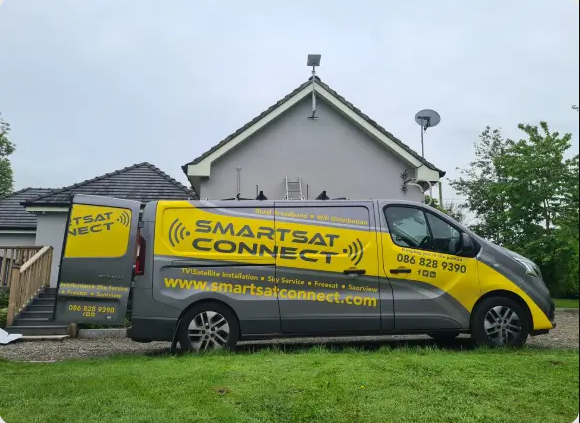
The adoption of Internet of Things (IoT) devices in Irish homes is accelerating, with recent statistics showing the average household now contains over 10 connected devices. From smart thermostats like Nest or Hive to monitored security alarms and remote-controlled gates, our homes are becoming increasingly intelligent. However, there is a critical vulnerability in this ecosystem that many tech-savvy homeowners overlook: the reliance on a single point of failure—the Wi-Fi router. Smartsat connect has analysed the reliability protocols of these systems and identified a crucial gap that can only be filled by cellular redundancy.
Many "smart" devices, particularly security alarms and heating controls, are designed with a fallback mechanism. If the home Wi-Fi goes down—due to a router crash, a cut fibre cable, or a power outage—they attempt to switch to a GSM (mobile data) backup to maintain connectivity. This is essential for sending alerts to your phone or communicating with a monitoring centre.
However, data indicates that modern energy-efficient homes often suffer from significant cellular signal attenuation. The decibel loss through modern insulation materials is profound. A standard cavity wall might cause a loss of 10-15dB, but foil-backed PIR insulation can cause attenuation of over 30dB. Since the decibel scale is logarithmic, a 30dB loss means that 99.9% of the signal power is blocked. If your mobile phone has only one bar of signal in the hallway, your smart alarm hub likely has even less capability to punch through that interference. When the Wi-Fi fails, the device attempts to connect to the mobile network, fails due to the weak signal, and goes offline completely. You are left with a "smart" home that is effectively dumb and disconnected.
A mobile phone signal booster is the infrastructure upgrade that closes this data gap. By amplifying the ambient 4G and 5G signals from outside and rebroadcasting them inside, you create a robust, always-on data layer for your IoT devices.
Technical testing shows that devices with a strong cellular backup connection re-establish contact with cloud servers 90% faster after a power outage than those searching for a weak signal. This latency reduction is critical for security systems where seconds matter. Furthermore, for devices like smart fridges or leak detectors located in kitchens or utility rooms—areas often prone to poor signal due to appliances and piping—a booster ensures consistent uptime.
Investing in smart home tech without ensuring cellular backup is an incomplete strategy. The data suggests that for a truly resilient smart home, you need to guarantee that the backup channel is just as strong as the primary one.
Conclusion Smart homes rely on connectivity redundancy to function reliably. Without a strong mobile signal, the cellular backup feature of your expensive IoT devices is useless. A signal booster provides the necessary infrastructure to keep your smart home online, secure, and functioning 24/7.
Call to Action Protect your smart home investment with a signal booster from Smartsat connect. https://www.smartsatconnect.ie/

 English
 Arabic
 French
 Spanish
 Portuguese
 Deutsch
 Turkish
 Dutch
Dutch
 Italiano
 Russian
 Romaian
 Portuguese (Brazil)