Why RWA Tokenization Will Define the Next Decade of Global Finance
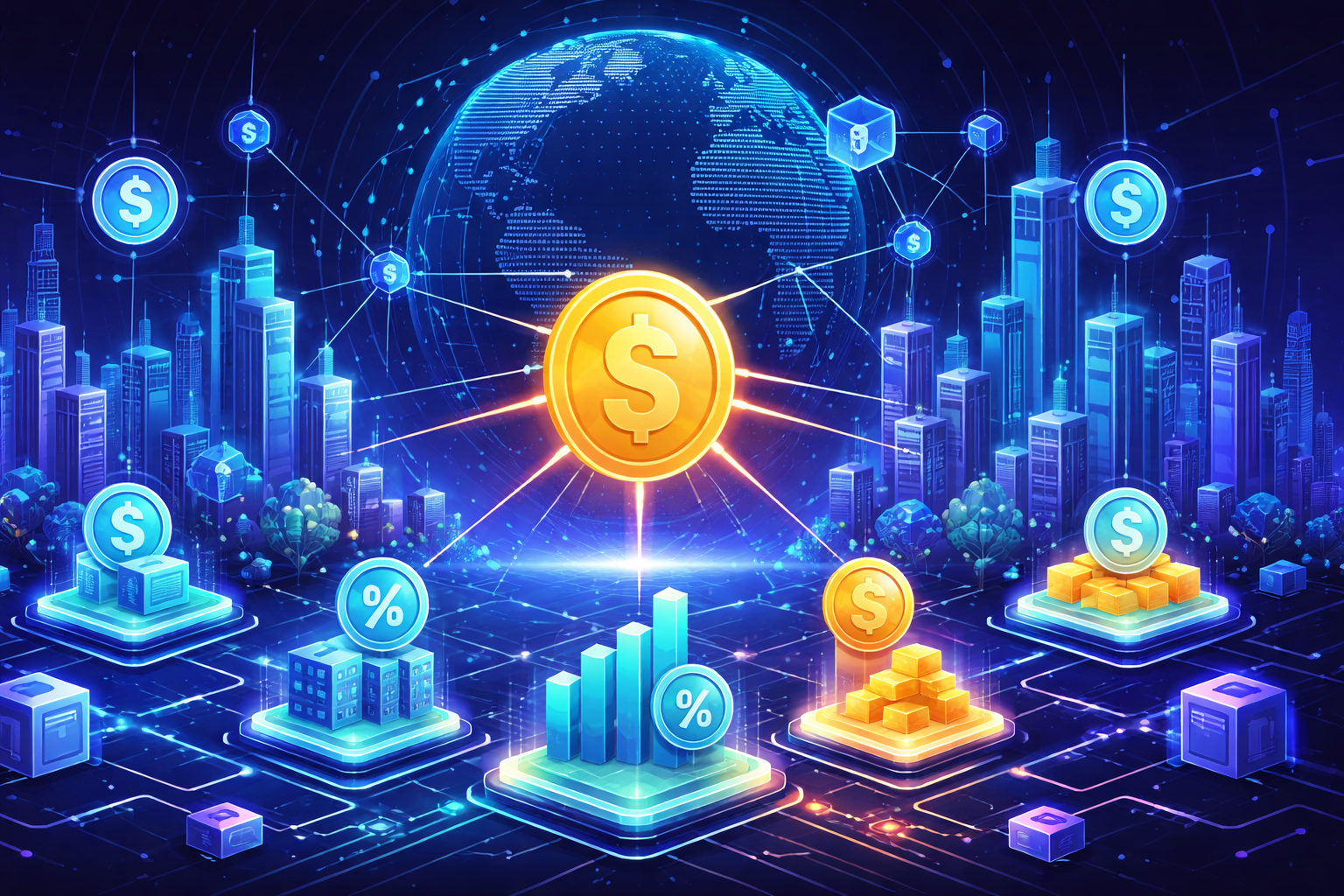
Global finance is entering a structural transition that goes far beyond incremental digital upgrades. At the center of this transformation lies Real World Asset tokenization, commonly known as RWA tokenization. What began as an experimental concept within blockchain ecosystems is rapidly evolving into foundational financial infrastructure. Over the next decade, RWA tokenization will redefine how assets are issued, owned, transferred, financed, and regulated across global markets.
Traditional financial systems were built for a slower, geographically bound economy. Settlement cycles take days, asset ownership is fragmented across intermediaries, and access to high value investments remains restricted to institutional or high net worth participants. RWA tokenization directly challenges these limitations by converting physical and traditional financial assets into programmable digital tokens that exist on distributed ledger networks.
This shift is not theoretical. It is being driven by institutional demand, regulatory progress, and a growing recognition that legacy financial rails are no longer sufficient for a global, always on digital economy. Over the next decade, RWA tokenization will become a defining force shaping capital markets, banking, asset management, and cross border finance.
Understanding RWA Tokenization in a Financial Context
RWA tokenization refers to the process of representing ownership or economic rights of real world assets as blockchain based tokens. These assets can include real estate, commodities, bonds, invoices, private equity, carbon credits, intellectual property, and infrastructure assets.
Unlike purely digital assets, RWAs have intrinsic value anchored in the physical or legal world. Tokenization does not replace the asset itself but creates a digital representation that mirrors ownership, cash flows, and transfer rights in a programmable and verifiable manner.
At its core, RWA tokenization introduces three fundamental changes to finance.
First, it digitizes ownership in a standardized format that can move seamlessly across systems.
Second, it embeds compliance, governance, and transaction logic directly into the asset itself.
Third, it enables fractionalization, allowing assets previously considered illiquid or inaccessible to be divided into smaller investable units.
These changes collectively form the foundation for a new financial architecture.
The Structural Limitations of Traditional Finance
To understand why RWA tokenization will define the next decade, it is essential to examine the inefficiencies embedded in traditional financial systems.
Most financial infrastructure today was designed decades ago. Asset issuance relies on paper heavy processes. Settlement involves multiple intermediaries. Reconciliation happens across siloed databases. Cross border transactions introduce additional layers of cost, delay, and risk.
Key limitations include:
-
Long settlement cycles that lock capital and increase counterparty risk
-
High operational costs due to manual processes and intermediaries
-
Limited transparency into asset ownership and transaction history
-
Restricted access to private and alternative assets
-
Fragmented global regulatory compliance mechanisms
These inefficiencies create friction in capital markets and slow economic growth. RWA tokenization addresses these challenges at the infrastructure level rather than through surface level optimizations.
Tokenization as a New Financial Primitive
Over the next decade, tokenized RWAs will function as a new financial primitive similar to how equities, bonds, and derivatives operate today.
A tokenized asset is not just a digital wrapper. It is a programmable financial object that can interact with other systems automatically. Ownership transfers, dividend distributions, collateralization, and compliance checks can occur without manual intervention.
This programmability fundamentally changes how financial products are created and managed.
For example, a tokenized bond can automatically distribute interest payments based on predefined conditions. A tokenized real estate asset can generate rental income distributions in real time. A tokenized commodity can be used as collateral across multiple platforms simultaneously.
This shift enables composable finance where assets are no longer static but actively participate in financial workflows.
Liquidity Transformation Across Asset Classes
One of the most profound impacts of RWA tokenization over the next decade will be liquidity creation.
Many valuable assets today suffer from illiquidity. Real estate transactions can take months. Private equity investments are locked for years. Infrastructure projects require long term capital commitments with limited exit options.
Tokenization introduces liquidity by enabling fractional ownership and secondary market trading.
Key liquidity benefits include:
-
Fractional investment access for smaller investors
-
Continuous trading windows instead of fixed market hours
-
Reduced reliance on centralized exchanges
-
Faster price discovery through transparent markets
As liquidity improves, asset valuations become more accurate, risk premiums decrease, and capital allocation becomes more efficient. This liquidity transformation will attract new classes of investors into traditionally closed markets.
Institutional Adoption Will Accelerate the Shift
The next decade of RWA tokenization will be defined by institutional adoption rather than retail speculation.
Banks, asset managers, insurers, and sovereign entities are increasingly exploring tokenization to modernize their operations. For institutions, the appeal lies in efficiency, compliance automation, and balance sheet optimization.
Tokenized assets enable real time settlement, reduced counterparty risk, and improved capital efficiency. They also allow institutions to offer innovative products without rebuilding their entire infrastructure.
Institutional use cases driving adoption include:
-
Tokenized deposits and settlement assets
-
On chain bond issuance and lifecycle management
-
Tokenized funds with automated compliance
-
Collateral optimization across global markets
As regulatory clarity improves, institutions will move from pilots to production deployments. This institutional momentum will anchor RWA tokenization firmly within mainstream finance.
Regulatory Evolution Will Support Tokenized Markets
Contrary to early perceptions, regulation is not a barrier to RWA tokenization. It is a catalyst.
Over the next decade, regulators will increasingly recognize tokenization as an extension of existing financial frameworks rather than a parallel system. Tokenized assets can embed regulatory requirements directly into smart contracts, making compliance more efficient and auditable.
Key regulatory advantages include:
-
Automated KYC and AML enforcement
-
Transparent audit trails
-
Real time reporting capabilities
-
Reduced settlement and custody risk
As regulators adapt, tokenization will become a preferred mechanism for issuing and managing regulated financial instruments. Jurisdictions that embrace this shift will gain a competitive advantage in global capital markets.
Redefining Global Capital Access
RWA tokenization will redefine who can access global capital markets and how capital flows across borders.
Traditional finance restricts access through geographic, institutional, and economic barriers. Tokenized assets operate on global networks, enabling participation from a broader range of investors and issuers.
This democratization does not mean removing safeguards. Instead, it allows compliant access at scale.
Benefits include:
-
Emerging market access to global investors
-
Reduced dependency on local intermediaries
-
Lower capital raising thresholds for issuers
-
Faster cross border settlement
Over the next decade, this expanded access will reshape investment patterns and support economic growth in undercapitalized regions.
Interoperability Will Create a Unified Financial Layer
Another defining factor of the next decade will be interoperability.
Tokenized RWAs can interact across platforms, networks, and jurisdictions through standardized protocols. This creates a unified financial layer where assets are not trapped within single institutions or systems.
Interoperability enables:
-
Cross platform asset mobility
-
Multi network liquidity pools
-
Integrated risk management
-
Seamless portfolio rebalancing
As standards mature, tokenized assets will function across traditional and decentralized systems alike. This convergence will blur the lines between legacy finance and digital finance.
Risk Management and Transparency at Scale
Transparency is a cornerstone of tokenized finance.
Every transaction, ownership change, and asset event can be recorded on an immutable ledger. This visibility enhances risk management and reduces information asymmetry.
Over the next decade, financial institutions will leverage tokenization to improve:
-
Real time exposure tracking
-
Automated margin and collateral management
-
Fraud detection and prevention
-
Systemic risk monitoring
Improved transparency strengthens market confidence and reduces the likelihood of cascading failures during periods of stress.
New Financial Products and Business Models
RWA tokenization will enable entirely new financial products that are not feasible under traditional systems.
Examples include:
-
Tokenized revenue sharing agreements
-
Programmable infrastructure financing
-
Dynamic collateral backed lending
-
On chain securitization of cash flows
These innovations will create new revenue streams for financial institutions and unlock value from previously underutilized assets.
Business models will shift from static ownership to active asset utilization where value is generated continuously rather than episodically.
Challenges That Will Shape the Transition
While the long term trajectory is clear, the transition to tokenized finance will face challenges.
Key challenges include:
-
Legal recognition of tokenized ownership
-
Integration with legacy systems
-
Data accuracy and asset verification
-
Standardization across jurisdictions
These challenges are not insurmountable. They will be addressed through collaboration between regulators, institutions, and technology providers. Over the next decade, solutions to these issues will mature alongside adoption.
Why the Next Decade Is the Inflection Point
The coming decade represents a convergence of forces that make RWA tokenization inevitable.
Technology is mature enough to support enterprise grade deployments. Institutions are under pressure to improve efficiency and transparency. Regulators are actively shaping frameworks for digital assets. Global markets demand faster, more inclusive financial infrastructure.
RWA tokenization sits at the intersection of these forces.
It does not seek to disrupt finance from the outside. It upgrades finance from within.
Conclusion: The Foundation of Future Finance
RWA tokenization is not a passing trend or a speculative narrative. It is a structural evolution of how value is represented and exchanged.
Over the next decade, tokenized real world assets will become foundational to global finance. They will redefine liquidity, accessibility, transparency, and efficiency across markets. Institutions that embrace this shift early will gain strategic advantages in cost, innovation, and global reach.
As financial systems evolve to meet the demands of a digital economy, RWA tokenization will stand as one of the most consequential transformations of our time.
The next decade of global finance will not be built solely on faster payments or smarter analytics. It will be built on tokenized assets that move at the speed of software while remaining grounded in real world value.

 English
 Arabic
 French
 Spanish
 Portuguese
 Deutsch
 Turkish
 Dutch
Dutch
 Italiano
 Russian
 Romaian
 Greek
Greek