How Blockchain Powers Real Estate Tokenization
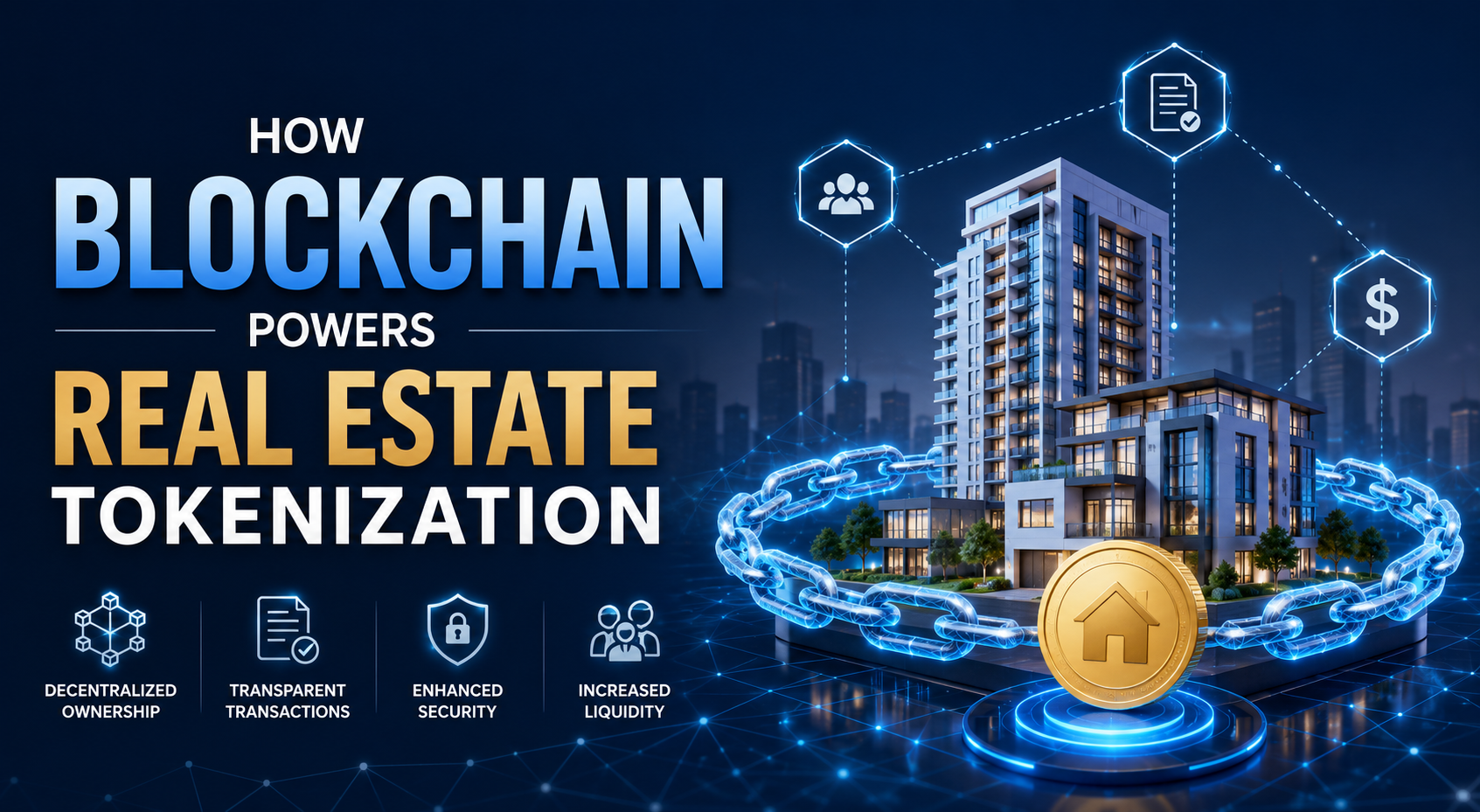
The real estate industry has traditionally been known for lengthy transactions, high investment requirements, and limited liquidity. Buying, selling, or transferring property often involves multiple intermediaries, extensive paperwork, and significant processing time. Blockchain technology is changing this landscape by making real estate transactions more secure, transparent, and efficient through tokenization.
Real estate tokenization is the process of converting ownership rights in a physical property into digital tokens stored on a blockchain. These tokens represent fractional ownership, allowing multiple investors to own a share of a property without purchasing the entire asset. As blockchain adoption continues to grow, tokenized real estate is becoming an attractive option for property owners, developers, investment firms, and institutional investors.
What Is Real Estate Tokenization?
Real estate tokenization involves representing a property's ownership as blockchain-based digital tokens. Ownership of a property is divided into digital tokens, with each token representing a portion of the asset. Investors can purchase these tokens, giving them fractional ownership while enabling property owners to raise capital more efficiently.
Unlike traditional real estate investments, tokenized assets can be managed digitally, making transactions faster and more accessible. Blockchain records every transaction in a secure, tamper-resistant ledger, ensuring transparency throughout the asset's lifecycle.
How Blockchain Enables Real Estate Tokenization
Blockchain serves as the underlying infrastructure that powers every stage of the tokenization process. It provides a decentralized and immutable ledger that records ownership, transactions, and transfers without relying on a single central authority.
Digital Ownership Records
Every token issued on the blockchain represents a verified ownership stake in a property. Ownership records are permanently stored and can be accessed by authorized participants, reducing disputes and improving trust between buyers and sellers.
Smart Contract Automation
Smart contracts are self-executing programs that automate various processes, including token issuance, ownership transfers, dividend distribution, and compliance checks. By eliminating manual intervention, smart contracts reduce operational costs while improving transaction speed and accuracy.
Fractional Property Ownership
Blockchain makes it possible to divide high-value real estate assets into thousands of digital tokens. Instead of investing millions in an entire property, investors can purchase smaller portions based on their budget. This significantly lowers the entry barrier and expands investment opportunities.
Transparent Transactions
Every transaction is recorded on the blockchain with a complete audit trail. Participants can verify ownership history, token transfers, and transaction details in real time, increasing transparency and reducing fraud.
Improved Security
Blockchain uses advanced cryptographic techniques to secure ownership records and transaction data. Once information is added to the ledger, it cannot be altered without network consensus, making unauthorized modifications extremely difficult.
Benefits of Blockchain-Based Real Estate Tokenization
The combination of blockchain and tokenization offers numerous advantages for investors, property owners, and real estate businesses.
-
Greater Liquidity: Tokenized assets can potentially be traded more efficiently than traditional real estate, improving market liquidity.
-
Lower Investment Barrier: Fractional ownership enables more investors to participate in premium real estate projects.
-
Faster Transactions: Blockchain reduces paperwork and automates settlement processes.
-
Global Investment Opportunities: Investors from different regions can participate in eligible tokenized property offerings more easily, subject to applicable regulations.
-
Enhanced Transparency: All ownership changes and transactions are securely recorded and easily verifiable.
-
Reduced Administrative Costs: Automation minimizes reliance on intermediaries and manual processes.
Common Use Cases
Blockchain-powered real estate tokenization is being adopted across various sectors of the property market.
Residential apartments can be divided into digital ownership shares, allowing multiple investors to participate in rental income and property appreciation.
Commercial office buildings and retail properties can attract institutional and retail investors through fractional ownership structures.
Luxury real estate projects become more accessible by enabling investors to purchase smaller ownership stakes instead of entire properties.
Real estate investment funds can also use tokenization to simplify capital raising, investor management, and asset distribution.
Challenges to Consider
Although blockchain offers significant advantages, successful real estate tokenization requires careful planning.
Regulatory compliance varies across jurisdictions, making legal guidance essential before launching tokenized assets. Property ownership documentation must be accurate and legally enforceable, while investor identity verification and anti-money laundering procedures must also be integrated into the platform.
Security audits are equally important to ensure that smart contracts operate correctly and remain resistant to vulnerabilities. Choosing a reliable blockchain infrastructure and experienced development partner can help reduce implementation risks.
Businesses seeking end-to-end solutions often work with a white label real estate tokenization platform development company to accelerate deployment while incorporating compliance features, investor management tools, and secure smart contract functionality.
The Future of Blockchain in Real Estate
Blockchain is transforming real estate from a traditionally illiquid asset class into a more accessible and digitally connected investment ecosystem. As regulatory frameworks continue to evolve and institutional adoption increases, tokenized real estate is expected to become a significant part of the global property market.
By combining transparency, automation, security, and fractional ownership, blockchain creates new opportunities for investors and property owners alike. Organizations that embrace blockchain-powered real estate tokenization today will be better positioned to meet the growing demand for digital investment solutions and unlock new sources of capital in the years ahead.