


How to Build a Music Streaming App Like Spotify in 2026 — Complete Guide
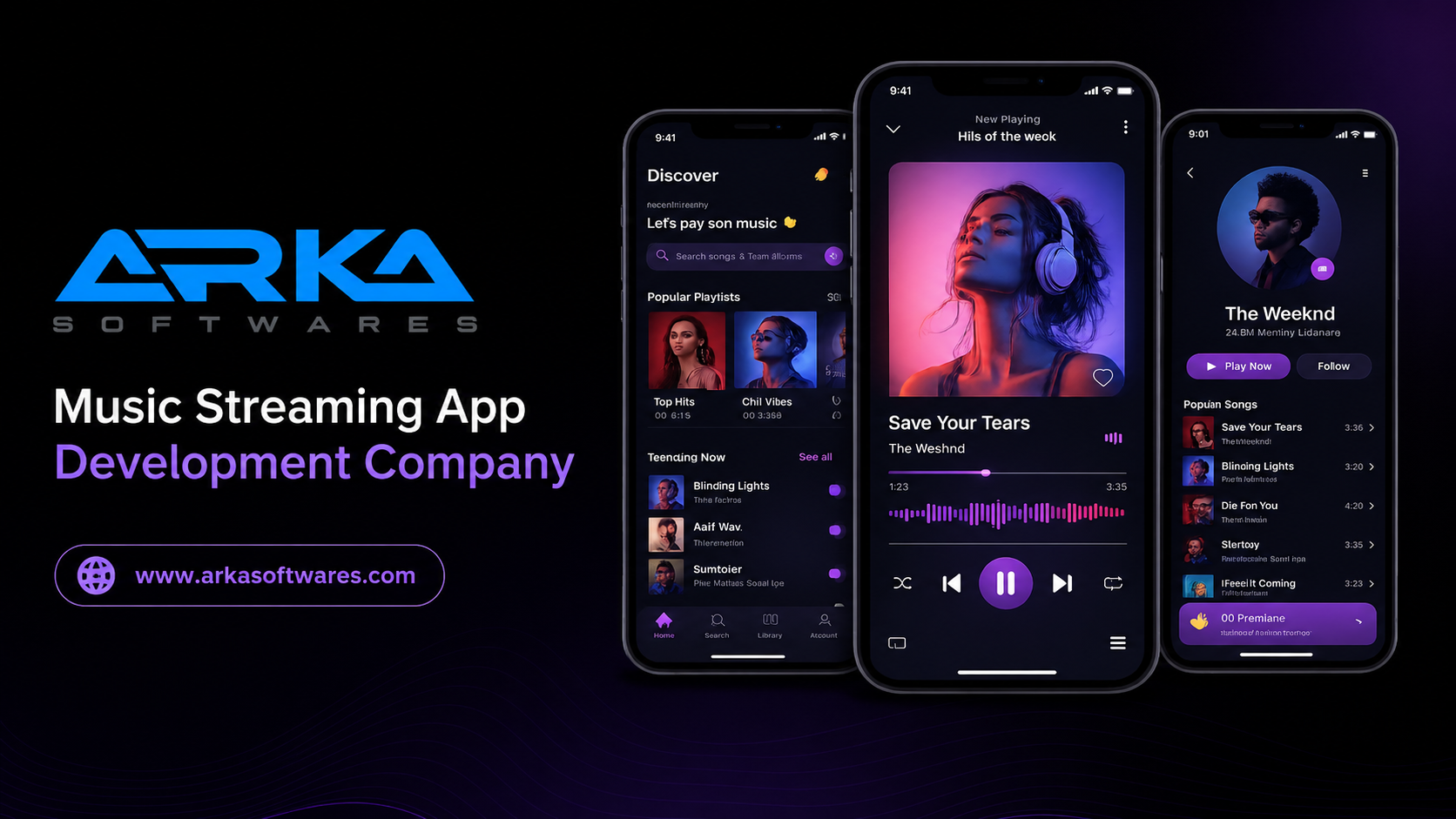
The global music streaming market is projected to cross $103 billion by 2030. If you're an entrepreneur or startup thinking about launching your own music platform, now is genuinely the right time to move.
But building a music streaming app isn't just about playing songs. It involves real-time audio delivery, licensing infrastructure, recommendation algorithms, and a seamless cross-platform experience. This guide walks you through everything.
What Makes a Music Streaming App Successful?
The most successful platforms — Spotify, Apple Music, Tidal — share a few core traits:
- Personalized recommendations powered by AI and listening history
- Offline playback so users aren't tied to internet access
- Cross-device sync — pick up on mobile where you left off on desktop
- Low-latency audio streaming with no buffering interruptions
- Social features like shared playlists and collaborative queues
If your app can nail even 3 of these 5, you already have a competitive foundation.
Core Features to Build in Your Music Streaming App
Here's what a fully functional MVP should include:
User Side:
- User registration & profile management
- Music search & discovery (by genre, mood, artist)
- Playlist creation & management
- Offline download & listening
- AI-powered song recommendations
- Lyrics display in sync with audio
- Equalizer & audio quality settings
Admin / Artist Side:
- Artist dashboard for track uploads
- Revenue analytics & streaming stats
- Content moderation tools
- Subscription & payment management
Tech Stack Used for Music Streaming Apps
Selecting the right technology stack is one of the most important decisions when building a music streaming platform, as it directly impacts performance, scalability, and user experience. For mobile development, React Native and Flutter are the top choices since both allow you to build for iOS and Android from a single codebase. On the web frontend, React.js and Vue.js deliver the fast, responsive interfaces that streaming users expect. The backend is typically powered by Node.js or Python (Django), both of which handle high-concurrency audio requests efficiently. For databases, most platforms use a combination of PostgreSQL for structured data like user profiles and subscriptions, and MongoDB for flexible content metadata. Audio streaming itself is handled through WebRTC or HLS (HTTP Live Streaming) protocol, which ensures low-latency, buffer-free playback across different network conditions. All audio files and media assets are stored on cloud infrastructure like AWS S3 or Google Cloud Storage, while a CDN — typically Cloudflare or AWS CloudFront — delivers that content quickly to users anywhere in the world. Finally, the AI-powered recommendation engine that suggests songs based on listening habits is built using TensorFlow or Python-based machine learning libraries, which analyze user behavior patterns to serve personalized content in real time.
How Much Does It Cost to Build a Music Streaming App?
Development cost depends on features, team location, and platform:
- Basic MVP (core streaming + profiles): $15,000 – $30,000
- Mid-level app (offline mode + recommendations): $30,000 – $70,000
- Full-scale platform (AI features + multi-platform): $70,000 – $150,000+
Hiring an experienced music streaming app development company significantly reduces costs compared to building an in-house team from scratch.
Key Challenges in Music Streaming App Development
- Music Licensing — You need rights from record labels or use royalty-free libraries. This is often the biggest non-technical hurdle.
- Audio Latency — Users expect near-instant playback. Your CDN and server architecture must be optimized.
- Scalability — What works for 1,000 users may break at 100,000. Plan your infrastructure for scale from Day 1.
- DRM (Digital Rights Management) — Protecting content from piracy requires encryption and secure token delivery.
- Battery & Data Optimization — Mobile users are sensitive to apps that drain battery or eat data.
Monetization Models for Music Streaming Apps
You have multiple revenue paths:
- Freemium — Free tier with ads, premium tier without
- Subscription — Monthly/annual plans for full access
- Pay-per-download — Users buy individual tracks
- Artist partnerships — Revenue share or promoted placement
- White-label licensing — License your platform to other businesses
Most successful apps combine freemium + subscription for maximum user acquisition and monetization.
Steps to Build Your Music Streaming App
- Define your target audience and niche (indie artists? classical? podcasts?)
- Conduct competitor analysis
- Plan your feature list and prioritize MVP features
- Choose your tech stack
- Design UI/UX wireframes and prototypes
- Develop backend APIs and database structure
- Build and integrate audio streaming engine
- Implement AI recommendation engine
- Test across devices and network conditions
- Launch, gather feedback, iterate
Why Work With a Specialist Development Company?
Building a music streaming app requires expertise across mobile development, backend engineering, audio processing, AI/ML, and cloud infrastructure. Most startups don't have all of these in-house.
Working with a specialized music streaming app development company like Arka Softwares gives you access to a full-stack team with proven experience building entertainment and on-demand platforms.
They offer end-to-end development — from ideation and UI/UX design to deployment and post-launch support — so you can focus on your business while the technical heavy lifting gets handled.
Learn more about their music streaming app development services here: https://www.arkasoftwares.com/solutions/music-streaming-app-development
Final Thoughts
The music streaming space is competitive, but there's still massive room for niche platforms — regional music, independent artists, genre-specific streaming, and B2B white-label solutions.
The technology to build it is accessible. The real differentiator is execution — picking the right team, building the right features, and scaling smartly.
Start with a solid MVP, validate with real users, and grow from there.