Why Food Manufacturers Are Choosing Polypropylene Food Packaging Over Traditional Alternatives
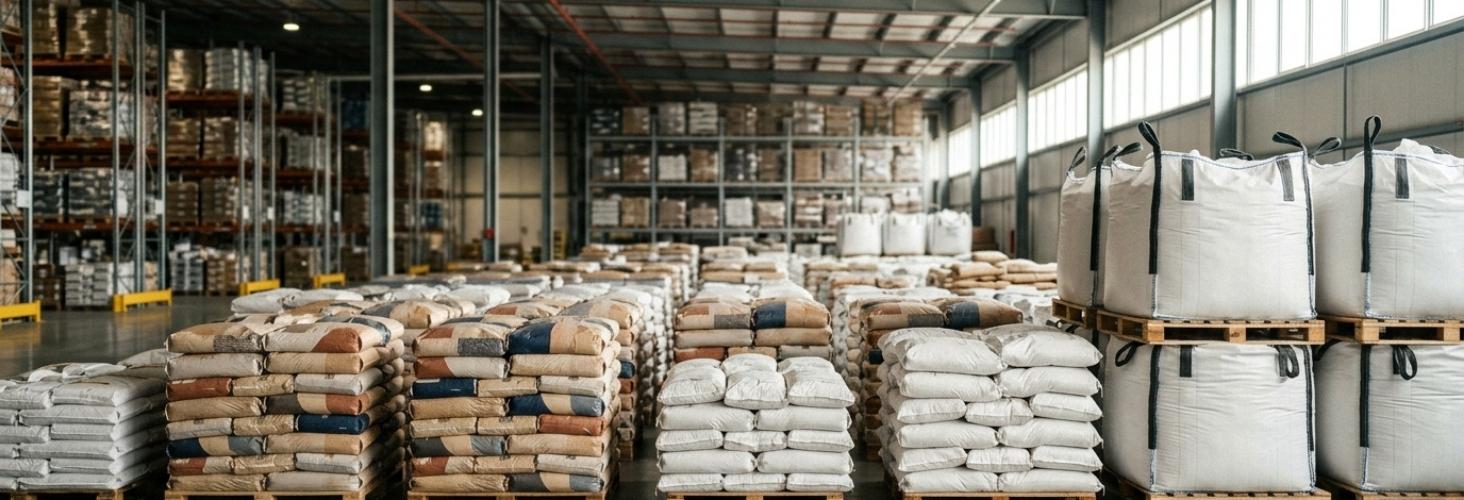
Food packaging is one of the most consequential decisions a food manufacturer makes. The packaging format chosen directly determines product shelf life, contamination risk, regulatory compliance exposure, logistics cost, and - increasingly - brand perception at the point of sale.
For decades, food manufacturers relied on traditional packaging formats: jute sacks, multi-wall paper bags, cotton fabric bags, and rigid containers. These materials served the food industry through generations of production and distribution. But as food safety regulations have tightened, supply chains have extended globally, and consumer and retailer expectations around packaging quality have risen sharply, the limitations of traditional formats are becoming operationally and financially unsustainable.
Polypropylene food packaging - specifically polypropylene bags food packaging in woven and laminated formats - is rapidly becoming the material of choice for food manufacturers across grain processing, flour milling, sugar refining, animal feed production, and specialty food ingredient manufacturing.
This blog examines why that transition is happening, what makes polypropylene food packaging technically and commercially superior to traditional alternatives, and what food industry procurement teams should evaluate when selecting a qualified PP woven bags manufacturer.
The Limitations of Traditional Food Packaging Formats
Before examining what polypropylene food packaging delivers, it is worth understanding what traditional alternatives consistently fail to provide.
Jute sacks have been the backbone of agricultural commodity packaging for generations. However, jute is a natural fiber that absorbs moisture readily - creating conditions that support mold growth, fungal contamination, and accelerated product degradation. Jute sacks also shed fibers into packaged products, creating a contamination risk that modern food safety audits flag as a compliance concern. Batch-to-batch tensile strength inconsistency adds further quality control risk for high-volume food manufacturers.
Multi-wall paper bags offer better print quality than jute but are highly susceptible to moisture damage during storage and transit. A single exposure to humidity or rain during loading or warehousing can compromise the structural integrity of a paper bag - resulting in product spillage, contamination, and financial loss. Paper bags also offer limited load capacity and poor puncture resistance in automated handling environments.
Cotton fabric bags are breathable but expensive, heavy, and prone to contamination through direct fiber contact with packaged food products. Their reuse creates hygiene management complexity that most food manufacturers prefer to eliminate.
Rigid plastic and metal containers offer excellent protection but at a cost - financial, logistical, and environmental - that makes them impractical for high-volume, one-way food commodity packaging.
The cumulative effect of these limitations is measurable: product spoilage, compliance failures, increased packaging cost per tonne, and supply chain inefficiencies that directly impact food manufacturer profitability
Why Polypropylene Food Packaging Is the Superior Choice
Food Safety and Material Compliance
The foundational question for any food packaging procurement decision is material safety. Polypropylene bags food packaging manufactured from virgin-grade polypropylene resin meets food-contact material safety requirements established by the U.S. FDA and India's FSSAI - two of the most rigorous food safety regulatory frameworks globally.
Polypropylene is a chemically inert, non-toxic polymer that does not leach harmful substances into packaged food products under normal storage and temperature conditions. Unlike jute, it does not shed fibers. Unlike paper, it does not absorb moisture and transfer contaminants. Unlike recycled plastic alternatives, virgin-grade polypropylene carries no risk of residual contamination from previous use cycles.
For food manufacturers subject to FSMA, HACCP, or BRC audit requirements, specifying food-grade polypropylene packaging from a certified PP woven bags manufacturer provides a defensible, documented compliance position that traditional packaging formats simply cannot match.
Superior Moisture and Contamination Protection
Moisture is the primary enemy of packaged food commodities. Flour, sugar, rice, pulses, spices, and animal feed ingredients are all highly susceptible to moisture-driven quality degradation - caking, mold growth, mycotoxin development, and nutritional value loss.
Laminated polypropylene food packaging creates a robust moisture barrier that conventional jute and paper packaging cannot replicate. Single-side or double-side PP lamination combined with polyethylene inner liner integration delivers a multi-layer moisture protection system that maintains product integrity across extended storage periods and challenging distribution environments.
For food manufacturers managing export supply chains - where products may spend weeks in humid shipping containers - this moisture protection capability is not a nice-to-have. It is a product integrity requirement.
Hygienic, Contamination-Free Packaging Surface
Modern food safety standards require packaging materials that do not contribute to product contamination. Polypropylene food packaging delivers a smooth, non-porous surface that does not harbor bacteria, does not shed fibers, and can be manufactured in cleanroom-compatible production environments.
A qualified PP woven bags manufacturer producing food-grade packaging operates under documented hygiene controls - including raw material traceability, production environment monitoring, and finished product testing - that align with food manufacturer supplier audit requirements.
Extended Shelf Life Performance
The combination of moisture barrier properties, contamination resistance, and structural integrity that polypropylene food packaging delivers directly extends the effective shelf life of packaged food products. For food manufacturers managing long distribution cycles - domestic wholesale, export distribution, or seasonal inventory storage - this shelf life extension translates into measurable reductions in product spoilage, customer returns, and associated financial losses.
High-Quality Print for Compliance Labeling and Brand Communication
Food packaging is a regulated communication medium. Ingredient declarations, nutritional information, allergen warnings, certification marks, batch codes, and barcodes must all be reproduced with precision and permanence on food packaging surfaces.
BOPP-laminated polypropylene food packaging delivers a print surface capable of reproducing regulatory compliance information and brand graphics with photographic quality and long-term print durability. For food manufacturers competing in retail channels where shelf appeal directly influences purchase decisions, this print capability transforms functional food packaging into a brand asset.
Standard PP woven bags with flexographic printing offer reliable compliance labeling capability for commodity food products where brand differentiation is a secondary consideration.
Industries and Applications Driving Polypropylene Food Packaging Adoption
The transition to polypropylene food packaging is already well advanced across multiple food manufacturing sectors:
-
Flour and Grain Milling: PP woven bags with polyethylene inner liners are the industry standard for 25 kg, 50 kg, and bulk flour and grain packaging - delivering moisture protection and compliance labeling capability that paper alternatives cannot match.
-
Sugar Refining: Laminated PP woven bags protect refined sugar from moisture absorption and caking during storage and distribution - a critical quality protection function that traditional packaging consistently underperforms.
-
Rice Processing and Export: PP woven bags and BOPP laminated bags are the dominant packaging formats for branded and commodity rice - offering the combination of structural strength, moisture protection, and print quality that rice export markets demand.
-
Animal Feed Manufacturing: PP woven bags for animal feed packaging must simultaneously deliver load capacity for 25 kg to 50 kg fill weights, moisture barrier protection for nutritionally sensitive feed formulations, and print quality for regulatory compliance labeling. Polypropylene food packaging meets all three requirements from a single material platform.
-
Specialty Food Ingredients: Spices, dried fruits, nuts, and specialty food ingredients increasingly specify BOPP laminated polypropylene packaging for the combination of product protection and premium retail presentation it delivers.
What Food Manufacturers Should Evaluate When Selecting a PP Woven Bags Manufacturer
Making the transition to polypropylene food packaging requires careful supplier qualification. Key evaluation criteria for food industry procurement teams include:
-
Food-grade certification: Confirm the manufacturer holds current food-contact material approvals - FDA, FSSAI, or equivalent - covering the specific bag construction being sourced. Request certification documents and verify their current validity.
-
Virgin resin sourcing: Food-grade polypropylene packaging must be manufactured from virgin-grade resin. Confirm the manufacturer's raw material sourcing policy and request resin compliance certificates.
-
Production hygiene standards: Evaluate the manufacturer's production environment hygiene controls, including raw material segregation, production area cleanliness standards, and finished product handling protocols.
-
Inner liner capability: For moisture-sensitive food products, confirm the manufacturer offers in-house polyethylene inner liner integration - not outsourced liner fitting, which introduces additional contamination risk and quality control complexity.
-
Batch traceability: A qualified PP woven bags manufacturer maintains complete batch traceability from raw material receipt to finished product dispatch. This traceability capability is essential for food manufacturer supplier audit compliance.
-
Print quality and compliance labeling: Evaluate the manufacturer's printing capability against your compliance labeling requirements - font size reproducibility, barcode print quality, color consistency, and print permanence across the bag's expected shelf life.
Conclusion
The transition from traditional food packaging formats to polypropylene food packaging is driven by a convergence of food safety regulation, supply chain performance requirements, and total cost of ownership analysis - all pointing in the same direction.
For food manufacturers committed to product integrity, regulatory compliance, and supply chain efficiency, polypropylene bags food packaging delivers across every performance dimension that traditional alternatives fail to meet consistently.
The critical success factor in making this transition is selecting a qualified, certified PP woven bags manufacturer with documented food-grade production capability, rigorous quality management systems, and the manufacturing depth to deliver consistent supply at the volumes your production operation requires.
The food manufacturers that make this sourcing upgrade now will be better positioned to compete on product quality, compliance confidence, and packaging cost efficiency in the food markets of the next decade.