


Why the Most Successful General Contractors Always Do This Before Starting a Project?
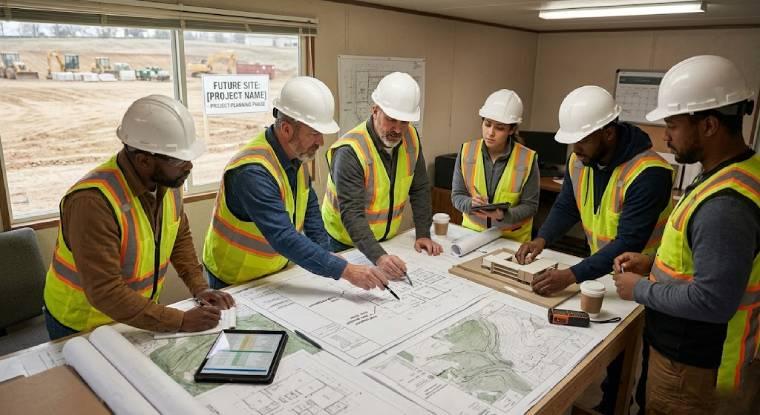
There is a pattern that separates the general contractors winning the best commercial projects in the United States from those stuck in a cycle of tight margins, field rework, and difficult closeouts. It is not their crew size. It is not their equipment fleet. It is not even their bid price. It is what they do before the project starts.
The most successful GCs in the country have built a repeatable pre-construction process that identifies risk early, locks in coordination before trades mobilize, and creates a shared project foundation that everyone, from the owner to the last subcontractor on site, can work from. That process, executed consistently, is the single biggest predictor of project performance.
They Treat Pre-Construction as a Billable Phase, Not a Free Service
One of the most consequential shifts in how successful general contractors operate is the decision to formalize pre-construction as a distinct, structured phase with dedicated resources, clear deliverables, and defined timelines. Many contractors still treat pre-construction as something that happens informally between winning a bid and starting work. Successful GCs treat it as the phase where the project is either set up to succeed or quietly set up to fail.
That means assigning a project engineer or VDC coordinator specifically to pre-construction tasks, establishing a schedule for when deliverables are due, and treating every gap in design documentation or coordination as a risk that needs to be resolved before mobilization rather than after.
Builders and project owners who have worked with contractors that run this kind of structured pre-construction process consistently report fewer surprises, smoother construction phases, and more accurate final costs. That reputation becomes a competitive advantage that compounds over time.
They Build the Project Digitally Before Building It Physically
This is the defining habit of the most successful general contractors operating in the U.S. commercial construction market today. Before a single piece of steel goes up or a slab gets poured, they build a complete, coordinated digital model of the project and use it to find and resolve every conflict that would otherwise surface as a costly field problem.
This is the core value proposition of BIM for General Contractors. A federated Building Information Model brings together the structural, architectural, and MEP trade models into a single coordinated environment where spatial conflicts are visible, measurable, and resolvable before anyone has picked up a wrench.
What a Coordinated Pre-Construction Model Actually Looks Like
A fully coordinated pre-construction model is not just a 3D visualization. It is a live data environment that contains the following.
Federated trade models — Individual models from the structural engineer, mechanical contractor, electrical contractor, plumbing contractor, and other specialty trades are combined into a single federated file. Each trade's systems are visible alongside every other system in the building.
Clash detection reports — Automated clash detection, often performed using tools like Navisworks clash detection software, identifies every point where two systems occupy the same space. These clashes are categorized, assigned to responsible parties, and tracked through resolution. A project with 400 clashes identified in pre-construction is a project that avoided 400 field conflicts.
Coordinated ceiling plans — The most contested real estate on any commercial project is the space above the ceiling. A coordinated model establishes exactly where every duct, pipe, conduit run, and structural element sits in that space, so trades are not competing for the same location on installation day.
LOD-compliant geometry — Successful GCs enforce Level of Development standards on all trade models. LOD 300 or LOD 350 geometry is accurate enough for coordination and fabrication, which means shop drawings generated from the model reflect what will actually be installed.
Building Information Modeling at this level of rigor is no longer a premium service on large commercial projects. It is a baseline expectation from owners and a requirement for contractors who want to protect their margins.
They Pull Subcontractors into Coordination Before Mobilization
A coordinated BIM model is only as good as the trade data that goes into it. Successful general contractors understand this, which is why they require subcontractor model submissions early in pre-construction and run coordination meetings before any trade mobilizes to the site.
This is where BIM for Trade Contractors becomes a direct extension of the GC's pre-construction process. Mechanical, electrical, plumbing, and specialty contractors that can deliver LOD-compliant models on schedule are valuable partners. Those that cannot are a coordination liability that the GC absorbs in the form of field rework and RFI delays.
How Coordination Meetings Drive Project Outcomes
Effective pre-construction coordination meetings are not show-and-tell sessions. They are structured problem-solving sessions where clash reports are reviewed, resolution responsibilities are assigned, and updated models are submitted on a defined cycle, typically weekly or biweekly during active coordination.
The GC's role in these meetings is to facilitate resolution, not just observe. That means having a VDC coordinator who understands the models well enough to identify which trade needs to move, propose routing alternatives, and document agreed resolutions in a clash log that is tracked to closure.
Projects that run weekly coordination meetings through pre-construction consistently carry fewer open RFIs into construction and report lower change order volumes at project closeout.
They Require Trade Contractors Who Can Prefabricate
The second major benefit of coordinated pre-construction models is that they enable prefabrication. Successful general contractors actively seek out and sometimes specify that subcontractors must have prefabrication capability, because prefabrication directly affects schedule, quality, and labor productivity on the project.
What This Means for Mechanical and Electrical Trades
BIM for Mechanical Contractors delivers its highest ROI through prefabrication workflows. When ductwork and piping systems are modeled accurately and coordinated before installation, mechanical contractors can fabricate assemblies off-site in a controlled shop environment and deliver them to the site ready to hang. That shift from field fabrication to shop fabrication reduces field labor hours, improves quality consistency, and removes a significant source of schedule uncertainty.
The same logic applies to BIM for Electrical Contractors. Conduit assemblies, wire harnesses, panel assembly kits, and pre-wired junction box clusters can all be prefabricated when the electrical model is accurate and coordinated. Field crews spend their time installing and connecting rather than measuring, cutting, bending, and routing from scratch.
General contractors who understand this dynamic build prefabrication requirements into their subcontract agreements and factor fabrication lead times into the master project schedule during pre-construction, not after mobilization.
They Lock In the Submittal Schedule on Day One
One of the most reliably overlooked pre-construction tasks is building out a complete submittal schedule before construction begins. Successful GCs treat the submittal log as a live project document that is initialized during pre-construction, reviewed weekly during construction, and closed out as part of project turnover.
The reason this matters financially is straightforward. Long-lead equipment items, including air handling units, switchgear, transformers, elevators, curtain wall systems, and specialty mechanical equipment, carry lead times that can range from 12 to 40 weeks depending on the manufacturer and current supply chain conditions. A submittal that is prepared and submitted in week one of pre-construction is approved and on order before the first floor slab is poured. A submittal that is submitted after mobilization because no one tracked it is a schedule risk that becomes a schedule problem.
Autodesk and other construction management platforms offer tools specifically designed to track submittals, RFIs, and procurement milestones in an integrated project environment. Successful GCs use these tools systematically, not occasionally.
They Align the Owner Before the First Shovel Hits the Ground
Every construction project has a gap between what the owner thinks they are getting and what the contract actually says they are getting. That gap, if it is not closed before construction begins, will generate change orders, disputes, and damaged relationships throughout the project.
Successful general contractors close that gap deliberately during pre-construction through a structured owner alignment process that covers the following.
Scope verification — Walking the owner through the full project scope at a level of detail that makes inclusions and exclusions explicit. Not as a legal protection exercise, but as a genuine effort to make sure both parties have the same picture of the finished project.
Schedule baseline — Presenting a detailed baseline schedule that shows major milestones, trade sequencing, and key decision points where owner input is required. Owners who understand the schedule are better partners when delays occur and more likely to make timely decisions on submittals and design questions.
BIM model walkthrough — The most effective owner alignment tool available today is a walkthrough of the coordinated pre-construction model. Walking an owner through a virtual version of their building before construction begins surfaces aesthetic questions, program concerns, and scope gaps that are far cheaper to address digitally than in the field.
Owners who have been through this process with a skilled general contractor do not just become repeat clients. They become advocates who refer to other owners based on the experience.
The Pattern Is Consistent Because the Process Is Deliberate
None of the habits described in this article are accidental. They are the result of general contractors who have learned, often through painful project experience, that construction complexity does not manage itself. Every conflict that is not resolved before mobilization will be resolved during construction, at a cost that is typically three to ten times higher than resolving it in pre-construction.
The most successful GCs have internalized that reality and built their pre-construction process around it. They invest in BIM coordination because it pays back. They require model submissions from subcontractors because it protects the project. They build the submittal schedule on day one because lead times do not wait for contractors to get organized.
The pattern is consistent because the process is deliberate. And the results, lower rework rates, fewer change orders, stronger client relationships, and better project margins, reflect that deliberateness every time.