


AI for Legacy System Modernization: Accelerating Digital Transformation
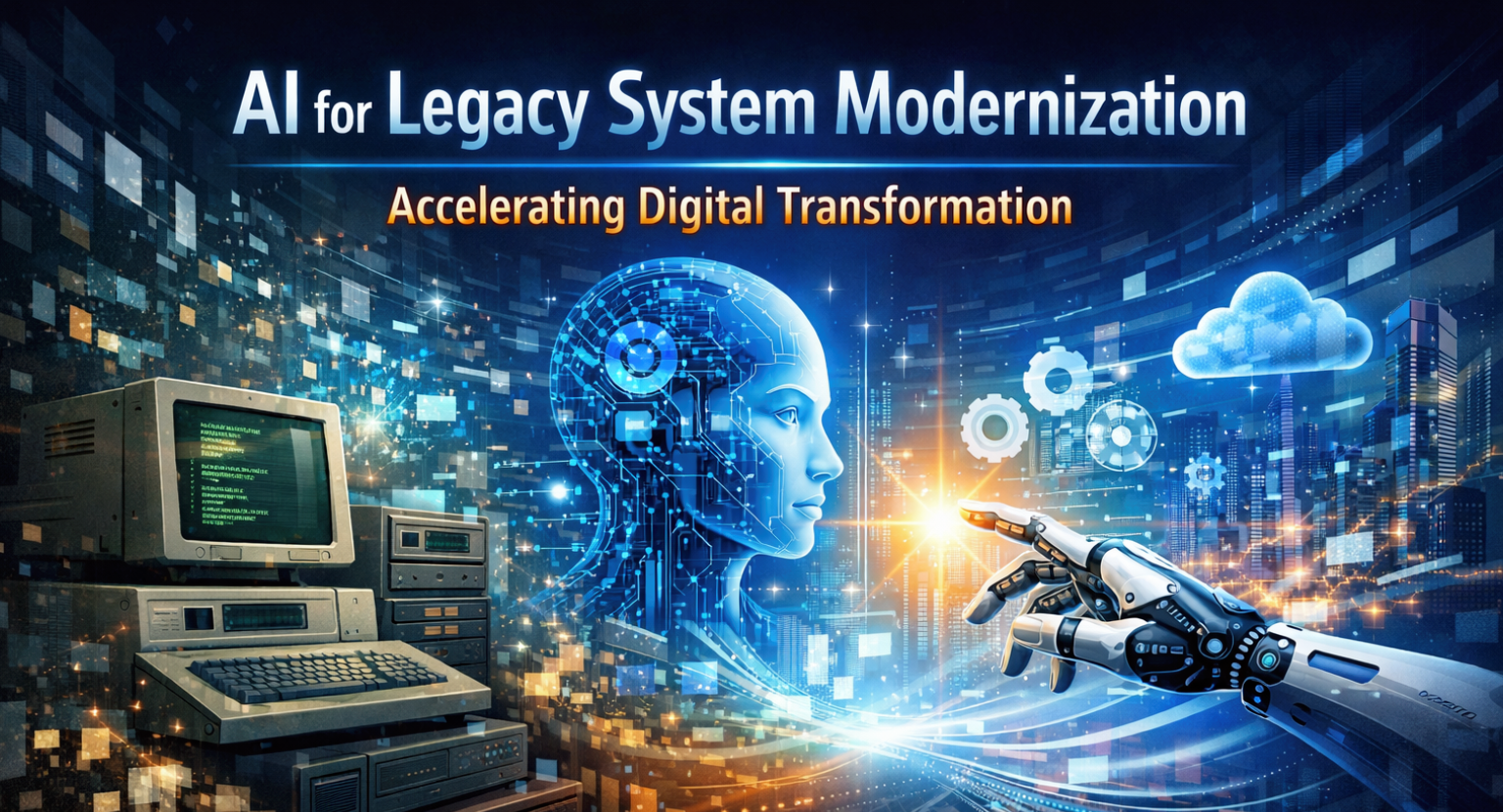
Many enterprises today still rely on legacy systems that were built years or even decades ago. While these systems often support critical business operations, they can limit innovation due to outdated architectures, poor scalability, and high maintenance costs.
As digital transformation becomes a strategic priority, organizations are under increasing pressure to modernize their legacy infrastructure without disrupting ongoing operations. This is where artificial intelligence is playing a transformative role.
AI for legacy system modernization enables businesses to analyze, optimize, and transform existing systems into agile, scalable, and intelligent platforms. By automating complex processes and reducing manual effort, AI accelerates modernization initiatives while minimizing risk.
In this blog, we explore how AI is reshaping legacy system modernization, the technologies involved, key benefits, challenges, and how enterprises can successfully transition to modern digital architectures.
Understanding Legacy System Modernization
Legacy system modernization refers to the process of updating or transforming outdated software, infrastructure, or applications to align with current business and technological requirements.
Traditional modernization approaches often involve:
- Rewriting entire systems from scratch
- Migrating to new platforms
- Re-architecting applications manually
These methods can be time-consuming, expensive, and risky especially for large enterprises with complex systems.
AI introduces a more intelligent approach by enabling automation, analysis, and incremental transformation, reducing the need for full system overhauls.
Why Legacy Modernization Is Critical for Enterprises
Legacy systems can create significant barriers to growth and innovation.
Organizations often face challenges such as:
- Limited scalability and performance constraints
- Difficulty integrating with modern applications and APIs
- High maintenance and operational costs
- Increased security vulnerabilities
- Lack of flexibility to adapt to changing business needs
AI-driven modernization helps organizations overcome these challenges by enabling faster, more efficient transformation strategies.
How AI Accelerates Legacy System Modernization
AI can be applied across multiple stages of the modernization lifecycle, making the process more efficient and less resource-intensive.
Code Analysis and Understanding
AI-powered tools can analyze legacy codebases, identify dependencies, and document system behavior reducing the need for manual code review.
Automated Code Refactoring
AI can assist in converting outdated code into modern programming languages or frameworks, improving maintainability and performance.
Intelligent Migration
AI enables smarter migration strategies by analyzing workloads and recommending optimal cloud or hybrid environments.
API Enablement
AI helps expose legacy functionalities as modern APIs, allowing seamless integration with new applications and services.
Data Transformation and Mapping
AI can automatically map and transform data structures, ensuring compatibility between legacy and modern systems.
Key Technologies Driving AI-Based Modernization
Machine Learning and Pattern Recognition
Machine learning models analyze legacy systems to identify patterns, dependencies, and optimization opportunities.
Natural Language Processing (NLP)
NLP helps interpret documentation, comments, and system logs to better understand legacy applications.
Robotic Process Automation (RPA)
RPA automates repetitive tasks involved in system migration, testing, and data transfer.
Cloud and Containerization
AI works alongside cloud technologies to enable scalable, flexible deployment of modernized systems.
Knowledge Graphs
Knowledge graphs map relationships between system components, helping AI understand complex architectures.
Benefits of AI-Driven Legacy Modernization
- Faster Transformation Timelines: AI reduces manual effort, enabling quicker modernization.
- Cost Optimization: Automation minimizes development and maintenance costs.
- Reduced Risk: Incremental modernization lowers the risk of system failures.
- Improved Scalability: Modernized systems can handle growing workloads efficiently.
- Enhanced Integration: AI enables seamless connectivity with modern applications and APIs.
Challenges in Modernizing Legacy Systems with AI
Despite its advantages, AI-driven modernization comes with challenges.
- Complexity of legacy architectures
- Limited or outdated documentation
- Data quality and consistency issues
- Integration with existing workflows
- Need for skilled expertise in both AI and legacy systems
Organizations must adopt a strategic approach to overcome these challenges effectively.
Enterprise Use Cases
AI-driven legacy modernization is being widely adopted across industries.
Banking and Financial Services: Organizations modernize core banking systems, enabling real-time transactions and digital services.
Healthcare Systems: Hospitals upgrade legacy systems to support electronic health records and AI-driven diagnostics.
Manufacturing: Enterprises modernize legacy production systems to enable smart manufacturing and predictive maintenance.
Retail and E-commerce: Businesses transform legacy platforms to support omnichannel experiences and real-time analytics.
Government and Public Sector: Agencies modernize outdated systems to improve service delivery and operational efficiency.
The Role of AI in Digital Transformation
AI is not just a tool for modernization it is a key enabler of digital transformation. By modernizing legacy systems, organizations can:
- Unlock new business capabilities
- Improve customer experiences
- Enable real-time data-driven decision-making
- Support innovation and scalability
AI ensures that modernization efforts align with long-term business goals.
Future Trends in AI-Driven Modernization
The future of legacy modernization is becoming increasingly intelligent and automated.
Emerging trends include:
- Autonomous system refactoring
- AI-driven architecture recommendations
- Continuous modernization pipelines
- Integration with low-code platforms
- Self-optimizing legacy systems
These advancements will further reduce complexity and accelerate transformation initiatives.
Final Thoughts
Legacy system modernization is no longer optional, it is essential for organizations aiming to remain competitive in a rapidly evolving digital landscape. AI is transforming this process by enabling faster, smarter, and more efficient modernization strategies.
By leveraging AI, businesses can reduce risks, optimize costs, and build scalable systems that support future growth.
If your organization is planning to modernize legacy systems or accelerate digital transformation, partnering with experienced experts can ensure a smooth and successful transition. At Swayam Infotech, we help businesses transform outdated systems into intelligent, scalable solutions tailored to their needs.