The Economics of AI: Cost Optimization Strategies for Enterprise Adoption
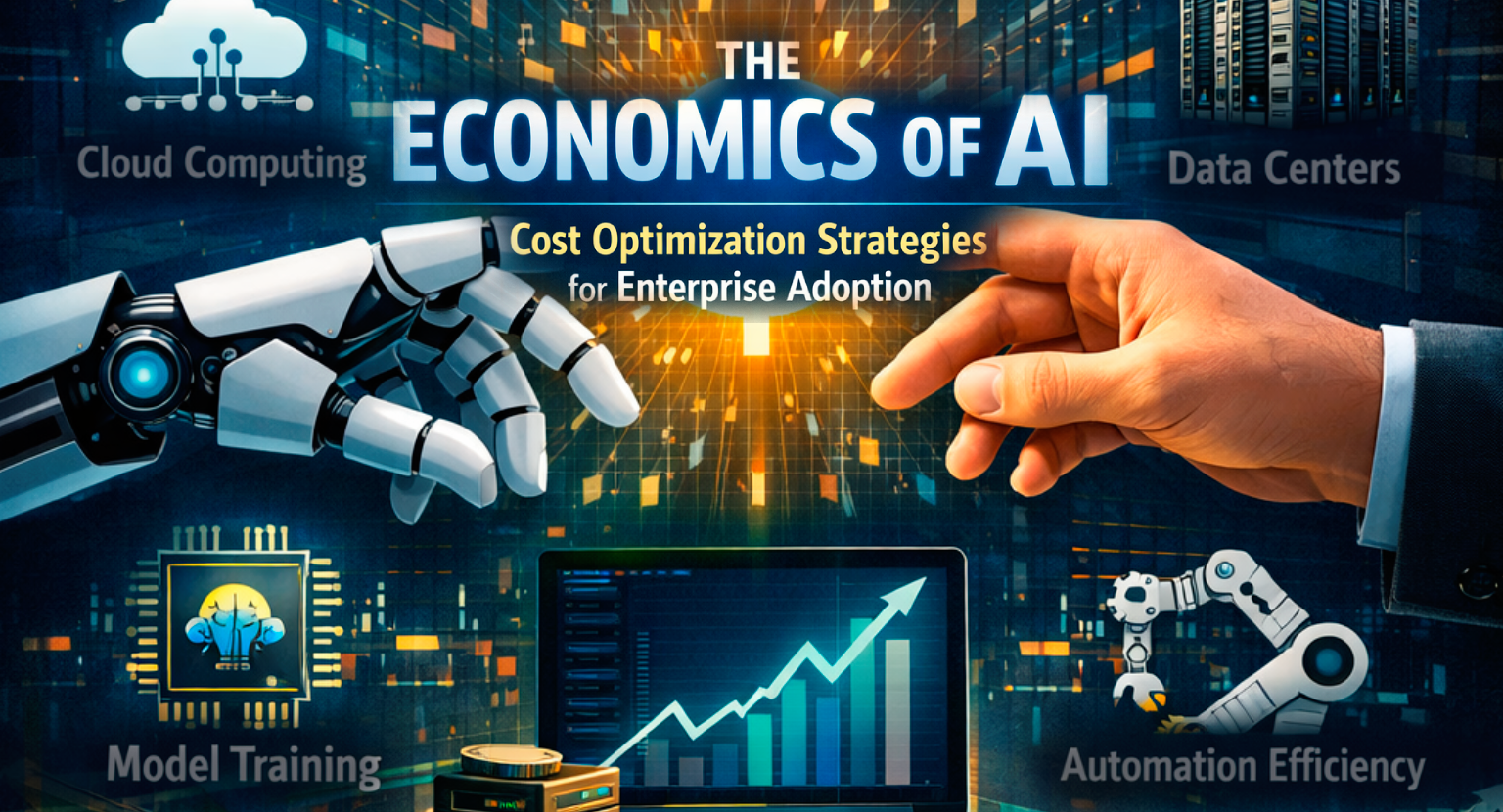
Artificial Intelligence is rapidly becoming a strategic asset for modern enterprises. From automating business processes to generating predictive insights, AI has the potential to significantly increase efficiency and innovation. However, one of the biggest challenges organizations face when adopting AI is managing the cost of implementation and operations.
AI systems often require large datasets, powerful computing infrastructure, specialized talent, and continuous monitoring. Without proper planning, these factors can make AI adoption expensive and difficult to scale.
Understanding the economics of AI is therefore essential for businesses that want to deploy AI solutions effectively while maintaining financial sustainability.
In this blog, we explore the cost drivers of AI systems and practical strategies enterprises can use to optimize costs while maximizing the value of their AI investments.
Understanding the Cost Structure of AI
Before implementing cost optimization strategies, organizations must first understand the primary components that contribute to AI expenses.
Infrastructure Costs
AI models, especially large ones, require substantial computational power. Training and deploying models often involves high-performance GPUs, cloud computing resources, and large-scale storage systems.
Infrastructure costs may include:
-
Cloud computing services
-
GPU or specialized AI hardware
-
Data storage systems
-
Networking and data transfer
These costs can grow significantly as AI models scale.
Data Acquisition and Management
Data is the foundation of any AI system. Collecting, cleaning, labeling, and managing high-quality datasets can be both time-consuming and expensive.
Organizations may need to invest in:
-
Data pipelines
-
Data labeling tools
-
Data governance systems
-
Storage and security frameworks
Effective data management plays a crucial role in reducing long-term AI costs.
Talent and Development Costs
Developing AI solutions requires highly skilled professionals such as:
-
AI engineers
-
Data scientists
-
Machine learning engineers
-
DevOps specialists
The demand for these professionals often drives up development costs.
Model Training and Maintenance
AI systems are not static. Models require ongoing retraining, monitoring, and optimization to maintain accuracy and performance.
This continuous lifecycle introduces recurring costs, including:
-
Model retraining
-
Performance monitoring
-
System updates
-
Security management
Organizations must plan for these operational expenses when deploying AI systems.
Why Cost Optimization Matters in AI
AI projects that lack cost management strategies may face:
-
Budget overruns
-
Limited scalability
-
Reduced ROI
-
Delayed adoption across departments
By implementing smart cost optimization strategies, enterprises can ensure their AI investments deliver sustainable value.
Cost Optimization Strategies for AI Adoption
Start with High-Impact Use Cases
One of the most effective ways to optimize AI spending is to begin with high-value business problems.
Instead of applying AI broadly across the organization, companies should focus on areas where AI can produce measurable results such as:
-
Process automation
-
Fraud detection
-
Customer service optimization
-
Predictive maintenance
Targeted implementation ensures early ROI and supports further AI investment.
Use Pre-Trained and Open-Source Models
Building AI models from scratch can be costly and time-intensive.
Enterprises can reduce development expenses by using:
-
Pre-trained AI models
-
Open-source machine learning frameworks
-
Transfer learning techniques
These approaches allow organizations to leverage existing AI research and reduce training costs.
Adopt Cloud-Based AI Infrastructure
Cloud computing platforms provide scalable resources that allow organizations to pay only for what they use.
Benefits include:
-
On-demand computing resources
-
Reduced hardware investment
-
Scalable infrastructure
-
Built-in AI development tools
Cloud-based AI platforms make it easier for businesses to experiment with AI without committing to large upfront investments.
Implement Efficient Data Management
Data inefficiencies often lead to increased AI costs.
Organizations can optimize expenses by:
-
Building efficient data pipelines
-
Automating data cleaning and labeling
-
Implementing strong data governance practices
Well-structured data systems improve AI model performance and reduce unnecessary processing costs.
Optimize Model Size and Performance
Larger models are not always better. In many cases, smaller and optimized models can deliver similar performance at a fraction of the cost.
Strategies include:
-
Model compression
-
Knowledge distillation
-
Edge AI deployment
-
Efficient neural network architectures
Optimizing model size helps reduce both training and inference costs.
Use Automation and MLOps
Managing AI systems manually can lead to inefficiencies and higher operational costs.
MLOps (Machine Learning Operations) helps automate the AI lifecycle, including:
-
Model training pipelines
-
Deployment processes
-
Performance monitoring
-
Continuous integration and updates
Automation reduces operational overhead and improves system reliability.
Monitor and Optimize AI Workloads
Continuous monitoring is essential for identifying unnecessary computing expenses.
Organizations should regularly evaluate:
-
Resource utilization
-
Model performance metrics
-
Cloud spending
-
Data processing workloads
Monitoring tools allow teams to optimize AI workloads and avoid wasted resources.
Build Cross-Functional AI Teams
Collaboration between business leaders, engineers, and data teams helps ensure that AI projects align with strategic goals.
This alignment prevents organizations from investing in AI initiatives that provide limited business value.
Measuring ROI from AI Investments
To ensure AI initiatives are financially sustainable, organizations must track key performance metrics such as:
-
Cost savings from automation
-
Productivity improvements
-
Revenue growth driven by AI insights
-
Customer experience improvements
Clear ROI measurement helps justify continued investment in AI technologies.
The Future of AI Economics
As AI technology continues to mature, the economics of AI adoption will evolve.
Several trends are likely to influence future cost structures:
-
More efficient AI models
-
Increased availability of AI development platforms
-
Advances in specialized AI hardware
-
Growth of open-source AI ecosystems
-
Expansion of edge computing solutions
These developments will gradually reduce the barriers to enterprise AI adoption.
Preparing for Sustainable AI Adoption
Enterprises that want to successfully adopt AI should approach implementation strategically.
Key steps include:
-
Identifying clear business objectives
-
Starting with scalable pilot projects
-
Implementing cost management strategies
-
Building internal AI expertise
-
Leveraging trusted AI development partners
By balancing innovation with financial discipline, organizations can unlock the full potential of AI while maintaining long-term sustainability.
Final Thoughts
Artificial Intelligence offers tremendous opportunities for businesses, but successful adoption requires careful financial planning. Understanding the economics of AI allows enterprises to deploy intelligent systems while maintaining cost efficiency and scalability.
By focusing on high-value use cases, optimizing infrastructure, leveraging pre-trained models, and automating operations, organizations can maximize the return on their AI investments.
As AI continues to evolve, enterprises that adopt cost-optimized strategies will be best positioned to compete in the rapidly transforming digital economy.
If your organization is exploring AI-driven solutions or intelligent automation platforms, working with experienced developers can accelerate implementation while controlling costs. At Swayam Infotech, we help businesses design and deploy scalable AI applications that deliver measurable value.