Myasthenia Gravis ICD 10: Accurate Coding for Infusion Billing Success
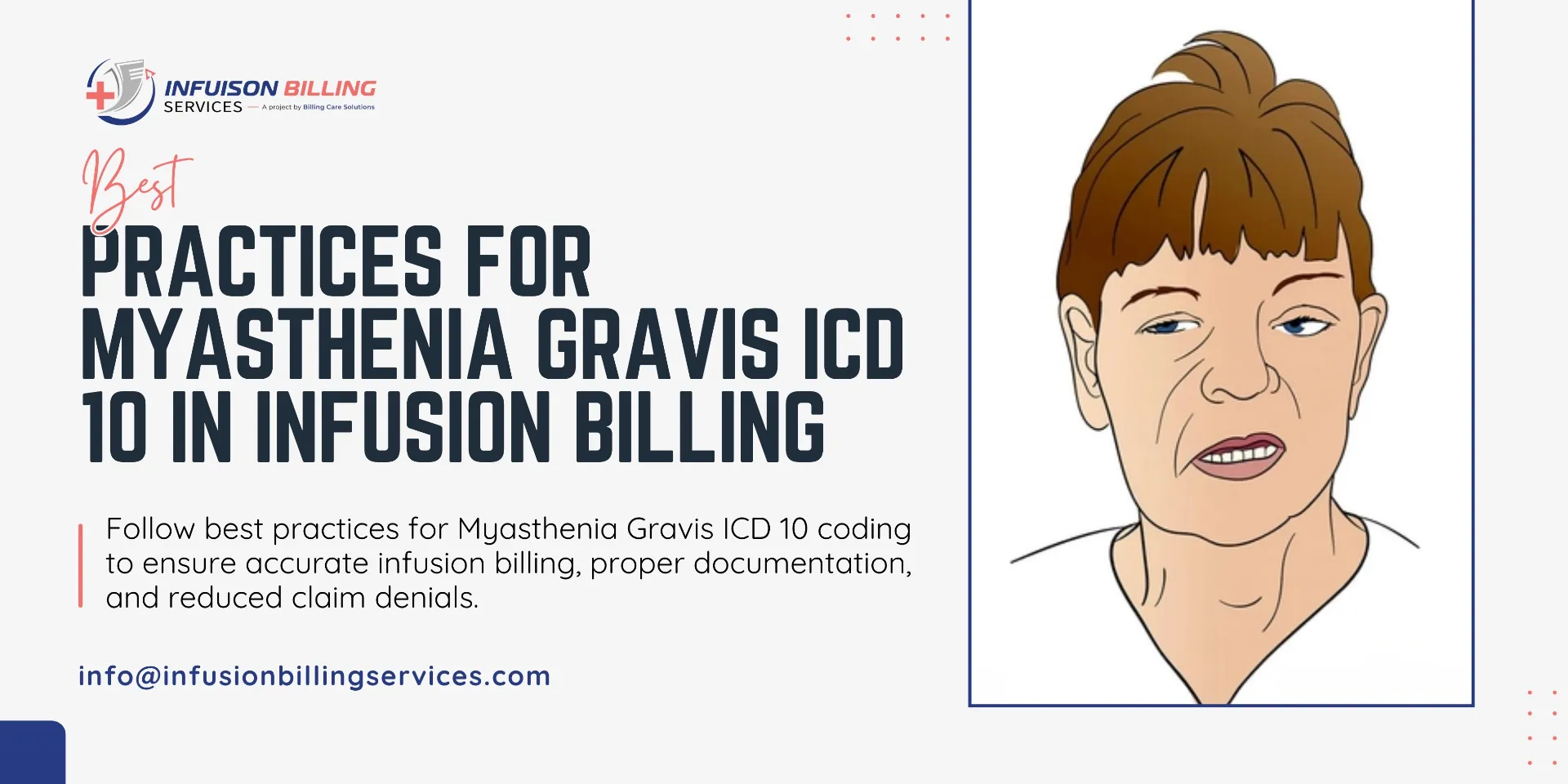
Myasthenia gravis is a chronic autoimmune neuromuscular disorder that causes muscle weakness and fatigue. Because the condition often requires infusion based therapies such as IV immunoglobulin and biologic treatments, precise diagnosis coding is critical for reimbursement. Accurate Myasthenia Gravis ICD 10 coding ensures that infusion services are supported by clear medical necessity and compliant documentation.
For infusion providers, even small documentation gaps can lead to claim denials or delayed payments. Since treatments for myasthenia gravis are often high cost and require prior authorization, correct coding plays a major role in maintaining revenue cycle stability.
Understanding Myasthenia Gravis in ICD 10
The ICD 10 system classifies myasthenia gravis under category G70.0. Codes may vary depending on whether the condition is documented with or without acute exacerbation. The presence of a myasthenic crisis or respiratory involvement significantly impacts code selection.
Choosing the correct Myasthenia Gravis ICD 10 code depends entirely on physician documentation. If records clearly state acute exacerbation or crisis, that must be reflected in the code. If documentation only notes stable myasthenia gravis, a different code applies.
Because treatment intensity often changes during flare ups, documentation must accurately describe the patient’s current condition at the time of infusion therapy.
Importance of Detailed Clinical Documentation
Precise Myasthenia Gravis ICD 10 coding begins with complete documentation. Providers should clearly describe:
-
Muscle weakness severity
-
Respiratory involvement
-
Bulbar symptoms such as difficulty swallowing
-
Recent exacerbations
-
Treatment plan and infusion medications
Infusion therapies are frequently used to manage worsening symptoms or prevent progression. If documentation does not clearly support medical necessity, payers may question expensive biologic or immunoglobulin treatments.
Specific clinical notes allow coders to assign the most accurate Myasthenia Gravis ICD 10 code and justify infusion services.
Linking Diagnosis to Infusion Therapy
Infusion providers often administer IVIG, monoclonal antibodies, or immunosuppressive medications to patients with myasthenia gravis. Because these therapies are costly, insurers closely review claims for appropriate diagnosis coding.
The selected Myasthenia Gravis ICD 10 code must directly support the therapy provided. Documentation should explain why infusion treatment is required, especially during exacerbations. If the therapy is intended to manage a crisis, that must be clearly recorded.
Failure to link treatment and diagnosis may result in denial for lack of medical necessity. Strong documentation ensures smoother claim processing and fewer reimbursement delays.
Capturing Exacerbations and Crisis
Myasthenia gravis can fluctuate in severity. Some patients experience stable disease, while others develop acute exacerbations or myasthenic crisis requiring urgent care.
When a crisis occurs, the correct Myasthenia Gravis ICD 10 code must reflect that severity. Respiratory involvement or the need for ventilatory support should be documented thoroughly.
Accurate coding of exacerbations not only supports infusion billing but also improves risk adjustment reporting. Severity capture ensures reimbursement aligns with the complexity of care delivered.
Managing Comorbidities
Patients with myasthenia gravis may have additional autoimmune disorders, infections, or complications related to immunosuppressive therapy. These secondary conditions must be documented and coded appropriately.
For example, if a patient develops infection due to immunosuppressive treatment, that condition should be reported alongside the primary Myasthenia Gravis ICD 10 code. Proper sequencing is essential to reflect the main reason for treatment.
Capturing the full clinical picture ensures accurate representation of patient acuity and supports proper reimbursement.
Common Coding and Billing Challenges
Infusion providers may face several issues when billing Myasthenia Gravis ICD 10 claims:
-
Incomplete documentation of exacerbation status
-
Incorrect sequencing of primary and secondary diagnoses
-
Missing linkage between infusion therapy and diagnosis
-
Failure to document prior treatment response
-
Lack of updated clinical assessment
Each of these issues can trigger payer review. Proactive internal audits reduce the likelihood of denial and protect revenue.
Prior Authorization and Payer Scrutiny
Many infusion therapies for myasthenia gravis require prior authorization. Payers often request documentation supporting the chosen Myasthenia Gravis ICD 10 code and the need for infusion therapy.
To avoid delays, providers should ensure that clinical notes clearly describe symptom severity, prior treatment attempts, and expected outcomes. Consistency between authorization documentation and submitted claims is critical.
Accurate coding strengthens approval rates and minimizes disruptions in patient care.
Denial Prevention Strategies
Preventing denials begins with strong documentation practices and coding oversight. Recommended strategies include:
-
Reviewing physician notes for severity details
-
Verifying correct Myasthenia Gravis ICD 10 code selection
-
Ensuring treatment plans justify infusion therapy
-
Monitoring payer policy updates
-
Tracking denial trends for improvement
Regular review processes enhance accuracy and reduce rework costs.
Compliance and Audit Readiness
Because infusion therapies for myasthenia gravis are high cost, claims may be subject to audit. Compliance requires that each reported Myasthenia Gravis ICD 10 code is fully supported by medical documentation.
Upcoding without clear evidence of exacerbation can create compliance risks. Undercoding may lead to revenue loss and incomplete reporting of disease severity.
Routine compliance checks ensure documentation accuracy and protect the practice from financial penalties.
How Infusion Billing Services Supports Neurology Coding
Infusion Billing Services provides specialized support for complex neurologic conditions, including Myasthenia Gravis ICD 10 cases.
Comprehensive Documentation Review
Clinical notes are examined for completeness and specificity before claims are submitted.
Accurate Code Assignment
Certified coders verify appropriate Myasthenia Gravis ICD 10 selection based on documented severity and exacerbation status.
Denial Management and Appeals
If claims are denied, detailed appeals are prepared with supporting documentation to secure payment.
Workflow Optimization
Ongoing analysis improves billing efficiency and reduces recurring coding errors.
Financial Benefits of Accurate Coding
Correct Myasthenia Gravis ICD 10 coding improves:
-
First pass claim acceptance
-
Cash flow consistency
-
Accounts receivable performance
-
Risk adjustment accuracy
-
Compliance protection
When coding reflects true clinical severity, reimbursement more accurately matches the intensity of infusion therapy provided.
Final Thoughts
Myasthenia gravis is a complex autoimmune disorder that often requires specialized infusion treatments. Accurate Myasthenia Gravis ICD 10 coding ensures medical necessity is documented, severity is captured, and reimbursement is protected.
Clear documentation, correct sequencing, and strong linkage between diagnosis and infusion therapy are essential. With expert support from Infusion Billing Services, providers can reduce denials, maintain compliance, and strengthen overall revenue cycle performance.
Proper coding is not simply administrative work. It is a critical component of delivering sustainable, high quality infusion care.