Electric Resistance Welding: Principles, Applications, and Industrial Best Practices
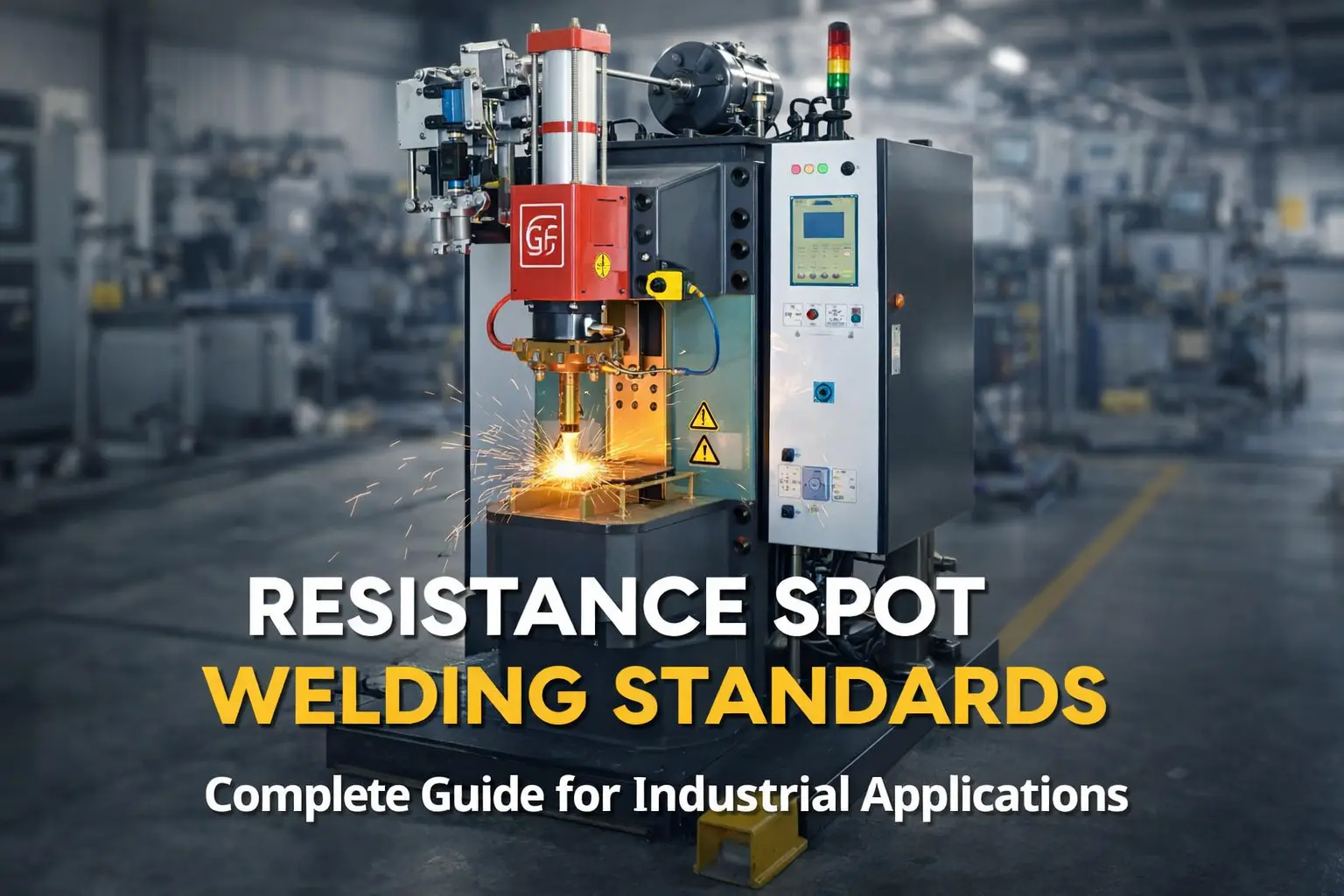
Electric resistance welding (ERW) is a cornerstone technology in modern manufacturing, enabling fast, precise, and reliable metal joining without the need for filler materials or complex setups. As global manufacturers increasingly adopt automation and advanced production lines, understanding ERW’s principles, applications, and best practices has never been more crucial.
At Heron Welder, we specialize in delivering high-performance resistance welding solutions including spot, projection, seam, MFDC, and capacitor discharge welding machines tailored to OEMs, automation integrators, and large-scale industrial operations.
What is Electric Resistance Welding?
Electric resistance welding is a process that joins metals by passing an electric current through the workpieces while applying pressure. The electrical resistance at the interface generates heat, which melts or softens the material, forming a strong metallurgical bond. Unlike traditional welding methods, ERW does not require filler materials or shielding gas, making it highly efficient for high-volume production.
Core Principles of ERW
-
Electrical Resistance: Heat is produced where two metal surfaces resist the flow of electricity. Higher resistance at the joint creates localized heating.
-
Pressure Application: Mechanical pressure ensures proper contact and consolidation of the molten metal.
-
Time and Current Control: Precise control of welding current and duration is critical to achieve consistent weld quality.
Heron Welder designs ERW machines with advanced MFDC and capacitor discharge technologies that optimize these parameters for diverse applications, ensuring repeatable, high-quality welds even in automated production lines.
Types of Electric Resistance Welding
Electric resistance welding encompasses multiple methods, each suited to specific industrial needs:
1. Spot Welding
Spot welding is the most common ERW technique, used for joining overlapping sheet metals. It’s ideal for automotive panels, electrical enclosures, and appliance manufacturing. Heron’s spot welding guns and controllers provide precise current, electrode force, and timing control, minimizing defects and ensuring uniform welds.
2. Projection Welding
Projection welding uses raised features on the metal surface to localize current flow, producing stronger welds in thicker materials or complex assemblies. Applications include automotive chassis components, HVAC panels, and heavy-duty machinery.
3. Seam Welding
Seam welding produces continuous welds along a joint, perfect for manufacturing tubes, tanks, and fuel containers. Heron’s advanced seam welding systems combine consistent current control with automated roller electrodes for flawless, leak-proof seams.
4. MFDC and Capacitor Discharge Welding
Medium-Frequency Direct Current (MFDC) and capacitor discharge systems are specialized ERW processes for precision applications. They deliver fast, high-intensity current pulses, ideal for battery tab welding, electrical components, and delicate thin metals where heat control is critical.
Industrial Applications of Electric Resistance Welding
ERW is widely adopted across industries due to its speed, repeatability, and minimal post-processing requirements. Key applications include:
-
Automotive Manufacturing: Body panels, chassis frames, and seat structures.
-
Electrical Components: Switchgear, transformers, battery packs, and connectors.
-
Consumer Appliances: Washing machines, refrigerators, ovens, and HVAC units.
-
Heavy Equipment: Structural assemblies for construction, agriculture, and transportation.
-
Metal Fabrication: Tubes, pipes, and storage tanks for industrial use.
Heron’s global clients benefit from ERW systems that integrate seamlessly with automated production lines, reducing labor costs while improving throughput and weld consistency.
Comparing ERW with Other Welding Methods
| Feature | Electric Resistance Welding | Arc Welding | Laser Welding |
|---|---|---|---|
| Heat Source | Electrical resistance | Electric arc | Laser beam |
| Filler Material | Not required | Often required | Sometimes required |
| Speed | High, suitable for mass production | Moderate | High but costly |
| Automation | Easily automated | Possible but complex | Fully automatable |
| Material Thickness | Thin to medium | Wide range | Thin to medium |
ERW stands out for high-volume production where repeatability, speed, and low operating costs are priorities. Heron Welder’s expertise ensures clients select the optimal ERW system for their application, minimizing trial-and-error and improving ROI.
Best Practices for Electric Resistance Welding
-
Material Preparation: Clean, flat surfaces maximize electrical contact and weld quality.
-
Electrode Maintenance: Regular inspection and dressing of electrodes prevent uneven heating or burn-through.
-
Parameter Optimization: Adjust current, pressure, and weld time according to material type and thickness.
-
Quality Control: Employ non-destructive testing and monitoring to detect defects early.
-
Automation Integration: Incorporate ERW systems into production lines with sensors, robotics, and PLC control for consistent output.
Heron provides not only machinery but also consultation on workflow optimization, ensuring clients get maximum performance and long-term reliability.
FAQs About Electric Resistance Welding
Q1: What metals can be welded using ERW?
A1: ERW works best with low to medium carbon steel, stainless steel, aluminum, copper, and brass. Material conductivity affects welding parameters.
Q2: Is ERW suitable for high-volume production?
A2: Yes, ERW is ideal for automated, repetitive production due to its speed, efficiency, and minimal post-weld finishing.
Q3: How does ERW differ from arc welding?
A3: ERW uses resistance heating without filler material or shielding gas, while arc welding relies on an electric arc and often requires consumables.
Q4: Can ERW weld thin materials without burn-through?
A4: Yes, using MFDC or capacitor discharge ERW systems ensures precise, low-heat welds for delicate or thin metals.
Q5: Does Heron provide custom ERW solutions?
A5: Absolutely. Heron designs customized ERW machines, guns, controllers, and automation solutions tailored to each client’s production requirements.
Partner with Heron for Electric Resistance Welding Solutions
From automotive to electrical, from thin-sheet metals to heavy-duty industrial assemblies, Heron Welder delivers reliable, high-performance ERW systems designed to meet today’s manufacturing challenges.
Request a quote or consult with our team today to explore customized resistance welding solutions and automated production lines engineered for precision, efficiency, and long-term reliability.