


AI and IoT: Creating Intelligent Devices That Learn and Adapt in Real Time
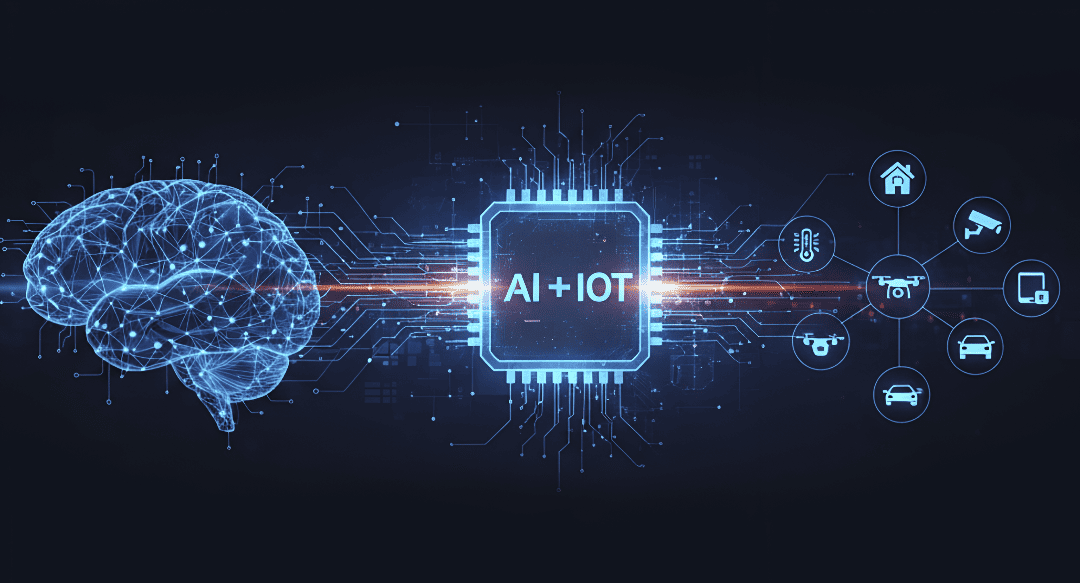
The convergence of Artificial Intelligence (AI) and the Internet of Things (IoT) is redefining how devices interact with the world around them. No longer limited to static sensors or rule-based automation, modern IoT systems are evolving into intelligent, adaptive networks capable of learning from data, making decisions, and responding in real time.
From smart homes and industrial automation to healthcare monitoring and connected transportation, AI-powered IoT is transforming raw data into actionable intelligence. This shift is enabling organizations to build systems that are not just connected but context-aware, predictive, and self-improving.
In this blog, we’ll explore how AI and IoT work together, the technologies driving this transformation, real-world use cases, and how businesses can leverage intelligent IoT solutions to gain a competitive edge.
Understanding the AI + IoT Synergy
At its core, IoT focuses on data collection sensors, devices, and machines continuously capturing information from their environment. AI, on the other hand, specializes in data interpretation and decision-making.
When combined, AI and IoT create a powerful feedback loop:
-
IoT devices collect massive volumes of real-time data
-
AI models analyze, learn, and identify patterns
-
Intelligent decisions are made instantly or autonomously
-
Systems improve continuously through learning
This fusion is often referred to as AIoT (Artificial Intelligence of Things) a new paradigm where connected devices can think, adapt, and act without constant human intervention.
Why Real-Time Intelligence Matters
Traditional IoT systems rely heavily on predefined rules: if X happens, do Y. While effective in simple scenarios, this approach fails in complex, dynamic environments.
AI enables IoT systems to:
-
Respond instantly to changing conditions
-
Predict outcomes before failures occur
-
Adapt behavior based on context and history
-
Reduce latency and dependency on manual control
Real-time intelligence is especially critical in industries where delays or inaccuracies can lead to financial loss, safety risks, or operational downtime.
Key Technologies Powering Intelligent IoT Systems
1. Machine Learning and Deep Learning
Machine learning algorithms allow IoT devices to recognize patterns, classify data, and make predictions. Over time, models improve accuracy by learning from historical and live data.
Deep learning, in particular, is effective for:
-
Image and video recognition
-
Voice and speech processing
-
Complex anomaly detection
2. Edge AI Computing
Instead of sending all data to centralized servers, Edge AI processes data locally on devices or gateways. This reduces latency, enhances privacy, and enables real-time decision-making.
Edge AI is crucial for:
-
Autonomous vehicles
-
Smart surveillance systems
-
Industrial robotics
-
Healthcare wearables
3. Cloud-Based AI Platforms
Cloud infrastructure provides scalable computing power for training and managing AI models across millions of devices. It enables centralized intelligence with distributed execution.
Cloud AI supports:
-
Model training and updates
-
Large-scale data analytics
-
Device orchestration and monitoring
4. Natural Language Processing (NLP)
NLP enables IoT devices to understand and respond to human language, making systems more intuitive and accessible through voice or text interfaces.
Real-World Use Cases of AI and IoT
Smart Homes and Buildings
AI-driven IoT systems optimize energy usage, improve security, and enhance comfort by learning user preferences and environmental patterns.
Examples include:
-
Smart thermostats that adjust automatically
-
AI-powered security cameras with facial recognition
-
Predictive maintenance for HVAC systems
Industrial IoT (IIoT)
In manufacturing and logistics, AI-powered IoT enables predictive maintenance, quality control, and process optimization.
Benefits include:
-
Reduced equipment downtime
-
Improved production efficiency
-
Real-time anomaly detection
Healthcare and Wearables
AI-enabled IoT devices continuously monitor patient vitals, detect early warning signs, and provide personalized health insights.
Applications include:
-
Remote patient monitoring
-
Smart medical devices
-
AI-assisted diagnostics
Smart Cities
AI and IoT power intelligent traffic systems, waste management, energy grids, and public safety infrastructure.
Key outcomes:
-
Reduced congestion
-
Improved resource utilization
-
Enhanced citizen safety
Connected Transportation
Autonomous and connected vehicles rely on AIoT to process sensor data, navigate safely, and adapt to real-time traffic conditions.
Benefits of AI-Powered IoT Solutions
1. Autonomous Decision-Making: Systems can operate independently, reducing reliance on human intervention and minimizing errors.
2. Predictive Capabilities: AI models anticipate failures, demand spikes, or anomalies before they occur, enabling proactive responses.
3. Scalability: AI-driven automation allows organizations to manage millions of connected devices efficiently.
4. Improved User Experience: Personalized, adaptive systems respond to user behavior and preferences seamlessly.
5. Operational Efficiency: Automation reduces manual tasks, optimizes workflows, and lowers operational costs.
Challenges in AI and IoT Integration
Despite its potential, implementing AIoT comes with challenges:
-
Data security and privacy risks
-
High initial infrastructure costs
-
Complex integration with legacy systems
-
Model accuracy and bias concerns
-
Scalability and performance management
Addressing these challenges requires careful planning, robust architecture, and expertise in both AI development and IoT systems.
The Role of AI App Development in Intelligent IoT
Building successful AI-powered IoT solutions demands more than just connecting devices. It requires:
-
Custom AI model development
-
Secure and scalable cloud integration
-
Real-time data processing pipelines
-
Edge computing optimization
-
Ongoing model training and maintenance
This is where specialized AI app development services play a critical role bridging the gap between data, intelligence, and real-world applications.
What the Future Holds for AI and IoT
The future of AI and IoT is moving toward self-learning, self-healing, and fully autonomous systems. Emerging trends include:
-
Federated learning for decentralized AI training
-
Digital twins powered by real-time IoT data
-
Emotion-aware devices using affective AI
-
Hyper-personalized user environments
-
Fully autonomous industrial ecosystems
As AI models become more efficient and hardware continues to evolve, intelligent IoT will become the foundation of next-generation digital ecosystems.
Final Thoughts: Turning Intelligent Devices into Business Advantage
AI and IoT together are not just transforming devices, they're transforming entire industries. Organizations that embrace intelligent, adaptive systems gain the ability to operate faster, smarter, and more efficiently than ever before.
If you’re looking to build AI-powered IoT solutions, intelligent applications, or scalable digital systems that learn and adapt in real time, partnering with the right technology experts is essential. At Swayam Infotech, we specialize in designing and developing advanced AI-driven applications that seamlessly integrate intelligence into real-world systems.