


Generative AI vs. Phishing: Can AI Defend Against AI-Driven Cyber Fraud?
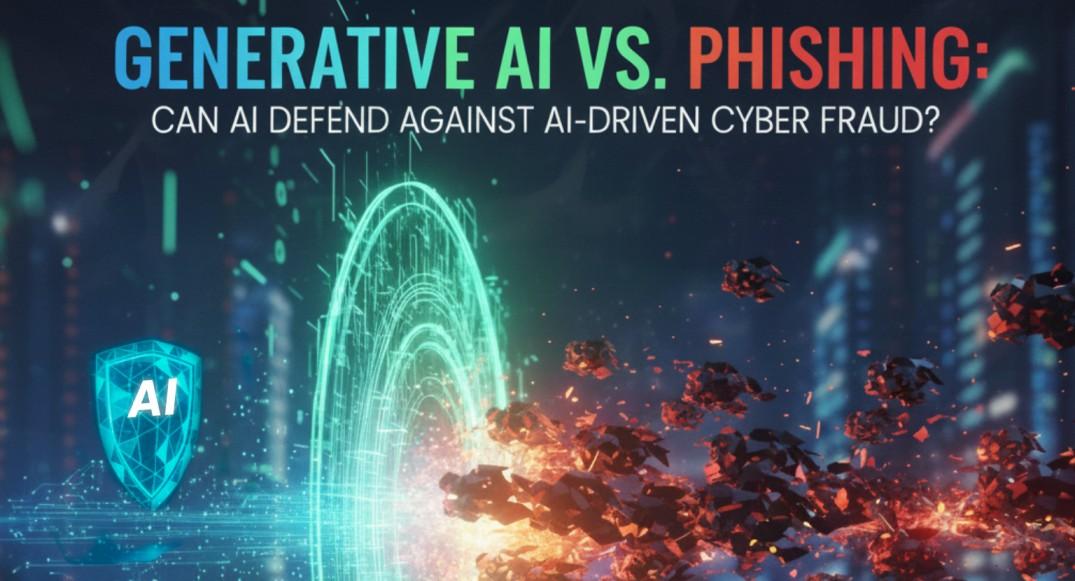
Cybercrime has evolved rapidly over the past decade, but few threats have escalated as quickly and dangerously as AI-driven phishing. What was once easy to spot—poor grammar, generic messages, suspicious links—has transformed into highly convincing, personalized attacks powered by generative AI. Today’s phishing emails can mimic writing styles, impersonate executives, and adapt dynamically to victims in real time.
As attackers weaponize artificial intelligence, a critical question emerges:
Can generative AI also be used to defend against AI-driven cyber fraud?
The answer is yes—but only when implemented correctly. This blog explores how generative AI is reshaping phishing attacks, how AI-based defenses work, their strengths and limitations, and why intelligent AI security solutions are becoming essential for modern organizations.
The Evolution of Phishing Attacks
Phishing is no longer just a numbers game. Traditional phishing relied on mass emails hoping a small percentage of recipients would fall for obvious scams. Generative AI has changed this approach entirely.
Modern phishing attacks are now:
-
Highly personalized
-
Context-aware
-
Grammatically flawless
-
Difficult to distinguish from legitimate communication
By analyzing social media profiles, public data, and leaked information, AI-powered phishing tools can craft messages that feel authentic and urgent—often bypassing both human intuition and traditional security filters.
How Generative AI Is Powering Modern Phishing
Generative AI models can produce human-like text at scale, making them ideal tools for cybercriminals.
1. Personalized Social Engineering
Attackers use AI to tailor messages based on:
-
Job roles
-
Company hierarchy
-
Recent business activity
-
Writing styles of known contacts
This level of personalization dramatically increases success rates.
2. Real-Time Adaptation
AI-driven phishing bots can:
-
Respond to victims in real time
-
Adjust tone based on replies
-
Continue conversations convincingly
This blurs the line between human and machine-driven fraud.
3. Multichannel Attacks
AI phishing isn’t limited to email. It now spans:
-
SMS (smishing)
-
Voice calls (vishing using AI voice cloning)
-
Messaging apps
-
Social media platforms
This omnichannel approach makes detection far more complex.
Why Traditional Anti-Phishing Defenses Are Failing
Legacy security systems were not designed to handle AI-generated threats.
Common limitations include:
-
Rule-based filters that rely on known patterns
-
Signature-based detection that fails against new attack styles
-
Keyword scanning that misses contextually accurate messages
-
Delayed response to emerging phishing techniques
As a result, many AI-generated phishing attacks pass through traditional defenses undetected.
Can Generative AI Fight Back?
Yes—but defensively applied generative AI works very differently from how attackers use it. When used ethically and strategically, AI becomes a powerful shield rather than a weapon.
AI-driven cybersecurity systems focus on behavior, intent, and anomalies, not just static patterns.
How AI Defends Against AI-Driven Phishing
1. Contextual Email Analysis
AI models analyze the meaning and intent behind messages rather than just keywords. They evaluate:
-
Writing tone deviations
-
Unusual urgency or pressure
-
Inconsistencies in communication style
-
Mismatch between sender behavior and content
This allows detection of highly polished phishing emails that traditional systems miss.
2. Behavioral User Modeling
AI systems learn normal user behavior over time, such as:
-
Typical communication patterns
-
Login habits
-
File access behavior
If an email prompts abnormal actions—like unusual payment requests or credential access—AI flags the activity instantly.
3. Natural Language Understanding (NLU)
Advanced AI models use NLU to:
-
Detect emotional manipulation
-
Identify coercive language
-
Spot impersonation attempts
This is critical for stopping executive impersonation and business email compromise attacks.
4. Real-Time Threat Adaptation
Unlike static security rules, AI systems continuously learn from:
-
New attack attempts
-
Failed phishing campaigns
-
Emerging fraud techniques
This allows defenses to evolve as fast as attackers innovate.
5. Voice and Deepfake Detection
AI-driven defenses can now analyze:
-
Voice anomalies in calls
-
Synthetic speech patterns
-
Video manipulation artifacts
This is essential as voice cloning and deepfake phishing attacks increase.
Challenges in AI-Based Phishing Defense
Despite its strengths, AI-driven security is not without challenges.
1. Data Dependency: AI models require high-quality, diverse data to perform accurately. Poor data can weaken detection.
2. Adversarial Attacks: Cybercriminals may attempt to manipulate or confuse AI systems through adversarial inputs.
3. Integration Complexity: AI security solutions must integrate smoothly with existing IT infrastructure and workflows.
4. Ethical and Privacy Concerns: Monitoring communications must be balanced with user privacy and regulatory compliance. This is why expertise in AI system design is critical—poorly implemented AI can create blind spots rather than protection.
Human + AI: The Strongest Defense Model
AI should not replace cybersecurity professionals—it should empower them.
The most effective phishing defense strategies combine:
-
AI-driven detection
-
Human oversight and judgment
-
Continuous training and awareness
-
Clear incident response protocols
This hybrid approach ensures resilience against both automated and targeted attacks.
The Future of AI in Cyber Fraud Prevention
As generative AI becomes more accessible, phishing attacks will continue to grow in sophistication. At the same time, defensive AI will advance toward:
-
Predictive threat modeling
-
Autonomous incident response
-
Cross-platform fraud intelligence
-
Organization-wide behavioral analysis
Security will shift from reactive defense to anticipatory protection, where threats are neutralized before users even encounter them.
Why Custom AI Security Solutions Matter
Off-the-shelf security tools often fail to address unique organizational risks. Custom AI-driven cybersecurity solutions offer:
-
Tailored threat models
-
Industry-specific protection
-
Better alignment with internal workflows
-
Greater long-term adaptability
Organizations dealing with sensitive data, financial transactions, or high-value operations benefit the most from customized AI defenses.
Conclusion: Using AI to Outsmart AI-Driven Phishing
Generative AI has undeniably raised the stakes in cyber fraud. Phishing attacks are now smarter, more convincing, and harder to detect than ever before. However, the same technology that empowers attackers can also be used to defend against them—when applied strategically and responsibly.
AI-driven phishing defense is no longer optional; it is a necessity for organizations that want to protect their data, reputation, and users. Building such intelligent security systems requires deep expertise in AI, cybersecurity, and scalable application development.
If you’re looking to develop AI-powered security solutions or integrate advanced fraud detection into your applications, partnering with a skilled AI app development company can help you stay ahead of evolving threats. Swayam Infotech specializes in building intelligent, secure, and scalable AI-driven applications that help businesses combat modern cyber risks effectively.