


How Stories About Animals Encourage Children to Care for Others
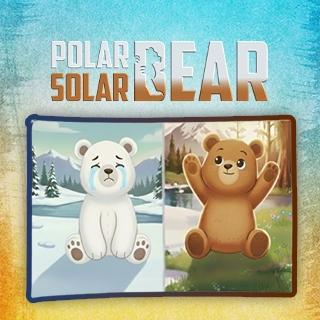
There is a reason children lean forward when a story features an animal character. Something about a small bear or a gentle cub lowers every guard a child has. They stop asking whether the story is meant for them. They simply listen. And in that listening, something quietly powerful happens: they begin to feel what the animal feels, and through that feeling, they learn how to care for others.
This is precisely the emotional world that F.K. Smith builds in Polar Bear, Solar Bear. A young polar bear cub who cannot survive Alaska's cold must leave her mother and find warmth in Louisiana. What follows is a story about belonging, caregiving, and the quiet courage it takes to love someone you may one day have to let go.
Why Animal Characters Teach Empathy Better Than Human Ones
Animal characters in children's fiction trigger what researchers call narrative empathy, the ability to feel what a character feels, more readily than human characters do. Because the character is not a child, young readers feel no pressure of comparison. They project themselves freely, experiencing empathy and compassion at a safe distance before they practice those things in real life.
Solar Bear is cold, frightened, and separated from her mother. Every child who has ever felt out of place or missed someone will recognize that emotional truth immediately. The fact that she is a polar bear does not create distance from those feelings. It amplifies them, because children feel alongside her without the story ever becoming a lesson.
Animal-centered stories build prosocial behavior because they:
• Reduce defensive resistance. Children engage more openly with difficult emotions when the character is not a direct human stand-in.
• Model behavior without prescribing it. Solar Bear does not tell children to be kind. She simply is kind, and readers notice.
• Create safe spaces for processing loss and vulnerability, emotions children often lack the words to describe.
Solar Bear and the Caregiving Instinct
One of the most quietly remarkable things about Polar Bear, Solar Bear is how caregiving flows in both directions. Miss Karen nurtures Solar Bear, and Solar Bear watches over Miss Karen when Lyme disease leaves her unwell. She prays for Grandma quietly, asks PawPaw to make soup, and suggests a milkshake outing to lift her spirits. She does not wait to be taught that someone needs help. She observes, feels, and acts.
When Grandma explains what compassion means, Solar Bear responds with one of the most honest lines in the book: "It kind of hurts to have compassion, doesn't it? I want to help, but don't know how, so my heart hurts." That is the emotional education this story offers. Not a definition on a page, but a lived example of what genuine care looks and feels like.
Values Woven Into Everyday Moments
F.K. Smith does not deliver values as a checklist. She weaves them into ordinary life. Solar Bear learns about faith through Sunday school stories, about belonging through a family that chose to love her, and about prayer by kneeling beside someone she loves. Merton, the argumentative boy in Sunday school, is not a villain. He is a five-year-old asking every question a curious child secretly wants to ask. His presence validates that wondering and even disagreeing are part of how children engage with the world.
Explore the full story and its themes at the official Polar Bear, Solar Bear book page, where F.K. Smith shares the heart behind it.
Using Animal Stories to Start Real Conversations With Children
The most valuable thing a parent, grandparent, or educator can do after reading a book like this one is to pause and ask questions. Not comprehension questions. Real ones. Questions like: Why do you think Solar Bear was worried about Grandma? Have you ever felt like you wanted to help someone but did not know how? What would you do if someone you loved were sick?
These conversations do not need to be long or structured. A child who thinks for a moment and then says something small, like "I would make them soup as PawPaw did," is already practicing empathy in a way that no worksheet can replicate.
Here are a few ways adults can extend the learning from Polar Bear, Solar Bear:
• Ask children to name a moment in the story when Solar Bear was kind, and then ask if they have ever done something similar.
• Use Grandma's explanation of compassion as a starting point. "It kind of hurts to have compassion, doesn't it?" is one of the most honest things a child character says in recent children's literature.
• Talk about someone in your family or community who, like Miss Karen, could use a small act of care, then do it together.
A Story That Stays With a Child Long After the Last Page
The best children's books do not end when you close the cover. They settle into a child's imagination and continue working quietly for years, shaping how they think about others, about kindness, and about what it means to belong somewhere. Polar Bear, Solar Bear is that kind of book.
F.K. Smith writes from lived experience. The Lyme disease that Miss Karen lives with in the story is real. The family dynamics are real. The love between a grandmother and a child, whether biological or chosen, is deeply real. That authenticity is what makes Solar Bear's compassion feel earned rather than manufactured. Children sense the difference.
If you are looking for a book that will not just entertain a child but genuinely shape how they think about caring for others, this is one worth reading together, more than once.
About the Author
F.K. Smith is a retired teacher with 49 years in the classroom and degrees from Louisiana State University, the University of Oklahoma, and Southwestern State College. She brings a lifelong love of storytelling, education, and faith to her writing