


India Fire Pumps and the Strengthening of Building Safety Systems
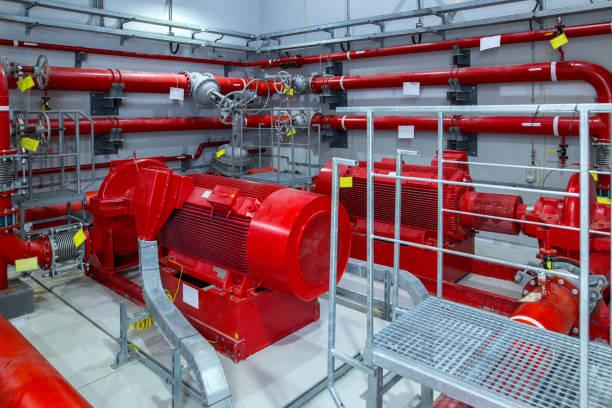
India’s fire protection ecosystem is becoming more important as urban construction, industrial expansion, warehousing, commercial real estate, data centers, healthcare facilities, and public infrastructure continue to grow. Fire pumps are a critical part of this safety network because they provide the pressure and water flow needed for sprinklers, hydrants, standpipes, and other water-based fire suppression systems during emergencies.
According to MarkNtel Advisors, the India Fire Pump Market was valued at around USD 64.88 million in 2025 and is projected to grow from USD 67.2 million in 2026 to USD 92.1 million by 2032, registering a CAGR of around 5.39% during 2026–2032. The CAGR of around 5.39% reflects mandatory enforcement of NBC 2016, stronger state-level fire compliance, commercial building upgrades, and industrial safety requirements.
Fire Safety Compliance Is Becoming More Structured
India’s fire pump demand is closely linked with regulatory enforcement. Large residential complexes, malls, hospitals, hotels, educational institutions, airports, factories, and warehouses require fire protection systems that can function reliably during emergencies. Fire pumps become essential where municipal water pressure is insufficient to support sprinkler and hydrant networks across multiple floors or large premises.
The National Building Code of India provides a broad framework for building safety, including fire and life safety considerations. As states and urban local bodies strengthen inspection processes, building owners and developers are placing greater focus on compliant fire pump rooms, backup power, controllers, storage tanks, and maintenance records.
Commercial Buildings Create Strong Installation Demand
Commercial infrastructure is one of the most important demand bases for fire pumps in India. Shopping malls, office towers, hotels, hospitals, IT parks, educational campuses, transport hubs, and mixed-use developments need reliable fire suppression systems to protect occupants and assets. In dense cities, fire safety planning becomes even more important because evacuation, access, and emergency response can be more complex.
The Ministry of Housing and Urban Affairs plays a central role in India’s urban development and infrastructure planning. As cities expand vertically and commercial spaces become larger, fire pumps remain essential for ensuring that water-based suppression systems can reach required pressure levels across complex building layouts.
Industrial Facilities Require High-Reliability Fire Systems
India’s industrial expansion is also supporting fire pump adoption. Manufacturing plants, chemical facilities, refineries, logistics parks, power plants, pharmaceuticals, textiles, and food processing units often store combustible materials, operate high-load electrical systems, or use process equipment that increases fire risk. Fire pumps support these facilities by providing dependable water delivery during emergency events.
Worker safety remains a core concern for industrial operations. The International Labour Organization’s occupational safety and health resources emphasize risk prevention and safe working environments. In India’s industrial sites, fire pumps are part of wider safety planning that includes alarms, hydrants, sprinklers, evacuation routes, training, and emergency response procedures.
Horizontal Split Case Pumps Lead the Product Mix
Horizontal split case pumps are projected to lead India’s fire pump landscape in 2026. Their popularity is linked to high flow capacity, operational reliability, easier maintenance, and suitability for large commercial and industrial fire protection systems. These pumps are often selected for buildings and facilities where stable water delivery is required across extensive fire suppression networks.
Their design also supports maintenance access, which is important because fire pumps may remain idle for long periods but must start immediately during emergencies. For facility managers, ease of inspection and serviceability can reduce downtime and improve confidence in system readiness.
Diesel and Electric Systems Serve Different Needs
Fire pump systems in India are usually selected based on site risk, power reliability, regulatory expectations, and building design. Electric fire pumps are common where grid power and backup systems are reliable, while diesel pumps are preferred where independent operation is needed during power failure. Many larger facilities use both main and backup pump arrangements to improve emergency reliability.
The NFPA 20 standard for stationary fire pumps is widely referenced globally for fire pump installation and performance practices. While India follows national and state-level regulations, international fire protection standards often influence engineering decisions, especially for industrial assets, multinational facilities, and high-value infrastructure.
Warehousing, Data Centers, and Logistics Add Momentum
India’s logistics and digital infrastructure expansion is creating another layer of demand. Warehouses, cold storage facilities, fulfillment centers, and data centers require reliable fire suppression because they contain high-value goods, electrical systems, battery backup units, servers, or combustible packaging materials. Fire pumps are essential to ensure sprinkler and hydrant systems can respond quickly and effectively.
Fire safety also intersects with disaster resilience. The National Disaster Management Authority provides guidance and coordination around disaster risk reduction in India. As infrastructure becomes more complex, fire preparedness is likely to remain an important part of wider risk management for both public and private assets.
Maintenance and Testing Will Shape Long-Term Reliability
Fire pumps are safety-critical assets, so maintenance discipline is essential. Regular testing confirms whether pumps can start, build pressure, and deliver required flow during emergencies. Controllers, batteries, diesel engines, electric motors, valves, gauges, suction lines, and water storage arrangements must all be inspected as part of lifecycle management.
The long-term outlook for India’s fire pump sector is steady as compliance enforcement, commercial construction, industrial safety, logistics growth, and infrastructure modernization continue. Demand will come from both new installations and upgrades of older fire protection systems. As India’s built environment becomes denser and more technically complex, fire pumps will remain essential for protecting people, property, and business continuity.