


Free AI Tools vs a Paid AI Literacy Course: What Should Parents Actually Choose in 2026?
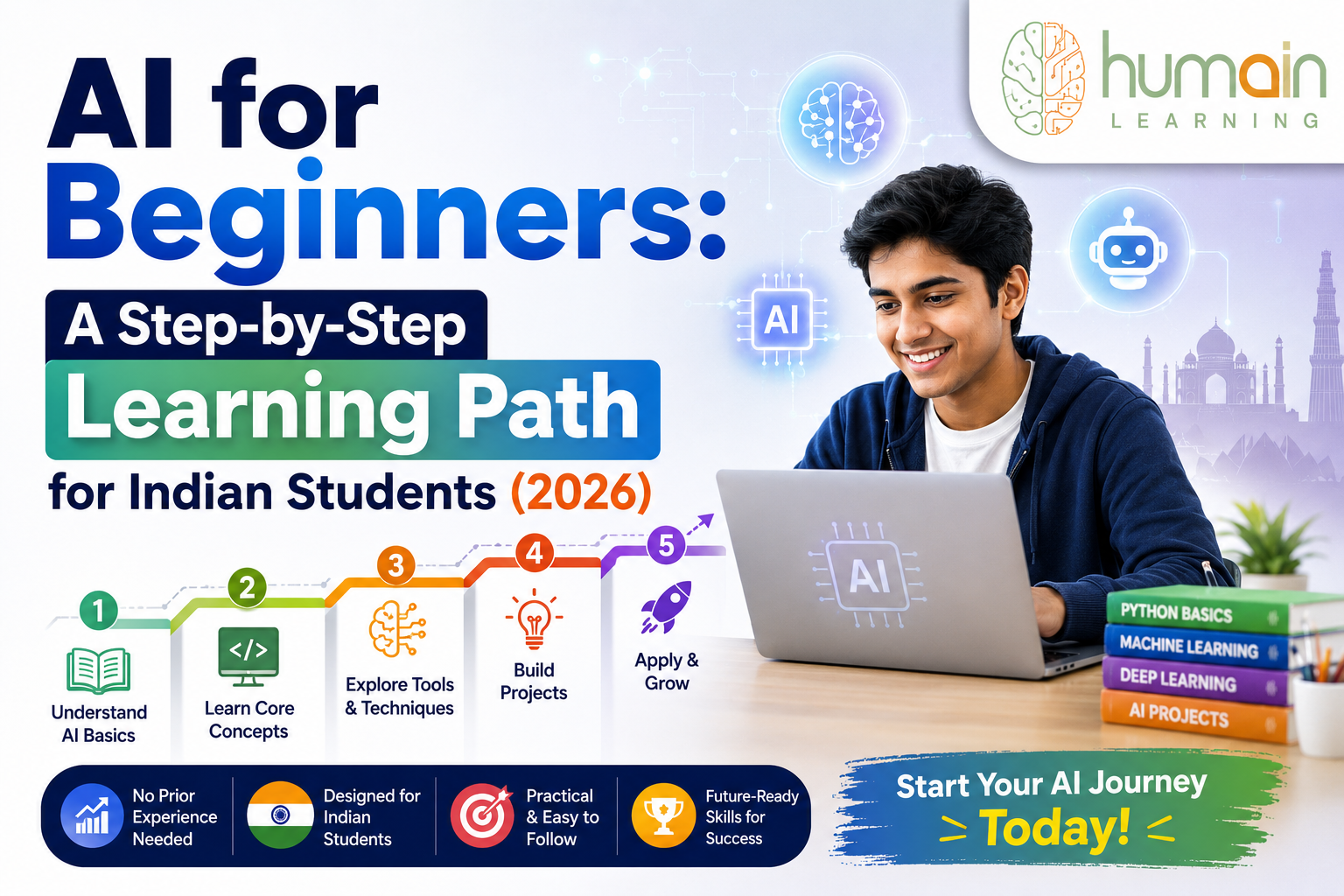
Your child already has ChatGPT open in one tab and homework open in another. So why would any parent pay for an AI course when the tools themselves are free?
It's the single most reasonable objection a parent can raise in 2026 — and it deserves a real answer, not a sales pitch. Here's the honest breakdown.
The Real Question Isn't "Free vs Paid" — It's "Tool vs Framework"
Free AI tools teach your child what a chatbot can do today. A structured AI literacy course teaches your child how to think alongside AI, permanently — a skill that doesn't expire when the next model launches.
That distinction sounds subtle. It isn't. Consider what actually happens when a student learns AI the free, unstructured way:
- They learn prompts, not principles — so when the interface changes, they're lost again
- They get answers, not frameworks for judging whether those answers are trustworthy
- They pick up habits from trial and error, with no one checking whether those habits are safe, ethical, or even effective
A paid, structured course exists to fix exactly this gap — not by teaching a tool, but by teaching a way of thinking that transfers to whatever tool exists in 2027, 2028, and beyond.
What Free AI Resources Are Actually Good For
To be fair, free tools aren't useless — they're a reasonable starting point:
- Quick homework help or explanations in the moment
- Casual exploration and curiosity-driven learning
- Zero-cost access for families not ready to commit to a structured program
Where they consistently fall short is depth and accountability. There's no curriculum, no progression, no one checking whether a 12-year-old is developing critical thinking or just developing a habit of copy-pasting AI answers into homework.
What a Structured Course Adds That YouTube and ChatGPT Never Will
This is where a program like Humain Learning earns its place — not as "another AI class," but as a literacy framework built around six pillars: AI Foundations, Learning, Studying, Creating, Agents & Automation, and Ethics & Safety.
That framework matters for three concrete reasons:
1. It's built by people who understand both AI and pedagogy. The course is designed by founders with Harvard and Cambridge backgrounds, in partnership with E-Cell IIT Kharagpur — including a dedicated AI Hackathon where students apply what they've learned instead of just absorbing theory.
2. It's aligned to what Indian education is already demanding. With NEP 2020, NCF 2023, and CBSE's Class IX AI skill subject already pushing schools toward structured AI education, a course mapped to these frameworks (and to UNESCO/OECD AI competency standards) isn't extracurricular — it's ahead of the curve.
3. It teaches judgment, not just usage. In live, small-batch sessions, students learn to catch AI's mistakes, question its outputs, and understand where automation should stop and human judgment should start — the exact skill free tools never explicitly teach.
The Parent's Real Fear: "Will My Child Become Too Dependent on AI?"
This is the second-biggest concern parents raise — and it's a fair one. The honest answer is that dependency isn't caused by using AI; it's caused by using AI without ever being taught its limits.
Structured courses address this directly through their ethics and safety module — teaching students when AI assistance crosses into AI dependence, and how to keep their own reasoning visible in their work rather than quietly outsourcing it. Parent feedback from existing cohorts consistently mentions the same pattern: children who complete the course start catching AI's errors themselves — sometimes even correcting their own parents' AI use at home.
That's the actual marker of literacy: not knowing how to use a tool, but knowing when not to trust it.
So — Free or Paid? Here's the Honest Framework
| If your priority is... | Go with... |
|---|---|
| Quick, occasional homework help | Free tools are fine |
| Long-term critical thinking and AI judgment | A structured course |
| Zero cost, no commitment | Free tools |
| Curriculum alignment (NEP/NCF/CBSE) + measurable progress | A structured course |
| Safety, ethics, and dependency guardrails | A structured course |
Free tools and structured courses aren't really competitors — they solve different problems. The mistake most parents make isn't choosing free tools; it's assuming free tools alone are "enough" preparation for a curriculum shift that's already mandatory from Class 3 onward.
Where to Go From Here
If your child is already using AI daily — and most are — the real decision isn't whether to introduce AI. It's whether that exposure comes with structure or without it.
For families ready to move beyond ad-hoc chatbot use, Humain Learning's courses for students offer a live, framework-based path built specifically for this. Schools evaluating a program for their students can explore the options for schools, and parents wanting more detail on how the course supports (rather than replaces) home learning can check the dedicated parents resources
The tools were always going to be free. The judgment to use them well rarely is — and that's exactly what's worth paying for.