


Assignments: A Complete Guide for Canada College & University Students
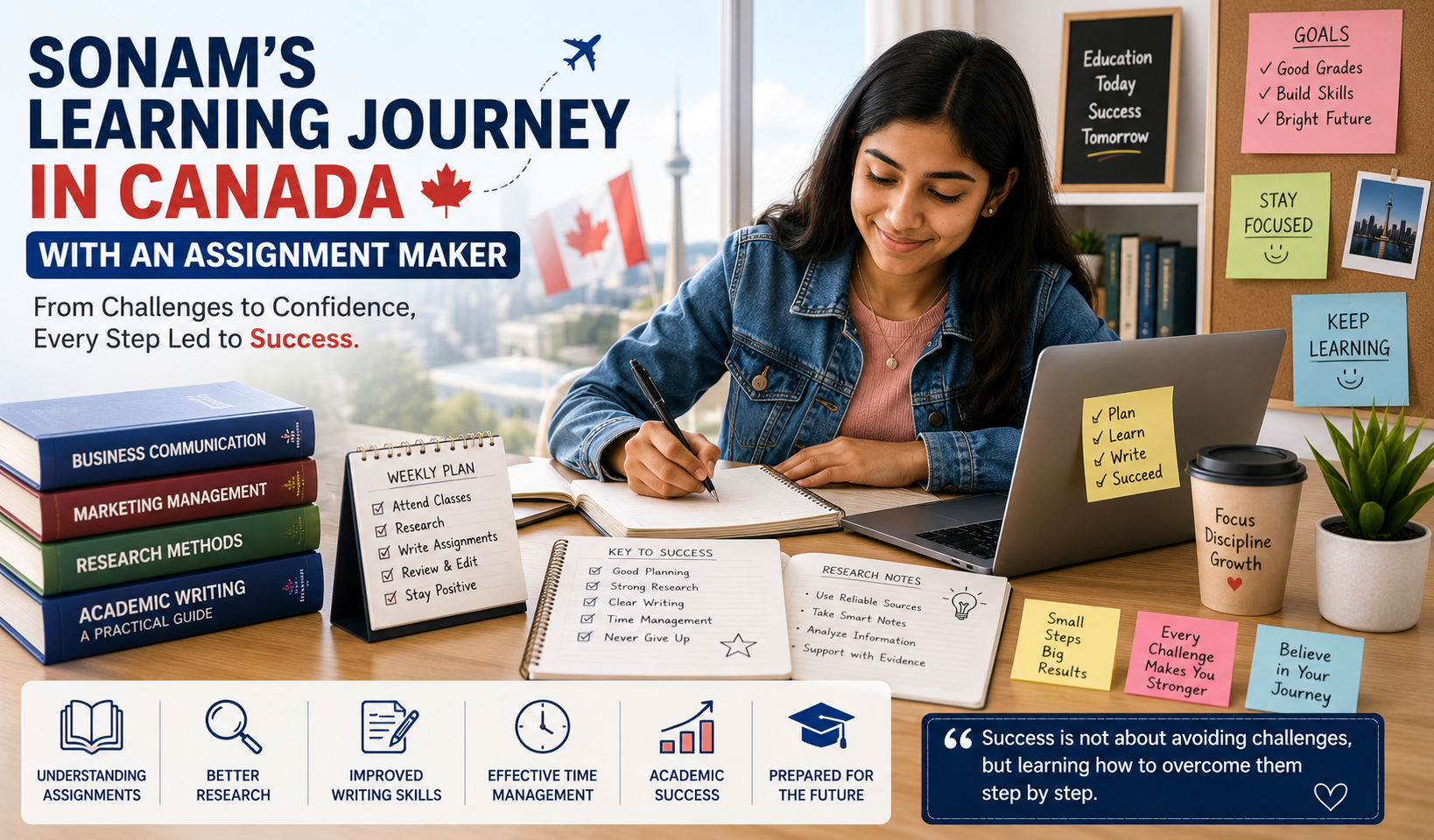
Assignments are an important part of academic life in Canadian colleges and universities. Whether you are studying business, nursing, engineering, law, computer science, or any other subject, completing assignments helps you develop knowledge, research skills, and critical thinking abilities. They are more than just tasks given by professors; they prepare students for real-world challenges and professional careers.
Many students find assignments stressful because of tight deadlines, multiple subjects, and balancing part-time jobs with studies. However, with the right planning and writing strategies, completing quality assignments becomes much easier.
In this guide, you'll learn everything about assignments, including their importance, different types, useful writing tips, and common mistakes to avoid.
What Are Assignments?
Assignments are academic tasks given by professors or instructors to evaluate a student's understanding of a particular topic. They may involve research, analysis, problem-solving, case studies, reports, essays, presentations, or practical projects.
Unlike examinations, assignments allow students to explore topics in detail and demonstrate their ability to think independently. Canadian educational institutions emphasize academic integrity, original research, and proper referencing, making assignments a valuable learning experience.
Why Are Assignments Important?
Assignments play a major role in academic success because they help students:
- Improve subject knowledge.
- Develop research and analytical skills.
- Enhance critical thinking.
- Build academic writing abilities.
- Learn proper citation and referencing.
- Improve time management.
- Prepare for workplace challenges.
Many universities in Canada allocate a significant percentage of the final grade to assignments, making them an essential part of every course.
Common Types of Assignments
Students in Canadian colleges and universities complete different types of assignments depending on their program.
Essay Writing
Essays require students to present logical arguments supported by evidence and academic sources.
Research Papers
Research assignments involve collecting information from reliable journals, books, and scholarly databases before presenting detailed findings.
Case Studies
Popular in business, healthcare, and law programs, case studies require students to analyze real-life situations and recommend practical solutions.
Reports
Reports are structured documents that present research findings, analysis, recommendations, and conclusions in a professional format.
Presentations
Students prepare visual presentations and explain concepts using slides, charts, and research findings.
Reflection Papers
Reflection assignments encourage students to share personal learning experiences while connecting them with academic theories.
How to Write High-Quality Assignments
Writing an excellent assignment becomes easier when you follow a systematic process.
Understand the Requirements
Read the assignment guidelines carefully before starting. Understand the topic, word limit, referencing style, and submission deadline.
Conduct Proper Research
Use reliable academic resources such as university libraries, peer-reviewed journals, government publications, and trusted educational websites.
Create an Outline
Organizing your ideas before writing helps maintain a logical flow throughout the assignment.
A simple structure includes:
- Introduction
- Main body
- Supporting evidence
- Analysis
- Conclusion
- References
Write in Clear Language
Use simple, professional, and easy-to-understand language. Avoid unnecessary jargon and focus on explaining your ideas clearly.
Edit and Proofread
Always review your work before submission. Check grammar, spelling, formatting, citations, and sentence clarity.
Students who need additional guidance often seek assignment help to better understand complex topics, improve research quality, and learn effective academic writing techniques. Using reliable academic support responsibly can also help students strengthen their writing skills for future assignments.
Common Challenges Students Face
Many Canadian students experience difficulties while completing assignments.
Some of the most common challenges include:
- Poor time management
- Lack of research skills
- Understanding complex topics
- Referencing errors
- Language barriers for international students
- Multiple deadlines in one semester
- Stress and academic pressure
The key to overcoming these challenges is starting early, breaking large tasks into smaller steps, and asking for assignment help whenever additional academic guidance is needed.
Tips to Score Better Grades
If you want higher marks on your assignments, consider these practical tips:
- Start your assignment as soon as it is assigned.
- Divide your work into manageable sections.
- Use recent and credible academic sources.
- Follow your professor's instructions carefully.
- Support every argument with evidence.
- Maintain logical paragraph structure.
- Use proper citations to avoid plagiarism.
- Proofread multiple times before submission.
- Submit your assignment before the deadline.
These habits not only improve grades but also build confidence in academic writing.
Common Mistakes to Avoid
Even well-researched assignments can lose marks because of avoidable mistakes.
Avoid the following:
- Copying content from online sources
- Ignoring formatting guidelines
- Weak introduction or conclusion
- Lack of supporting evidence
- Poor grammar and spelling
- Missing citations
- Repeating the same ideas
- Last-minute writing
Paying attention to these details significantly improves the overall quality of your assignment.
The Future of Academic Assignments
Technology has transformed the way students complete assignments. Today, students use digital libraries, online learning platforms, AI-powered research tools, grammar checkers, citation generators, and collaborative software to enhance productivity.
However, Canadian institutions continue to emphasize originality, ethical learning, and independent thinking. Technology should be used as a learning aid rather than a replacement for genuine academic effort.
Final Thoughts
Assignments are an essential part of higher education in Canada because they help students build research skills, improve critical thinking, and prepare for professional careers. By understanding assignment requirements, planning effectively, conducting quality research, and proofreading carefully, students can produce work that meets academic standards and earns better grades.
For students looking to improve efficiency while maintaining originality and proper academic structure, using an online assignment maker as a supportive planning and formatting tool can simplify the writing process. Combined with your own research and critical thinking, it can help you stay organized and confidently complete assignments that meet university expectations.