China Agricultural Machinery Adoption Rises as Farming Moves Toward Scale, Efficiency, and Smart Systems
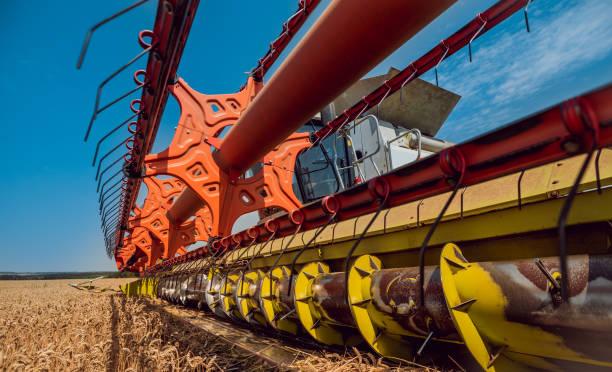
China’s agricultural machinery sector is gaining momentum as the country focuses on improving farm productivity, reducing labor dependency, and modernizing rural production systems. With large food demand, diverse cropping regions, and rising pressure to improve resource efficiency, machinery is becoming central to farming operations. Tractors, cultivation tools, irrigation systems, seeders, sprayers, harvesters, and precision equipment are helping farms operate with better consistency.
According to MarkNtel Advisors, the China Agricultural Machinery sector was valued at around USD 21.8 billion in 2025 and is projected to grow from USD 23.5 billion in 2026 to USD 36.2 billion by 2032. The CAGR of 7.47% reflects rising mechanization, government support, large-farm adoption, and growing use of digitally enabled equipment across China’s farming landscape.
Mechanization Supports Food Security Goals
China’s agriculture system must support a large population while managing labor shortages, land-use pressures, and climate variability. Mechanized farming helps improve planting, tillage, irrigation, spraying, harvesting, and post-harvest handling. It can reduce manual effort, shorten field-operation time, and improve productivity across major crop-producing regions.
The Food and Agriculture Organization highlights sustainable agricultural mechanization as a way to improve productivity while supporting better resource use. This is especially relevant for China, where modernization is closely tied to food security and rural development.
Government Support Is Accelerating Modernization
Policy support remains one of the strongest drivers of machinery adoption in China. Subsidies, modernization programs, rural revitalization strategies, and technology-focused initiatives are encouraging farmers and agricultural enterprises to upgrade equipment. These measures are particularly important because advanced tractors, precision planters, and smart machinery often require high upfront investment.
The State Council of the People’s Republic of China provides policy direction on rural development, agriculture, and modernization. Such policy backing helps reduce adoption barriers and supports the transition from traditional farming tools toward more efficient mechanized systems.
25–100 HP Machinery Holds Strong Demand
The 25–100 HP machinery segment plays a leading role because it fits many Chinese farming conditions. The report indicates that this segment accounts for about 51% share in 2026. These machines provide a balance of power, affordability, and flexibility, making them suitable for small to medium-sized farms, cooperatives, and mixed crop operations.
This horsepower range is especially practical where land parcels are fragmented or where farms need versatile machines for tillage, transport, planting, and other field activities. It also aligns with subsidy programs that support broader mechanization across rural areas.
Large Agricultural Enterprises Lead Adoption
Large agricultural enterprises are expected to account for more than 45% share by 2032, supported by their stronger capital base and need for high-capacity machinery. These enterprises often manage larger land areas and require reliable equipment for planting schedules, harvesting windows, irrigation efficiency, and labor reduction.
The World Bank emphasizes agriculture’s role in food systems, poverty reduction, and resilience. In China, large-scale operators and cooperatives can help improve farm efficiency by using modern machinery and sharing equipment access across wider rural communities.
Smart Machinery Is Changing Field Operations
China is increasingly integrating artificial intelligence, satellite navigation, sensors, drones, and data platforms into agricultural machinery. The report notes that more than 2.2 million agricultural machines were equipped with the BeiDou Navigation Satellite System by the end of 2023. These technologies support precision operations, autonomous guidance, and better input management.
The OECD highlights digital agriculture as a pathway for improving productivity, sustainability, and decision-making. For Chinese farmers, smart machinery can help reduce waste, improve timing, and make field operations more predictable.
Sustainability Is Shaping Equipment Development
Energy efficiency and lower-emission machinery are becoming more important as agriculture aligns with green development goals. Manufacturers are investing in improved engines, electric machinery, hybrid tractors, fuel-efficient harvesters, and precision sprayers that can reduce input waste. These shifts are relevant for both environmental compliance and operating-cost control.
The International Energy Agency tracks energy efficiency and industrial technology trends that influence equipment manufacturing. As machinery producers adopt cleaner and more efficient technologies, agriculture can benefit from lower fuel use and improved equipment performance.
Outlook
China’s agricultural machinery sector is expected to remain closely linked with rural modernization, food security, smart farming, and government-backed mechanization. Growth will depend on affordability, financing access, dealer networks, spare parts, operator training, and the ability to serve both large enterprises and smaller farms.
Over time, demand is likely to expand for mid-range tractors, smart seeders, precision sprayers, irrigation equipment, autonomous machinery, and electrified farm equipment. As China continues modernizing its agricultural base, machinery will remain a practical foundation for improving productivity, reducing labor pressure, and strengthening food-system resilience.