


Water Pumps for Data Centers Gain Importance as Cooling Demands Intensify
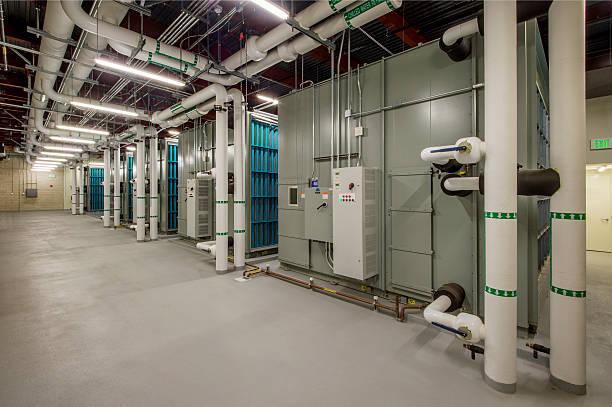
Water pumps are becoming critical components in modern data centers as computing density, artificial intelligence workloads, and cloud infrastructure continue to expand. High-performance servers generate substantial heat, requiring reliable cooling systems that can operate continuously. In this environment, pumps support chilled water circulation, liquid cooling loops, condenser water systems, and heat-rejection processes that keep digital infrastructure stable and energy-efficient.
According to MarkNtel Advisors, the Global Water Pump for Data Centers sector was valued at USD 2.76 billion in 2025 and is projected to grow from USD 3.14 billion in 2026 to USD 6.77 billion by 2032. The sector is projected to expand at a CAGR of 13.68%, supported by rising AI workloads, hyperscale construction, and the increasing need for efficient cooling infrastructure.
Why Pumps Matter in Data Center Cooling
Data centers depend on precise thermal management to protect servers, storage systems, and networking equipment. Water pumps move coolant through cooling towers, chillers, heat exchangers, computer-room air handlers, and liquid cooling systems. If circulation is unstable, thermal performance can decline, affecting equipment reliability and uptime.
The International Energy Agency notes that data centers and data transmission networks are becoming increasingly important within global electricity demand discussions. As power density rises, cooling equipment, including pumps, becomes central to overall facility efficiency.
AI Workloads Are Increasing Thermal Loads
Artificial intelligence and high-performance computing are changing data center design requirements. AI servers often use dense racks with higher heat output than conventional IT systems. This is increasing interest in advanced cooling systems, including chilled water loops, rear-door heat exchangers, direct-to-chip liquid cooling, and immersion cooling.
Water pumps are essential in these systems because they maintain coolant flow and support heat transfer. Their role becomes more important when facilities move from traditional air cooling toward hybrid or liquid-based cooling architectures. In high-density facilities, pump efficiency, redundancy, and control accuracy can directly influence cooling reliability.
Chilled Water Systems Continue to Dominate
Chilled water systems hold a strong position in data center cooling because they are widely used in large-scale facilities and can support consistent temperature management. In these systems, pumps circulate chilled water between chillers, cooling coils, and heat exchangers. Their performance affects flow stability, cooling efficiency, and operating cost.
The U.S. Department of Energy provides guidance related to data centers and server rooms, including efficiency considerations. For pump systems, this reinforces the importance of proper sizing, variable-speed operation, maintenance, and integration with broader energy-management strategies.
Centrifugal Pumps Lead Adoption
Centrifugal pumps account for a major share of water pump use in data centers because they are suitable for high-flow applications, chilled water circulation, condenser water movement, and general cooling infrastructure. Their broad availability, scalability, and compatibility with variable frequency drives make them practical for large and medium-sized facilities.
However, pump selection must be aligned with pressure requirements, flow rate, redundancy design, and energy targets. Oversized pumps can waste energy, while undersized systems may compromise cooling reliability. This makes engineering design and lifecycle cost analysis essential in data center projects.
Efficiency Is Becoming a Design Priority
Cooling systems can represent a substantial portion of data center energy use. Pump efficiency matters because these systems often operate around the clock. Variable speed drives, smart controls, optimized pipe layouts, and efficient pump curves can help reduce unnecessary energy consumption while maintaining cooling performance.
The National Renewable Energy Laboratory has highlighted data center efficiency through its work on high-performance computing infrastructure. Such efforts show how cooling design, energy monitoring, and operational optimization are becoming closely connected in advanced facilities.
Water Use and Sustainability Are Under Review
While water-based cooling can improve thermal performance, it also raises questions about water availability and environmental impact. Data center operators are increasingly evaluating water-use effectiveness, heat reuse, closed-loop systems, and alternative cooling strategies to reduce local resource pressure.
The U.S. Environmental Protection Agency promotes water efficiency across different applications. Although data centers have specialized cooling needs, the broader principle of reducing unnecessary water consumption is becoming more relevant as facilities expand in water-stressed regions.
Standards and Reliability Shape Procurement
Data centers require highly reliable mechanical systems. Pumps must support redundancy, fault tolerance, predictable maintenance, and integration with building management systems. Standards and best-practice frameworks influence how facilities evaluate cooling performance, energy efficiency, and operational resilience.
The ASHRAE Technical Committee 9.9 focuses on mission-critical facilities, data centers, and technology spaces. Its guidance is relevant because thermal management decisions increasingly depend on balancing equipment safety, energy use, and facility reliability.
Outlook
Water pumps for data centers are becoming more strategic as AI, cloud computing, and hyperscale expansion reshape cooling requirements. Demand is expected to remain closely linked to high-density computing, liquid cooling adoption, chilled water infrastructure, and sustainability-focused design.
The next phase of growth will likely emphasize efficient centrifugal pumps, intelligent controls, variable-speed systems, and cooling architectures that reduce energy waste while supporting uptime. As data centers become more power-dense and performance-sensitive, pump systems will remain essential to keeping digital infrastructure reliable, efficient, and scalable.