How Do You Engineer an Equestrian Arena Base for Optimal Drainage and Compaction?
Let us start with something we have all seen...
A brand new arena that looks absolutely perfect. Fresh sand, clean edges, everything looking spot on. And then... a bit of rain comes along, and suddenly it turns into a patchy, soggy mess.
Frustrating, right?
That usually has nothing to do with the top layer. The real story is underneath. When we talk about building a proper equestrian sand arena, the base is where everything begins... even if no one sees it.
The Base Is Doing All the Hard Work
We tend to focus on what we ride on. Makes sense. That is the part we feel.
But underneath, the base is quietly handling everything... holding the structure together, managing water, and keeping the surface stable day after day.
If that part is not right, things start going wrong pretty quickly. Puddles show up. The footing shifts. Maintenance becomes a never-ending chore.
Not fun.
It All Starts Before the First Load of Material Arrives
This is the part people rush... and then regret later.
Before anything goes down, the ground needs to be cleaned up properly. We are talking about removing grass, roots, loose soil... all that stuff that does not belong under an arena.
Skip this step, and you might not notice the problem right away. But give it some time... soft spots start forming, and things get uneven.
A little effort here saves a lot of headaches later.
A Slight Slope... Not Something You See, But You Feel
Here is something interesting...
A good arena is not completely flat. It has a very gentle slope. Nothing dramatic... you probably would not even notice it while riding.
But it helps water move.
Without it, rain just sits there. And once water starts sitting, everything else starts going downhill.
Sometimes it really is the small things that make the biggest difference.
Building That Solid Foundation Layer
Now we get into the real structure.
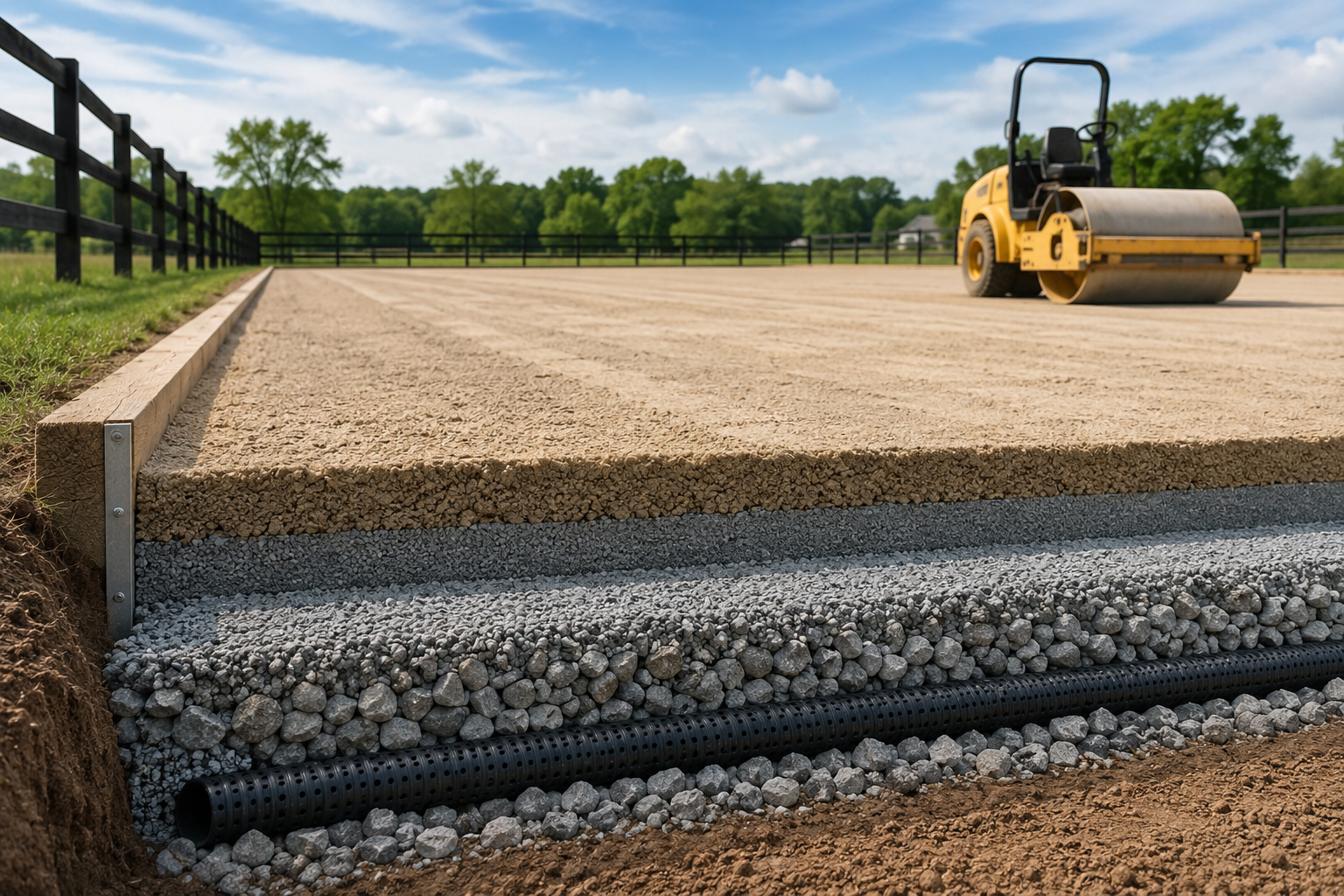
The base layer is usually made with compacted stone or aggregate. This is what gives the arena its strength. It needs to feel firm enough to support horses and equipment, but not like concrete.
Too loose? It shifts over time.
Too hard? Water struggles to move through.
Finding that balance... yeah, that is the tricky part.
Let Us Talk About Drainage... Because It Makes or Breaks Everything
Honestly, drainage is where most arenas either succeed or fail.
When it rains, water needs a clear path to escape. If it does not have one, it just sits there... and turns your riding space into something you would rather avoid.
Many arenas use simple drainage setups under the base. Nothing fancy, just something that helps move water away.
Combine that with a good slope and the right base materials, and suddenly the arena stays usable even after rain.
Feels like magic... but it is really just smart planning.
Compaction... Sounds Simple, But It Is Not
Compaction is one of those things that sounds easy until you actually deal with it.
If the base is not compacted enough, it starts shifting. You get dips, ruts, uneven areas... all the things we do not want.
But if it is overdone, it can block water movement.
So what do we do?
We build it in layers. Slowly. Carefully.
Each layer gets compacted before moving to the next. It takes more time, sure... but it creates a stronger, more stable base in the long run.
Adding the Surface Layer... The Part Everyone Notices
This is where things finally start to look like an arena.
The footing goes on top, and suddenly it feels real.
But here is the thing... even the best surface material cannot fix a bad base. If the layers underneath are not right, the top layer will struggle too.
That is why experienced builders spend just as much time on what you do not see.
Why All This Effort Actually Pays Off
We get it... this process can feel like a lot.
But a well-built base makes life so much easier later.
Less maintenance. Fewer puddles. More consistent footing. A better experience for both horse and rider.
And honestly... who wants to keep fixing the same problems over and over?
When the base is done right, things just work. Simple as that.
Final Thoughts
At the end of the day, building a great arena is not about rushing to the finish line. It is about getting the foundation right.
A properly built base handles water, supports the surface, and keeps everything stable over time. That is what turns a basic setup into a reliable riding space.
So if you are planning an equestrian sand arena, take your time with what is underneath. It might not be visible, but it is doing all the heavy lifting.
And trust us... you will feel the difference every single time you ride.
FAQs
1. Why is drainage important in an equestrian arena?
It helps move water away so the surface does not become wet, uneven, or unsafe for riding.
2. What materials are commonly used in an arena base?
Most bases use compacted stone or aggregate materials because they provide strength and allow water to pass through.
3. How deep should an equestrian arena base be?
It depends on the ground conditions and usage, but it needs to be deep enough to support the surface and prevent shifting.
4. Can poor compaction affect arena performance?
Yes, it can lead to uneven areas, surface movement, and more maintenance over time.
5. How can we reduce maintenance in a horse arena?
A properly built base with good drainage and balanced compaction makes a huge difference in keeping maintenance low.