


Jewelry Protection Methods to Keep Every Piece Safe
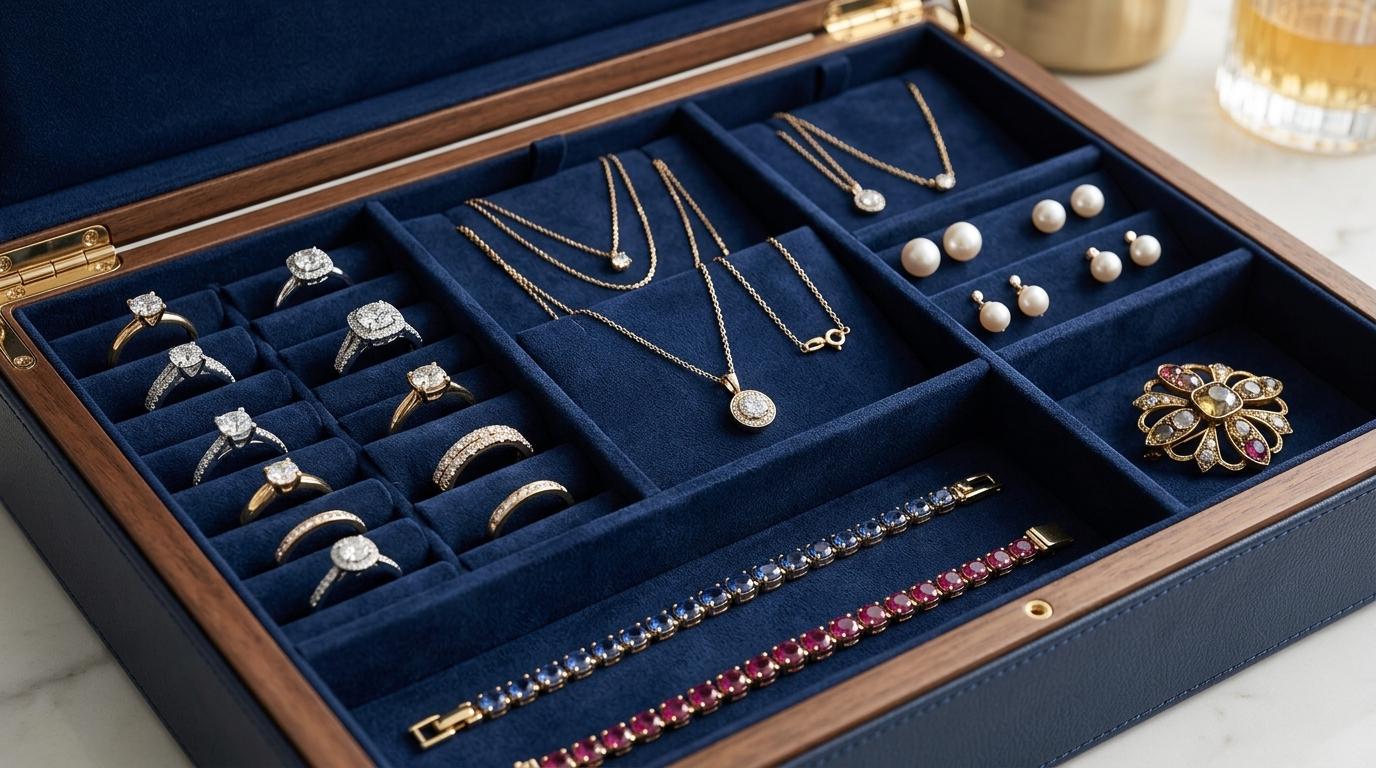
Jewelry holds value far beyond its price tag. A wedding band, an heirloom locket, or a first pair of diamond studs carries memories that no insurance check can replace. We work with fine pieces every day, and we know that protecting them comes down to three things: proper storage, careful handling, and the right packaging when they travel.
The problem is that most damage happens during ordinary moments. A necklace tangles in a drawer. A ring scratches against keys in a bag. A shipped package arrives with a bent clasp because the box gave it too much room to move. These small failures add up to real loss.
This guide walks you through every method we trust. We cover daily storage, cleaning, travel, shipping, insurance, and the warning signs of wear. By the end, you will know exactly how to keep your jewelry safe — whether it sits in a drawer at home or crosses the country in a box.
Why Jewelry Needs Specific Protection
Jewelry faces threats that other valuables do not. Soft metals scratch, gemstones chip, and finishes fade with the wrong contact. We protect against each of these risks separately, because a single method rarely covers them all.
Three forces cause most jewelry damage:
-
Friction: Pieces rub against each other, against hard surfaces, or against rough fabric, which scratches metal and dulls stones.
-
Chemical exposure: Lotions, perfumes, chlorine, and household cleaners corrode metal and cloud gemstones over time.
-
Impact and pressure: Drops, knocks, and the weight of stacked items bend prongs, crack stones, and break clasps.
Your protection plan needs to address all three. A jewelry box that prevents scratches still fails if you store it in a humid bathroom where moisture tarnishes the metal.
The Real Cost of Unprotected Jewelry
Damage costs more than the repair bill. When a piece breaks, you pay for the fix, the lost wear time, and sometimes the loss of a stone that cannot be matched. Sentimental pieces carry a cost no number captures.
Here is where the costs add up:
|
Cost Type |
What It Includes |
Long-Term Effect |
|
Repair |
Prong rebuilding, stone resetting, polishing |
Recurring expense over years |
|
Replacement |
Lost stones or pieces beyond repair |
Permanent loss of value |
|
Resale loss |
Lower appraisal from visible wear |
Reduced trade-in or sale price |
|
Sentiment |
Damage to heirlooms and gifts |
Irreplaceable personal loss |
A small effort upfront almost always costs less than a single avoidable repair.
Proper Storage at Home
Storage is your first line of defense, and most jewelry damage starts here. We organize storage by material and by use, so soft metals never touch harder stones and everyday pieces stay separate from delicate ones.
Separate Every Piece
The biggest storage mistake we see is letting pieces touch. Diamonds rank highest on the hardness scale, which means a loose diamond ring can scratch gold, silver, pearls, and softer stones in the same compartment.
To prevent contact damage:
-
Store each piece in its own lined compartment or pouch.
-
Keep chains fastened and laid flat so they cannot tangle.
-
Place rings in slotted rows rather than stacked in a pile.
-
Wrap soft stones like pearls and opals in separate cloth.
Control the Environment
Jewelry reacts to its surroundings. Humidity speeds up tarnish on silver, while direct sunlight fades certain gemstones over months of exposure.
We recommend these conditions for home storage:
|
Factor |
Ideal Condition |
Why It Matters |
|
Humidity |
Low, with anti-tarnish strips |
Prevents silver tarnish and metal corrosion |
|
Light |
Dark or shaded storage |
Stops UV fading of colored stones |
|
Temperature |
Stable room temperature |
Avoids stress cracks in some gems |
|
Location |
Away from bathrooms |
Reduces moisture and chemical exposure |
Add silica gel packets or anti-tarnish strips to your jewelry box. These small additions absorb moisture and slow the chemical reaction that dulls precious metals.
Choose the Right Storage Box
A good jewelry box does more than hold your pieces. It separates them, cushions them, and shields them from light and dust. Look for soft, non-abrasive lining like felt or microfiber, plus individual slots for rings and hooks for chains.
For collectors who store many pieces, custom-fit compartments work better than open trays. They hold each item in place so nothing shifts when you open or move the box.
Cleaning and Maintenance Methods
Regular cleaning protects jewelry as much as careful storage. Built-up oils and residue dull the surface and can weaken settings over time. We clean different materials in different ways, because one method does not suit every piece.
Safe Cleaning by Material
Each metal and stone responds to cleaning differently. The wrong solution can strip a finish or damage a porous stone, so we match the method to the material.
|
Material |
Safe Cleaning Method |
Avoid |
|
Gold |
Warm water, mild soap, soft brush |
Harsh chemicals, abrasive cloths |
|
Silver |
Silver polish cloth, gentle soap |
Toothpaste, rough scrubbing |
|
Diamonds |
Warm soapy water, soft brush |
Chlorine, ultrasonic on fragile settings |
|
Pearls |
Damp soft cloth only |
Soaking, brushes, any cleaner |
|
Opals/Emeralds |
Damp cloth, no soaking |
Ultrasonic cleaners, heat |
For pearls and porous stones, less is always more. Wipe them gently after each wear and never soak them, since water can seep behind the setting or into natural pores.
A Simple Maintenance Routine
Consistency keeps jewelry in top condition. We follow the same routine so nothing gets overlooked.
-
After each wear: Wipe pieces with a soft cloth to remove oils and sweat.
-
Monthly: Inspect prongs, clasps, and settings for looseness or wear.
-
Every 6 to 12 months: Take fine pieces to a jeweler for professional cleaning and inspection.
-
Before storage: Make sure every piece is clean and fully dry.
This routine catches small problems before they become expensive repairs. A loose prong spotted early costs far less than a lost stone.
Daily Wear and Handling Habits
How you wear and handle jewelry matters as much as how you store it. Most scratches and chemical damage happen during normal daily activity, not during accidents.
The Last-On, First-Off Rule
Put jewelry on after you apply makeup, perfume, lotion, and hairspray. Take it off first before you wash dishes, clean, or exercise. This single habit keeps chemicals and friction away from your pieces.
You may be wondering whether this really makes a difference. It does. Perfume and lotion leave a film that dulls gemstones, and chlorine from cleaning products can weaken gold alloys over time.
Know When to Remove Jewelry
Some activities pose a clear risk to fine pieces. We always remove jewelry before:
-
Swimming in pools or hot tubs, where chlorine damages metal and stones.
-
Gardening or manual work that exposes pieces to dirt and impact.
-
Showering, since soap builds up film and rings can slip off.
-
Sleeping, which bends thin chains and loosens prongs over time.
Keep a small dish or pouch in the spots where you usually remove jewelry. A consistent landing place prevents the lost-down-the-drain moment that ruins so many pieces.
Protecting Jewelry During Travel
Travel exposes jewelry to loss, theft, and damage all at once. We pack jewelry for trips with the same care we use for shipping, because hotel rooms and luggage offer little protection on their own.
Smart Travel Packing
A dedicated travel case keeps pieces organized and separated. Roll-up cases with individual pockets work well, since they hold each item snug and prevent tangling during transit.
Follow these travel rules:
-
Carry valuable jewelry in your personal bag, never in checked luggage.
-
Use individual pouches so pieces do not scratch each other.
-
Bring only what you plan to wear to limit your exposure to loss.
-
Photograph your pieces before you travel for insurance records.
Hotel and Destination Safety
Once you arrive, treat your jewelry as a target. Use the in-room safe for pieces you are not wearing, and avoid leaving items on counters or nightstands. For high-value pieces, a hotel front-desk safe often offers stronger protection than the in-room version.
Shipping Jewelry Safely
Shipping is where jewelry faces the most handling and the least control. We pack every shipment in layers, because a single layer rarely survives the bumps, drops, and sorting that happen between pickup and delivery.
Build Protection in Layers
Each layer has a job. The piece gets wrapped, the inner box holds it steady, and the outer box absorbs impact. Skipping any layer leaves a gap that handling will find.
-
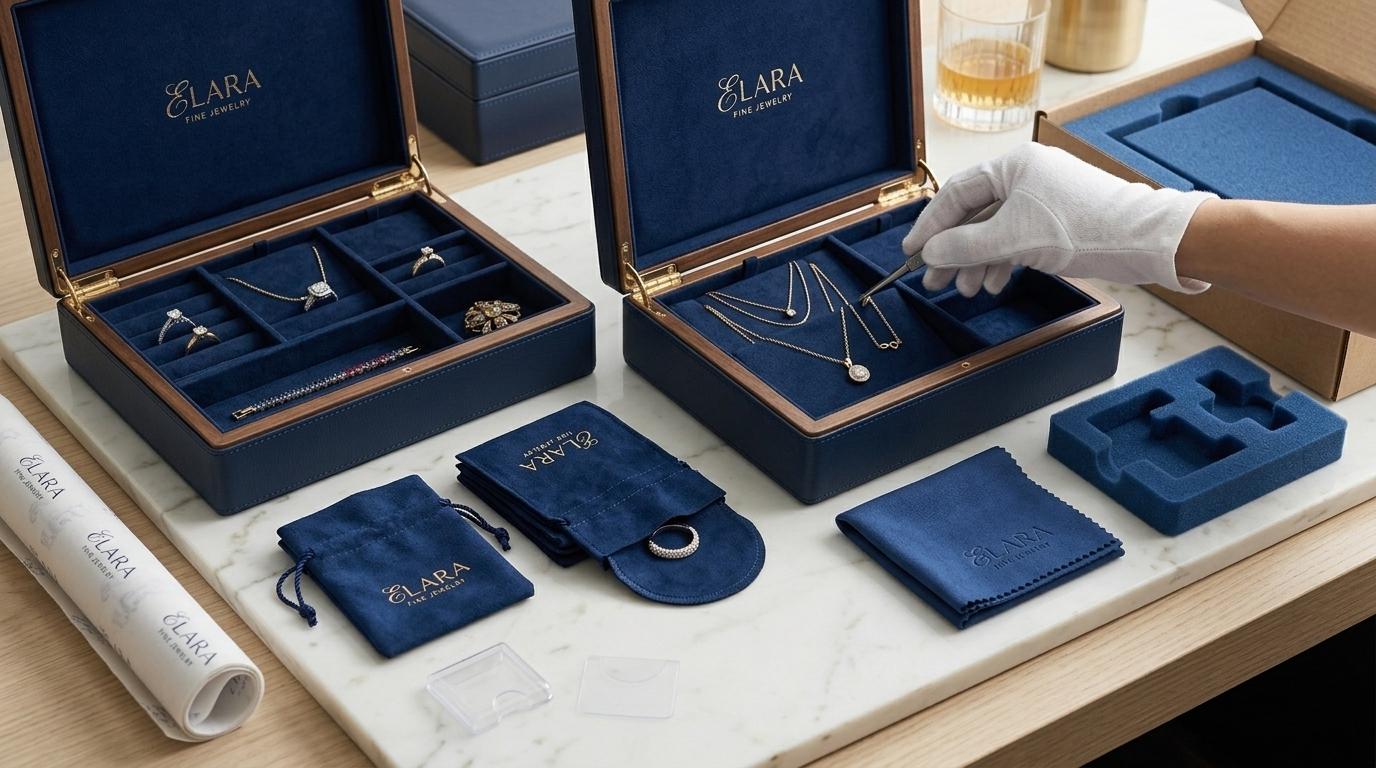
Wrap the piece: Place each item in a soft pouch or anti-tarnish cloth.
-
Secure the inner box: Use a fitted gift or presentation box that holds the piece in place.
-
Cushion the void: Fill empty space so nothing shifts inside the outer box.
-
Seal the outer box: Use a sturdy corrugated mailer and tape every seam.
The most common shipping failure is movement. When a piece slides inside an oversized box, every bump turns into an impact. Fitted protection solves this by holding each item exactly where it belongs.
Why Fitted Inserts Matter
Loose fill shifts during transit, which lets jewelry knock against the box walls. Rigid, custom-fit compartments stop that movement entirely. We rely on Custom Inserts For Boxes for jewelry shipments because they lock each piece in its own slot and keep it suspended away from the box edges.
A good insert does three things:
-
Holds each piece in a dedicated compartment so nothing touches.
-
Suspends items above the base to absorb drop impact.
-
Keeps spacing consistent even when the box tilts or shifts.
Discreet and Insured Shipping
Never label a package in a way that signals valuable contents. Plain outer boxes draw less attention during transit. For valuable pieces, choose a carrier service with tracking, signature confirmation, and full insurance coverage.
|
Shipping Factor |
What to Look For |
Why It Matters |
|
Tracking |
Real-time updates |
Catch delays and issues early |
|
Signature |
Required on delivery |
Prevents porch theft and loss |
|
Insurance |
Coverage for full value |
Protects against loss in transit |
|
Discretion |
Plain, unmarked packaging |
Reduces theft risk |
Keep your shipping receipt and insurance documents until the package arrives and the recipient confirms its condition.
Choosing the Right Packaging Materials
The materials around your jewelry determine how well it survives storage and shipping. We choose materials based on the piece, not on what happens to be on hand.
Match the Material to the Piece
Different pieces need different protection. A delicate chain needs tangle prevention, while a gemstone ring needs impact cushioning around the setting.
|
Material |
Best For |
Pros |
Cons |
|
Anti-tarnish pouches |
Silver and gold pieces |
Slows tarnish, soft lining |
Limited impact protection |
|
Foam inserts |
Rings and earrings |
Holds shape, cushions impact |
Needs correct sizing |
|
Microfiber cloth |
Polished surfaces |
Prevents scratches |
No structural support |
|
Rigid compartments |
Multi-piece shipments |
Total separation and support |
Higher upfront cost |
|
Padded mailers |
Light single items |
Affordable, simple |
Weak against crushing |
For brands that ship jewelry regularly, branded boxes with fitted interiors protect the product and present it well. A tailored solution lets you Customize Packaging to fit each product line, so every piece arrives secure and looks the part when the customer opens the box.
Avoid Common Material Mistakes
The wrong material can cause the damage you meant to prevent. We avoid these common errors:
-
Using newspaper or printed paper, which can transfer ink onto metal.
-
Relying on a single layer of bubble wrap for fragile settings.
-
Reusing crushed or worn boxes that have lost their strength.
-
Skipping anti-tarnish protection on silver during long storage.
Insurance and Documentation
Even with perfect care, loss and theft happen. Insurance and documentation give you a path to recover value when protection alone is not enough. We treat documentation as a core part of any protection plan.
Document Every Valuable Piece
Good records speed up claims and prove ownership. For each valuable piece, keep:
-
A professional appraisal with the current replacement value.
-
Clear photos from multiple angles, including any unique marks.
-
The original receipt or proof of purchase.
-
A written description noting metal, stones, and measurements.
Update appraisals every few years. Precious metal and gemstone values change, and an outdated appraisal may not cover full replacement cost.
Choose the Right Coverage
Standard home insurance often limits jewelry coverage to a low amount. For valuable pieces, a separate policy or a scheduled rider covers the full appraised value.
|
Coverage Type |
Best For |
Key Benefit |
|
Homeowner's policy |
Low-value everyday pieces |
Basic, already included |
|
Scheduled rider |
High-value individual items |
Full appraised value coverage |
|
Standalone jewelry policy |
Large collections |
Broad coverage, fewer exclusions |
Read every policy for exclusions. Some plans cover theft but not accidental loss, so confirm exactly what your coverage includes before you rely on it.
Recognizing Wear Before It Becomes Damage
Catching wear early prevents most major repairs. We inspect pieces regularly and watch for the warning signs that signal a problem ahead.
What to Inspect and How Often
A quick monthly check catches issues while they are still small. During each inspection, look for:
-
Loose stones: Gently tap the piece near your ear. A rattle means a loose setting.
-
Worn prongs: Thin or flattened prongs can release a stone without warning.
-
Stretched clasps: A clasp that no longer snaps firmly risks dropping the piece.
-
Thinning bands: Rings worn daily thin over years and can crack under pressure.
When you spot any of these signs, stop wearing the piece and take it to a jeweler. A minor repair now protects you from losing a stone you cannot replace.
Building a Complete Protection System
The best results come from a consistent system, not occasional effort. We do not leave jewelry care to memory. Instead, we follow the same proven steps for storage, cleaning, and shipping every time.
A reliable protection system includes:
-
A storage box with separate, lined compartments for every piece.
-
A cleaning routine matched to each material in your collection.
-
A documentation file with appraisals, photos, and receipts.
-
A standard packing method for any piece that travels or ships.
This approach removes guesswork. When every piece follows the same proven steps, damage and loss drop, and your jewelry stays in the condition you expect.
Final Thoughts
Protecting jewelry is not complicated, but it does take the right methods and a steady routine. Store each piece separately, clean it the right way for its material, handle it with care during daily wear, and pack it properly whenever it travels. Document your valuable pieces and insure them for full value.
Do all of this, and your jewelry will hold its beauty and value for years. Start today with one step: organize your storage so no two pieces touch. From there, build the full routine, and your collection will stay safe, sound, and ready to wear whenever you reach for it.
Frequently Asked Questions
1. What is the best way to store jewelry to prevent scratches?
Store each piece in its own lined compartment or soft pouch so nothing touches. Diamonds and harder stones scratch softer metals and gems, so separation is the key. Keep chains fastened and laid flat to prevent tangling, and store rings in slots rather than stacked in a pile.
2. How often should I clean my fine jewelry?
Wipe pieces with a soft cloth after each wear to remove oils and sweat. Do a deeper cleaning monthly using a method matched to the material. We also recommend a professional cleaning and inspection every 6 to 12 months to catch loose settings before they fail.
3. Can I use the same cleaning method for all my jewelry?
No. Each material responds differently, and the wrong method causes damage. Gold and diamonds tolerate warm soapy water, but pearls and opals should only be wiped with a damp cloth. Never use ultrasonic cleaners or harsh chemicals on porous or fragile stones.
4. What is the safest way to ship jewelry?
Pack jewelry in layers: wrap each piece, secure it in a fitted inner box, cushion the void, and seal a sturdy outer box. Use plain packaging that does not signal valuable contents, and choose a service with tracking, signature confirmation, and full insurance. Fitted inserts that lock each piece in place prevent the movement that causes most shipping damage.
5. Does my home insurance cover valuable jewelry?
Standard home insurance usually limits jewelry coverage to a low amount. For valuable pieces, add a scheduled rider or a standalone jewelry policy that covers the full appraised value. Read the policy for exclusions, since some cover theft but not accidental loss.
6. How do I know if a piece needs repair before it breaks?
Inspect each piece monthly. Tap it gently near your ear to check for loose stones, look for thin or flattened prongs, and test clasps for a firm snap. Watch for thinning bands on rings you wear daily. When you spot any of these signs, stop wearing the piece and take it to a jeweler.