


GAZA’S NIGHTMARE: THE POWER OF PEOPLE TO HALT WAR
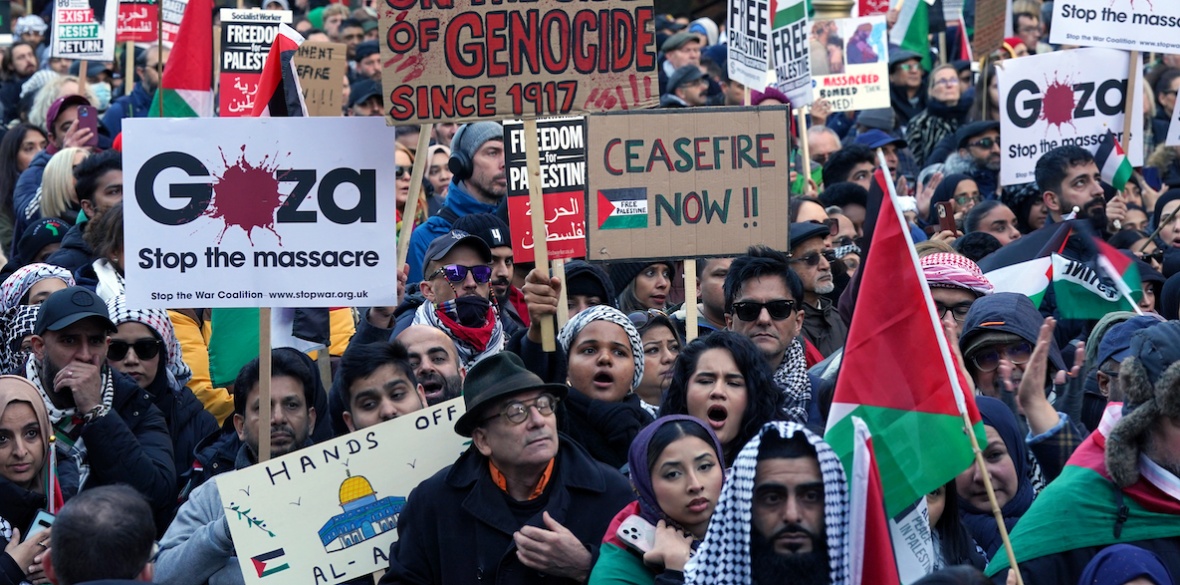
The movement impacts government support and moderates backing for the ongoing
conflict. Increasing pressure to secure Palestinian state recognition becomes a focal
point. Addressing the ongoing ethnic cleansing in the West Bank becomes a critical
objective.
The conflict between Hamas and Israel is now in its eighth week. More than 15,000 people,
mostly civilians, have since been killed in the first phase of war by Israeli bombardments.
Images of wholesale destruction, particularly in Northern Gaza, have raised concerns in the
international community.

Evacuations and Ethnic Cleansing Concerns:
Israel’s evacuation orders during attacks raise alarming suspicions of ethnic cleansing.
Restrictions on Palestinian return during truces add complexity to the already dire
situation. Evacuation orders in the south exacerbate challenges for Gaza’s two million
residents.
Netanyahu’s Stance and Governance Dilemmas:
Netanyahu’s commitment to eliminating Hamas clashes with resistance to Palestinian
Authority control in Gaza. Questions loom over the future governance of the region amid
ongoing conflicts. Denial of Palestinians’ right to return and the prospect of long-term
security control become contentious issues.

How We Can Stop This: A Call to Action
International Pressure:
Global concerns prompt as Rishi Sunak pleas for ‘sustained humanitarian pauses’.
International pressure, fuelled by protests, forces a six-day truce, showcasing the impact
of mobilized voices. Nuanced backing for Israel by Western leaders, including the UK and
US, reflects shifting political positions.
The Call for Prolonged Ceasefires:
The potential for extended truces gains significance, opening doors for meaningful
negotiations. Calls for longer pauses in the fighting highlight the potential for diplomatic
solutions. The impact of global protests, especially in Britain, underscores the
effectiveness of mobilized voices.
China’s Peace Plan:
China, as UN Security Council chair, proposes a five-point peace plan. Emphasis on an
immediate ceasefire, prevention of forced displacement, and a UN-led peace conference.
Advocacy for the establishment of an independent state of Palestine based on the 1967
border.
Shifting Political Positions:
The Labour Party’s altered stance on recognizing a Palestinian state raises questions.
Contrasts with earlier commitments under leaders like Ed Miliband and Jeremy Corbyn.
The push for multilateral recognition gains momentum on the global stage.
Palestine Solidarity Movement’s Influence:
The movement impacts government support and moderates backing for the ongoing
conflict. Increasing pressure to secure Palestinian state recognition becomes a focal
point. Addressing the ongoing ethnic cleansing in the West Bank becomes a critical
objective.
Left’s Role in Labour Support:
By mobilizing the left to force Labour to resume support for Palestine and aligning party
commitments with historical positions under previous leaders can make a change.



 English
 Arabic
 French
 Spanish
 Portuguese
 Deutsch
 Turkish
 Dutch
Dutch
 Russian
 Romaian
 Portuguese (Brazil)
 Greek
Greek